


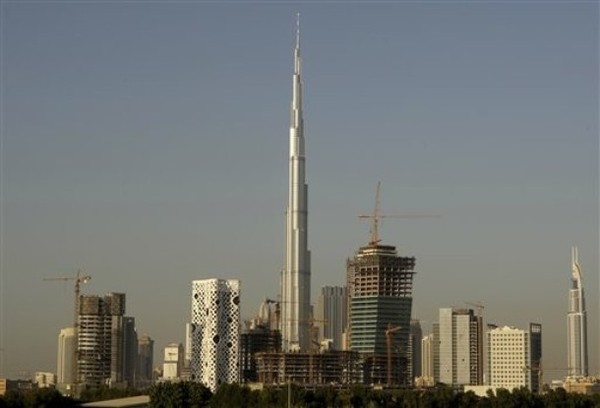
The boom years of the early 21st century were good for many people, but perhaps no one enjoyed them more than Sheikh Mohammed bin Rashid al Maktoum, the ruler of Dubai. Stripped to its essentials, Dubai is a sweltering strip of sand blessed with a natural harbour known as the creek, which has been an entrepot for merchants and smugglers for centuries. Building on his father's vision, Sheikh Mohammed turned Dubai into a 21st Century boomtown, luring western financiers and tourists with gleaming steel and glass towers, vast beaches, and green golf resorts.
Now Sheikh Mohammed is calling for a standstill on debt repayments at one of his most important companies, Dubai World, least temporarily rocking world markets and raising huge questions about the future of Dubai. The Standard & Poor's 500 index of 500 stocks fell 1.7% in abbreviated trading Friday, to 1,091.49, and the MSCI Emerging Markets Index had slipped 1.8% as of 2:12 p.m.
Dubai was always a confidence game—a momentum play. Unlike Saudi Arabia or Abu Dhabi, the hugely wealthy emirate to the West, Sheikh Mohammed had scant oil production to fuel his grandiose ideas. Instead he sold the world on his vision of Dubai as a hub for the Middle East, western Asia, and Africa, attracting investment from his wealthier neighbors—both Arabs and Iranians—and increasingly, from the West and Russia.
For a while, it worked. Western bankers fell over each other to book space in his Dubai International Financial Center, a handsome if somewhat over-the-top real estate project aimed at being the Wall Street of the Gulf. The cream of technology companies and media companies, from Cisco Systems (CSCO) to Microsoft (MSFT), set up shop in Dubai's Internet City. CEOs and politicians came to Dubai to pay court to the ruler, whom they treated like a sage.
Sheikh Mohammed patronized a corps of young technocrats, who worshiped "The Boss" and raced to enact his visions. He told them there was nothing they couldn't do if they put enough imagination and energy into it. When Mohammed Alabbar, the chairman of developer Emaar Properties, came to the Sheikh with a plan to build a skyscraper in what was becoming the new downtown of Dubai, the ruler urged him to build the tallest building in the world. That's exactly what Alabbar did; today the Bourj Dubai is nearly completed, soaring above an artificial lake that boasts an elaborate set of fountains that cost $250 million. For a relatively small place, Dubai has acquired an extraordinary collection of futuristic towers—some of them unfinished or empty. The cityscape looks like something out of a Buck Rogers setting.
Post a comment about this story in Reader Discussion…
Track and share business topics across the Web.
RSS Feed: Most E-mailed Stories
RSS Feed: Most Discussed Stories
About Advertising EDGE Programs Reprints McGraw Hill Careers Terms of Use Disclaimer Privacy Notice Ethics Code Contact Us Site Map Press Room
Copyright 2000-2009 by The McGraw-Hill Companies Inc. All rights reserved.
McGraw-Hill Education Standard & Poor's BusinessWeek Platts McGraw-Hill Construction AviationWeek McGraw-Hill Broadcasting J.D. Power
Read Full Article »