


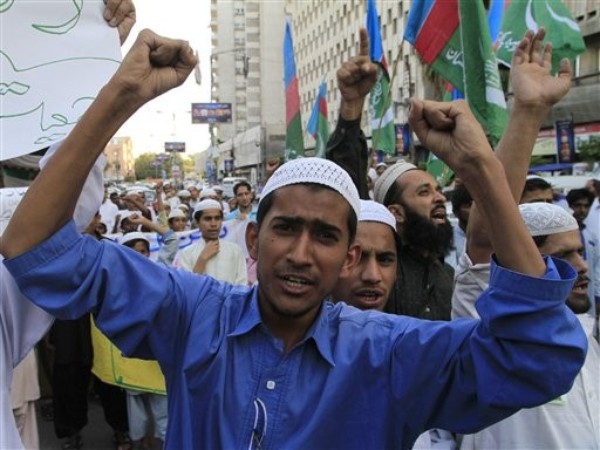
The planet's urban population has increased by more than 2.7 billion since the end of World War II. Expanding urban zones are the engines of the global economy and also showcases for inequality.The gap between rich and poor, a focus of protests last weekend in the U.S. and other countries, is spectacularly on display in a swiftly expanding city in the developing world, as I could see without leaving my restaurant table at Port Grand. I noticed that the signage was not in Urdu, Pakistan's most common language, but in English, spoken by the globalized elite. Across the water to my right stood harbor cranes, the kind that unload billions of dollars' worth of supplies bound for U.S. forces in Afghanistan; to my left I saw a bridge with a new metal wall running its length. The wall keeps ordinary people on that bridge from gawking or taking potshots at the affluent at Port Grand. It costs 300 rupees to pass the armed guards at the gate of the jetty -- the equivalent of about $3.50, more than many Karachi residents earn in a day.
Yet two recent books argue that for all their flaws, growing cities offer unmatched opportunity for the poor.
Read Full Article »