


J. Peter Pham, director of the Atlantic Council’s Michael S. Ansari Africa Center, was featured as an expert commentator in a France 5 television documentary on al-Qaeda in the Islamic Maghreb (AQIM).
Atlantic Council South Asia Center director Shuja Nawaz was interviewed on National Public Radio's Morning Edition for a segment called "U.S. Considers Ways to Keep Drones in Pakistan."
Barry Pavel, director of the Atlantic Council's International Security Program, appeared on Al Jazeera English to discuss US-China relations following the escape of Chinese civil rights activist Chen Guangcheng from house arrest. Chen is reportedly seeking refuge at the US Embassy in Beijing.
Atlantic Council Executive Vice President Damon Wilson testified on NATO before the House Foreign Affairs Subcommittee on Europe and Eurasia on April 26, arguing that NATO should also make room for a serious discussion on future enlargement and pursue a more ambitious partnership agenda at the upcoming Chicago summit.
MORE NEWS
Get Email Updates
Get Atlantic Council news on your blog, website, desktop or mobile phone.
CLICK HERE
Former US Secretary of State Dean Acheson once famously remarked that Britain had lost an empire but had not yet found a role. Sadly, many years later London’s strategic bankruptcy means Britain is still searching, but what of the US? Nothing that has happened of late suggests an America that is thinking hard about how it will lead in the big, brave and dangerous world which is about to emerge from behind the mask of two wars and a sub-prime economy. Is America losing the will to make grand strategy?
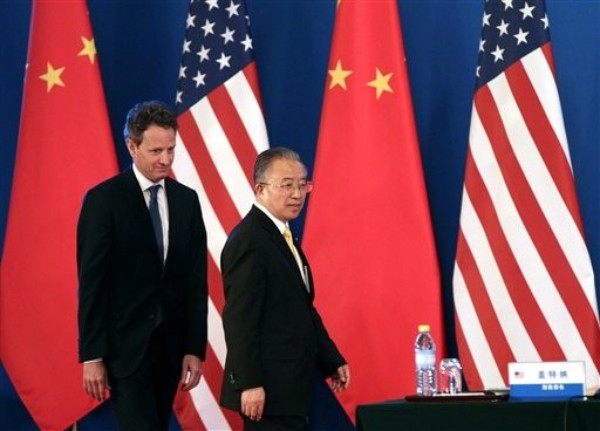
On the face of it President Obama’s rather unconvincing commitment this week to “finish the job” in Afghanistan, China’s rather brusque rejection of American attempts to finesse the human rights of one Chinese activist and Hilary Clinton’s rather stuttering ‘big issues’ visit to Beijing are only tangentially connected.
In fact the US needs Chinese support to get out of Afghanistan if it is to retain even a modicum of strategic honour. However, the price Beijing will exact from Washington for helping engineer a modicum of stability in Afghanistan’s post-American space will be high. In spite of the sacrifice of Western soldiers and the huge amounts of Western taxpayer’s money that has been poured into Afghanistan this past decade it is China that will extract Afghanistan’s high-value natural resources. Beijing will also expect less criticism of its human rights and Chinese mercantilism. However, the real prize for Beijing will be geopolitical; it is China that post-2014 could well define stability in Asia if the US is seen to give too much ground.
Tellingly, Hillary Clinton’s visit to Beijing was not the big news this week; that looked too much like a hard-pressed American administration seeking Chinese favors in election year. The big news was the treatment of Chen Guangcheng – by both Beijing and Washington. America remains the natural beacon for those Chinese discontent with the ‘we will make China powerful but do not question how’ deal the post-Tiananmen Communist Party has long offered its people.
Afghanistan? For all this week’s talk of strategic partnership one year on from the killing of Osama bin Laden Afghanistan is old news in American politics. President Obama promised to get America out of two contentious wars in Afghanistan and Iraq prior to November’s presidential election. His two exit strategy is on track, if not on time.
So, for all this week's rhetoric America is beating a strategic retreat. If that political retreat leads to a new global balance of power that is not ‘made in America’ Asia and much of the world beyond will come to reflect Chinese interests rather than American values. The rest of us will be forced in time to occupy the sodden, swampy quicksand in between. Such a world would take on the appearance of nineteenth century Europe – a cold, hard place in which change is driven by the narrow interests of narrow, cynical elites. Absent American strategic leadership India will be forced to treat with China as the dominant regional power; Japan will be forced to look to itself for security and what price Taiwan?
The Washington-Beijing axis will be the defining power relationship of this age. However, Washington must be careful not to sell its soul in pursuit of such a relationship. Beijing must be held to account and prove it is prepared to work for such a relationship. How China treats its citizens should be as important to Washington as the fashioning of power balances. Indeed, the critical balance in American strategy is the one between values and interests that has defined American leadership and must continue to do so. Therefore, Washington must look up from the Afghan trench into which it has fallen, overcome its palpable strategic exhaustion and begin a bipartisan effort to consider America’s new leadership challenge in the post Osama bin Laden world.
As a Briton I can on occasions find the Americans irritating. Much of that I put down to my jealousy as I watch my once proud country decline into irrelevance. However, the plain truth is that a just world needs a posturing, irritating, big-mouthed, big ideas America. If America becomes just like the rest of us then the world will be far the worst for it. If a Beijing-placating US henceforth merely mouths human rights platitudes the battle for ideas will be over before it has begun and Americans will have vacated their ‘shining city on the hill’ to join the rest of us on the muddy plains of power and weakness.
At the very least a second term Obama administration will need to offer Americans and the world more than a ‘we got you out of two bad wars’ strategy. A Romney administration will need a bigger idea than deficit-reduction or the strategic pretense of neo-isolationism.
It was of course Churchill who made that famous quip about one being able to rely upon the Americans making the right decision, but only after every other option had been exhausted. I am beginning to wonder.
Is America losing its strategic mojo? If it is twenty-first grand strategy will be made in China.
Julian Lindley-French is Eisenhower Professor of Defence Strategy at the Netherlands Defence Academy, Fellow of Respublica in London, Associate Fellow of the Austrian Institute for European and Security Studies and a member of the Strategic Advisory Group of the Atlantic Council. He is also a member of the Academic Advisory Board of the NATO Defence College in Rome. This essay first appeared on his personal blog, Lindley-French's Blog Blast. Photo credit: Getty Images.
#block-block-26 { display: none !important; } .field-type-relevant-content { width:450px; height:100px; padding:10px; background-color:#fff; border-top:3px solid #0A138F; position:fixed; bottom:0px; right:-480px; -moz-box-shadow:-2px 0px 5px #aaa; -webkit-box-shadow:-2px 0px 5px #aaa; box-shadow:-2px 0px 5px #aaa; } .field-type-relevant-content .field-label, a.more{ font-size:11px; text-transform:uppercase; font-family: Arial,Helvetica,sans-serif; letter-spacing:1px; color:#555; } a.more{ cursor:pointer; color:#E28409; } a.more:hover{ text-decoration:underline; } .field-type-relevant-content .field-items .field-item a { color:#0A138F; font-size:18px; margin:10px 20px 10px 0px; }
New Atlanticist NavigationAbout
Policies
Contact
Archive
Most Popular New Atlanticist Posts Made in China: Is America Losing its Grand Strategic Mojo? Chen Guangcheng Deal Struck, No Thanks to Chen Guangcheng Iran and al Qaeda: More Enemies Than Allies The Strategic Influence Game 5: A German Europe or a European Germany? What Went Wrong; What Might Go Right? Recommended Blogs A Fistful of EurosAbu Aardvark (Marc Lynch)AfPak ChannelAlex Massie (Spectator UK)Atlantic CommunityBelgravia Dispatch (Gregory Djerejian)Bernard FinelBlogactiv EUDanger RoomDaniel W. DreznerDefense TechEU ReferendumEurope Insight (Business Week)European Union (Foreign Policy Assn)Foreign Policy PassportForeign Policy WatchGlobal Guerrillas (John Robb)Gunpowder and LeadJulian Lindley-French's Blog BlastKings of WarNATOSourcePublic Diplomacy Blog (USC)Race for Iran (CAP)RealClearWorld BlogRealClimateRobert AmsterdamSmall Wars JournalThe GlobalistThe Washington Note (Steve Clemons)Thomas P.M. BarnettUN DispatchWhat After Iraq (Don Snow)World Politics Review Blog International NewsBBC (Europe)Christian Science Monitor (World)CNN (World)Deutsche Welle (English)Economist (Europe)Economist (International)EurActivEuropean Affairs (European Institute)Financial Times (Europe)Hurriyet (Turkey)International Herald TribuneIrish TimesLondon Times (World)Los Angeles Times (World)Manchester Guardian (World)New York Times (International)Newsweek (International)NRC HandelsbladRadio Free Europe/Radio LibertyRealClearWorldReuters (International)Spiegel (English)Time (World)Today's Zaman (Turkey)Turkish Policy QuarterlyWall Street Journal (Europe)Washington Post (World)Watching AmericaWorld Politics ReviewYahoo News - EuropeThink TanksAmerican Enterprise InstituteAmerican Foreign Policy CouncilAspen InstituteBrookings InstitutionCarnegie EndowmentCato InstituteCenter for a New American SecurityCenter for Transatlantic Relations (SAIS)Council on Foreign RelationsCSISEuropean InstituteForeign Policy Research InstituteGerman Marshall FundHeritage FoundationHudson InstituteNew America FoundationNixon CenterRand CorporationU.S. Institute of PeaceWilson Center Global Leadership Circle $('#s1').cycle({fx:'scrollHorz',timeout: 3000,pause: 1}); Related Tags International Security Russia Afghanistan NATO Barack Obama South Asia EU Pakistan Transatlantic Relations Iran Global Business & Economics Ukraine Germany SAG Eurozone Taliban Patriciu Eurasia Center UK Libya China Georgia Financial Crisis France Al Qaeda Terrorism Atlantic Update Israel India Turkey Asia Middle East Iraq Egypt Interview Podcast Greece Osama Bin Laden Eurasia Energy Hillary Clinton Missile Defense Ansari Africa Center Strategic Concept G20 Cyber Security Energy Security Nuclear Proliferation Obama Administration UN Nicolas Sarkozy Dmitri Medvedev Viktor Yanukovych Vladimir Putin United States Energy & Environment Angela Merkel NATO Forum Iran Task Force Nuclear Weapons Syria Azerbaijan ATLANTIC COUNCIL New Atlanticist NATOSource Council Events Council News Get Involved Publications Privacy Policy ABOUT Mission History Partners Sponsors Employment GET INVOLVED Corporate Program Individuals Faculty LEADERSHIP Chuck Hagel Frederick Kempe Board of Directors PROGRAMS Transatlantic Relations International Security Global Business Patriciu Eurasia Center Asia South Asia Center Energy & Environment Ansari Africa Center Young Atlanticist Hariri Middle East CenterAtlantic Council, 1101 15th Street, NW, 11th Floor Washington, D.C. 20005, U.S.A. - Telephone: (202) 463-7226 - Facsimile: (202) 463-7241
$(document).ready(function() { $('.view-content-top-issues-no-programs a:even').addClass('stripeit'); }); //replaces vote button ///document.getElementById('edit-vote').type = "image"; //document.getElementById('edit-vote').src = "/misc/vote.gif"; var gaJsHost = (("https:" == document.location.protocol) ? "https://ssl." : "http://www.");document.write(unescape("%3Cscript src='" + gaJsHost + "google-analytics.com/ga.js' type='text/javascript'%3E%3C/script%3E")); try{var pageTracker = _gat._getTracker("UA-15229014-1");pageTracker._trackPageview();} catch(err) {} var gaJsHost = (("https:" == document.location.protocol) ? "https://ssl." : "http://www."); document.write(unescape("%3Cscript src='" + gaJsHost + "google-analytics.com/ga.js' type='text/javascript'%3E%3C/script%3E")); try { var pageTracker = _gat._getTracker("UA-15229014-1"); pageTracker._trackPageview(); } catch(err) {} _qoptions={ qacct:"p-efnSB_qB8i47s" };About
Policies
Contact
Archive
Other Corporate Members
Atlantic Council, 1101 15th Street, NW, 11th Floor Washington, D.C. 20005, U.S.A. - Telephone: (202) 463-7226 - Facsimile: (202) 463-7241
Read Full Article »