


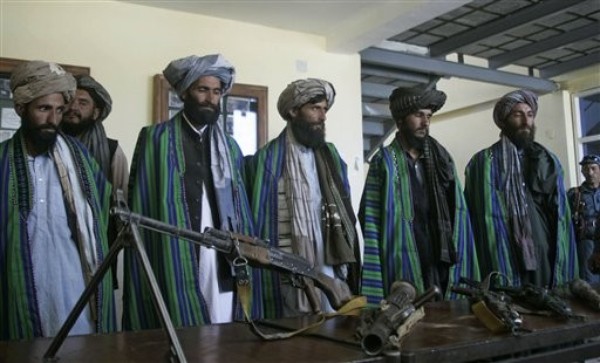
One historic weakness of U.S. foreign policy has been the excessive confidence of policy makers who believe they can foresee the future. As a result, they lock themselves into policies and fail to adjust in time, even when their underlying assumptions prove unfounded. This has been the case repeatedly over the past thirty years in Afghanistan. President Obama’s call for a reduction of the future force structure of Afghan National Security Forces (ANSF) poses the risk of repeating this tragic cycle.
During the 1980s, U.S. policy makers assumed that the Soviets would ultimately prevail and the Afghan resistance could only impose costs on Soviet occupation forces. It might have been a reasonable belief, but it proved wrong. And it was a costly mistake. On the assumption the Soviets were there to stay, the United States paid too little attention to the political orientation of insurgent groups fighting the Soviets. Too much support went to fundamentalist groups, too little to moderates and nationalists not hostile to the West. The United States did not take into account the implications of empowering fundamentalists in post-Soviet Afghanistan because it assumed there would not be a post-Soviet Afghanistan. Washington is still paying for this mistake.
During the 1990s, the United States assumed the negative externalities from the post-Soviet chaos in Afghanistan, such as terrorism and drug trafficking, were not critical threats to American interests. In disengaging after the Soviet withdrawal, U.S. policy makers subcontracted Afghan policy to Pakistan and calculated that regional powers would handle the costs of Afghan instability. The September 11 attacks proved otherwise.
Read Full Article »
