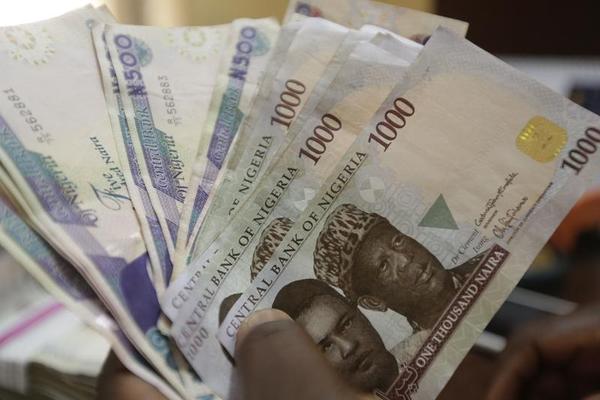
Last year, the Central Bank of Nigeria issued a new hundred-naira note to commemorate the union, in 1914, of the predominantly Muslim North and the predominantly Christian South. The redesigned bill includes a digital code that smartphone users can scan to see a timeline of currency used in the region, set against images of cowrie shells, which were used as currency in Nigeria before 1700, and manilla, a horseshoe-shaped metal bracelet that was historically adopted by Europeans to acquire slaves. These features of the new design were overshadowed, though, by an adjustment to the way the denomination was presented. On past banknotes, the words “Naira dari,” Hausa for “one hundred naira,” had appeared in Arabic script. Now, the Hausa was printed, like the Yoruba and Igbo, in small Roman letters, to the right of the larger centered text in English, the country’s official language. The change proved controversial.



The Language of Nigerian Money
Read Full Article »
Comment
