


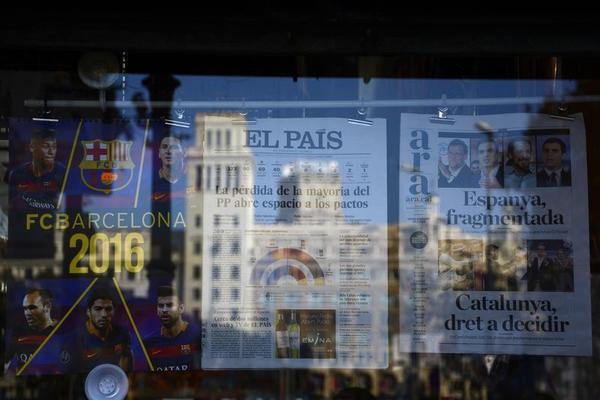
Following Spain’s inconclusive general election on Sunday, talks – potentially marathon-length – have begun to form a new government. Given the significant possibility that no deal will be reached, a second ballot may be necessary in 2016, raising political and economic uncertainty in what is the euro zone’s fourth-largest economy.
The ballot ended the long-running political duopoly of the People’s Party (PP) and the Spanish Socialist Workers’ Party (PSOE) that has dominated the country since the late 1970s. The ruling right-of-centre PP emerged again as the largest party, but it is more than 50 seats from a majority in the lower house of parliament, and there has been a potential electoral breakthrough for two “new parties” – the leftist, anti-austerity Podemos which finished a strong third with over 20 per cent of the vote, and the centrist Ciudadanos, which came fourth.
Read Full Article »