


realclearworld Newsletters: Mideast Memo

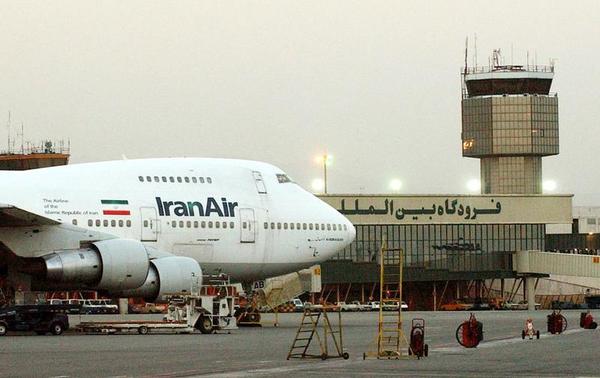
Iran played a prominent role in last week's international headlines. The International Atomic Energy Agency announced that the Islamic Republic had met the requirements of last year's nuclear agreement between Tehran and six world powers, and Tehran also released five American prisoners, among them Washington Post reporter Jason Rezaian. Nearly lost however below the headlines were reports that the Iranian government -- almost immediately after the lifting of economic sanctions against its government -- had begun talks with European aircraft manufacturer Airbus regarding the possible purchase of more than 100 new airplanes for its civil aviation fleet.
Beleaguered by decades of sanctions and mismanagement, Iran estimates that it may require hundreds of new planes to replenish its aging fleet. While Iran only in recent days won the ability to do business with manufacturers, Tehran has reportedly been in talks with Airbus and American aircraft maker Boeing for months now.
Once the jewel of the region, Iran's civil aviation industry has been plagued in more recent years by restrictions on the import of parts, relying mostly on old Russian and Western aircraft to meet domestic and international travel demands. Although many of the newly acquired aircraft will likely be used or refurbished, the purchase couldn't come soon enough for the country.
"Iran has an active civil aircraft fleet of about 225 aircraft, most of which are better than 20 years old," Simon Elsegood, senior analyst at the Sydney-based Centre for Aviation, told RealClearWorld. "The fleet is also very small given the size of Iran's travel market. There are around 100 aircraft in the country that are inactive or stored due to a lack of spare parts, thanks to the sanctions."
The addition of the second-hand planes, adds Elsegood, will markedly improve Iran's civil aviation fleet, even if the purchased aircraft are more than a decade old. Iran has incurred rigid restrictions on the types of aircraft it's allowed to fly and land inside EU borders due to its poor flight safety record, one of the worst in the world.
Iran naturally hopes to put all of that behind it now and bring its fleet back to its former prestige. Next week, airline officials from all over the world will meet in Tehran for what is being billed as the first aviation conference of its kind to be held in the city in nearly four decades, and according to the Centre for Aviation the first meeting of global business leaders to be held in the country post-sanctions.
Amid the industry leaders scheduled to be in Tehran next week will also be various officials from the administration of Iranian President Hassan Rouhani, primarily those charged with the handling of tourism and infrastructure. Post-sanctions Iran will likely lean heavily on the lure of tourism to its many historical sites and cities to help pump much-needed cash into the country's struggling economy. But for that, you need planes, runways, and reliable roads.
Rouhani, moreover, must deliver some tangible results to Iranian voters, especially with elections for Parliament and for the Assembly of Experts, an influential clerical body, rapidly approaching. Although the centrist president still enjoys strong approval across the country, Rouhani's base appears to be getting restless, and is underwhelmed by impending sanctions relief.
"Being able to fly on brand new western aircraft with a better safety record because of sanctions relief will make the people of Iran feel that they too have gained something from the recent nuclear agreement," said Mideast analyst Meir Javedanfar, author of the blog The Iran-Israel Observer. "This is important to Rouhani and [Minister of Foreign Affairs Mohammad Javad] Zarif, who advocated the nuclear deal."
The Airbus purchases aren't just for domestic consumption, however. Rouhani hopes to lure as much as $50 billion in foreign investment to the country over the next five years, and to do so will require the help of the largely untapped Iranian diaspora. With sizeable Iranian communities in cities such as Los Angeles, Toronto, and London, Tehran is counting on its upgraded fleet to accommodate its airlines and would-be investors. But will it work?
The model of Airbus jets being eyed by Tehran "can operate pretty much any route that Iran Air would want to, except for Tehran-Australia/New Zealand," writes industry analyst Vinay Bhaskara. "Los Angeles would be pushing it, but at 6,614 nautical miles, it is technically within the range of the A340-600, which has been used by South African Airways to operate Johannesburg-New York JFK nonstop in the past."
Equally worrisome for the Rouhani administration should be the layers of bureaucracy and red tape that await these potential investors once they arrive in Iran. The Iranian government, according to Reuters, has more than 180,000 business regulations on the books, and the enigmatic Islamic Revolutionary Guard Corps continues to play an outsized role in the country's economy.
"An investor may need to obtain several permits, intermediate approvals, consents, and authorizations -- out of 2,000 listed ones -- from different organizations to start business activity in the country," writes Al-Monitor's Alireza Ramezani. "This complicated bureaucracy consumes considerable time and energy."
Iran to Buy 114 Airbus Jets, May Seek Boeing Post-Sanctions -- Bloomberg
The Iranian Diaspora in America: 30 Years in the Making -- PBS
The Forgotten Story of Iran Air Flight 655 -- Washington Post
Feedback
Questions, comments, or complaints? Feel free to send us an email, or reach out on Twitter @kevinbsullivan.
And be sure to check for all of the latest news and analysis on the Middle East at RealClearWorld.com.
