




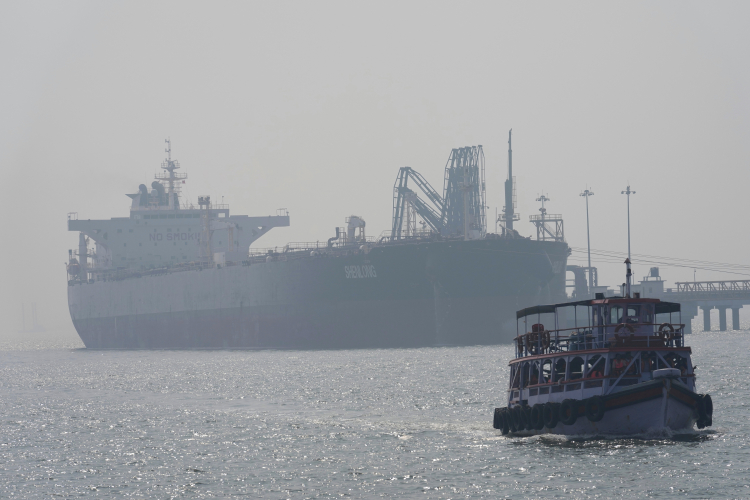
The global impact of the Iran War is clear. Closure of the Hormuz Strait and rising oil prices reveal the dependence of all nations on the free flow of shipping through the Strait. It will take many years for countries to recover from this energy crisis. President Trump vows to end the War and reopen the Strait, but the off-ramp from war is not clear.
Governing structures have been created to guarantee shipping in other straits that provide lessons for creating a new governing structure for the Hormuz Strait. Perhaps the best model for such a governing structure is that created to guarantee passage of ships through the Strait of Malacca. Several states that border the Strait of Malacca, Malasia, Indonesia, and Singapore created a regional security framework to guarantee shipping. That security framework provides coordinated patrols, information sharing, and respect for the sovereignty of regional partners. Cooperation between the countries contiguous to the Strait is not surprising, they have good trading relations and jointly benefit from a governing structure guaranteeing safe passage for shipping. This governing structure is also supported by many nations dependent upon shipping through the Strait, most notably China, Japan, and South Korea.
Asian countries have also benefitted from a broader cooperative agreement, the Regional Agreement on Combating Piracy and Armed Robbery Against Ships in Asia (RECAAP). This agreement was formalized in 2004 and grew from 14 Asian countries to 21 nations, including the U.S. The Information Sharing Center created by the Governing Council shares information on emerging nautical threats to ensure safe passage for shipping. RECAAP has been effective in promoting cooperation of member states against piracy and robbery of ships throughout Asia.
A similar governing structure could be created for the Hormuz Strait to provide an offramp from the Iran War. The first task of a new cooperative agreement should be a Hormuz Navigation Treaty guaranteeing safe passage for shipping through the Strait. The Gulf states have the most at stake in reopening the Strait and preventing attacks. The Gulf states should create an independent governing structure to control shipping through the Strait.
The governing agency could create an information sharing center like that created by RECAPP to share information and coordinate efforts to combat piracy and attacks on shipping. The 31 nations participating in RECAPP would have an incentive to support a new agency to govern shipping through Hormuz as well. With the support of the U.S., NATO, and other allies the new governing agency could work to guarantee shipping from attacks by Iran or any quarter. Such an off-ramp is the best path to peace in the Middle East.
However, in the current environment the prospects for creating such a governing structure for the Hormuz Strait are not good, and some would say they are nil. A major barrier is the decision of the U.S. and Israel to go to war without the support of NATO nations and other allies. The U.S. and Israel are now attempting to negotiate a ceasefire, and an off-ramp from the War with Iran. While NATO countries and other allies support these peace efforts, the trust between the U.S., Israel, and our allies has been broken by the unilateral decision to go to war without their support.
For most of the post-World War Two period the U.S. played a leadership role in creating multilateral organizations, most importantly NATO. But the Trump Administration has been critical of many of these multilateral institutions and in some cases has withdrawn our support. This week the President signed an executive order suspending U.S. support from 66 of these organizations, signaling our retreat from organizations the Administration sees as of questionable value. In January of this year the Trump Administration withdrew from RECAAP. This is a signal that the Administration may not be receptive to an agreement creating a new governing structure for the Hormuz Strait that requires cooperation with NATO and our allies.
A Termination of the Iran war should include an International Agreement to ensure that Hormuz stays open. This would be a great contribution to world trade and would include the U.S. working with NATO and other regional allies. The U.S. could again pursue a new “Eisenhower Doctrine” in the Middle East. This would include a security guarantee for the strait in partnership with the United States, NATO and relevant nations in the region including Saudi Arabia. Oman, UAE, Bahrain, and Iran.
Barry W. Poulson is professor emeritus at the University of Colorado, Boulder Colorado, and on the Board of the Prosperity for US Foundation
William Owens is a former vice chairman of the Joint Chiefs of Staff. He is on the Board of the Prosperity for US Foundation
