Main

May 14, 2012

Orthodoxy

David Sanger had a piece over the weekend wherein many of Governor Romney's foreign policy advisers griped about being ignored by their candidate:

But what has struck both his advisers and outside Republicans is that in his effort to secure the nomination, Mr. Romney’s public comments have usually rejected mainstream Republican orthodoxy. They sound more like the talking points of the neoconservatives — the “Bolton faction,” as insiders call the group led by John Bolton, the former ambassador to the United Nations.

I hate to break it to Sanger but the "talking points of the neoconservatives" are the Republican orthodoxy. Consider Sanger's example of what constitutes as a more "nuanced" critique of the Obama administration:

So far Mr. Romney’s most nuanced line of attack was laid out in the introduction to a campaign white paper last fall written by Eliot Cohen, a historian and security expert who worked for Condoleezza Rice in the State Department, that the “high council of the Obama administration” views the “United States as a power in decline,” a “condition that can and should be managed for the global good rather than reversed.” It also alleged a “torrent of criticism, unprecedented for an American president, that Barack Obama has directed at his own country.”

The first quote is completely unsubstantiated in the white paper and is also false. But it is a staple of ... neoconservative criticism of the Obama administration.

The second critique is silly - Obama hurt America's feelings! But guess what - it's another neocon talking point.

(To be fair, the entire white paper is better than these quotes would indicate.)

And regardless of what talking points he prefers, it's really pointless to go searching for a Romney doctrine at this point. I suspect Romney leans toward the "Bolton faction" because it produces the best soundbites and the most scathing attacks against President Obama. Whether a President Romney would govern according to the councils of the "Bolton faction" would really depend on factors no one can accurately anticipate today.

May 8, 2012

No U.S. President Can Be a Dove

Via Andrew Sullivan, Conor Friedersdorf laments some mislabeling:

In summary, President Obama escalated a major war and sent tens of thousands more troops to fight it, even as he joined in regime change in a different country, ordered drone strikes in at least three others, and sent commandos into Pakistan, a list of aggressive actions that isn't even exhaustive.

It's perverse for that record to be rendered, in America's newspaper of record, as Obama "straddling the precarious line between hawk and dove." In fact, he is a hawk. Republicans are misrepresenting his record and positions and some progressives are doing the same, because they are rightly embarrassed by the gulf between his campaign promises and the record he's amassed.

I think what Friedersdorf has identified is the bankruptcy of the hawk/dove label. In reality, no post-Cold War U.S. president could accurately be called a "dove." Every Democratic president since Roosevelt has either initiated large wars, escalated those wars, ramped up military spending or used military force in some capacity. Any contemporary president inherits a foreign policy apparatus that is weighted heavily toward the military (with its global footprint and immense budget) and a bureaucracy that perceives itself as stewards of the global order. Throw in the war on terror, with its open-ended mandate for interventionism, and it's silly on its face to call any president a "dove."

What's always interested me is why Republicans have chosen to ignore the tradition of Eisenhower and Nixon (presidents who stepped in to end the failed or stalemated wars initiated by their Democratic predecessors) and instead run as the amplified id of America's quasi-imperial foreign policy. Rather than step back and question some basic premises of America's global footprint or set of "interests" in need of a global nanny state funded by U.S. taxpayers, most Republicans run on a platform of global activism and big government.

May 3, 2012

Obama Has Started New Wars

If anything, the beginning of the end in Afghanistan will help Obama build his “leadership” case against Mitt Romney. With the killing of bin Laden, the intervention in Libya, and the gradual end of the wars in Iraq and Afghanistan, Obama has the resume he needs to present himself as a strong and competent manager of the country’s foreign affairs, which in turn, might improve perceptions of his economic management. What’s more, this provides a clear contrast with Romney, who at varying times in the last three years, has opposed each of these moves. At the end of the day, Obama will be able to pose a simple question to the American public—“Do you want a president who has brought peace, security, and good relations with our allies, or do you want a president who has called for extending our wars, and starting new ones?" [Emphasis mine - GS.] - James Bouie

Right. So President Obama will hail the success of the new war he started in Libya while castigating Romney for wanting to start a new war. I suspect we'll see this kind of cognitive dissonance emerge frequently during the campaign.

April 30, 2012

America's Political Campaign Won't Scare China

Jacob Stokes comments on China's role in the U.S. presidential race:

Ultimately, the 2012 U.S. presidential election will have a long-term effect on Sino-American relations to the degree that it increases or decreases strategic mistrust between the two countries. The Chinese leadership understands that the rough and tumble of U.S. politics is often more smoke than fire—that most heated rhetoric gets moderated when it runs up against the demands of real-world policy making.

But a political discussion that frames the relationship between the two countries as an exclusively zero-sum competition, one that mirrors the ideological and strategic dimensions of the Cold War--instead of a process of managing differences and identifying common interests--risks creating an atmosphere of strategic distrust that will do long-lasting damage in relations with China. While it’s essential for the U.S. leaders to stand firmly in support of American interests and values, candidates should be wary of letting political point-scoring damage the world’s most important bilateral relationship.

I think the atmosphere of strategic mistrust predates the presidential campaign and that, as Stokes notes, the Chinese almost certainly discount everything they hear from the candidates until election season is over. That's probably a good strategy for the rest of us, too.

April 26, 2012

So Is Obama Really Bluffing on Iran?

In a speech defending Obama's foreign policy, Vice President Biden is apparently going to invoke the prospect of another war as a knock on Romney:

Electing Romney could again "waste hundreds of billions of dollars and risk thousands of American lives on an unnecessary war," Biden said in a clear reference to the unpopular Iraq war that Obama ended.

This would certainly be a useful contrast to draw, but how well positioned in the Obama administration to make it? I'm assuming here that this "unnecessary war" is against Iran. But here's Biden's boss a few weeks ago:

I think that the Israeli government recognizes that, as president of the United States, I don't bluff. I also don't, as a matter of sound policy, go around advertising exactly what our intentions are. But I think both the Iranian and the Israeli governments recognize that when the United States says it is unacceptable for Iran to have a nuclear weapon, we mean what we say...

I think it's fair to say that the last three years, I've shown myself pretty clearly willing, when I believe it is in the core national interest of the United States, to direct military actions, even when they entail enormous risks. And obviously, the bin Laden operation is the most dramatic, but al-Qaeda was on its [knees] well before we took out bin Laden because of our activities and my direction.

Now we have Biden running around warning that to elect Romney is to court a war with Iran. Does that mean that President Obama was bluffing and that he actually has no intention of using military force against Iran's nuclear program? Or maybe Obama was being honest and it's Biden who's playing fast-and-loose in an effort to court a war-weary public? Or maybe President Obama has an unbelievably optimistic view of what his diplomacy can achieve? Either way, Biden's line of attack raises some uncomfortable questions.

Did Marco Rubio Give a Serious Foreign Policy Speech?

I listened to Marco Rubio's speech yesterday and while I thought it was an effective recitation of the neoconservative worldview, I didn't think there was much else to it. Then I see Time's Michael Crowley describe it as "learned and substantive" and it got me thinking if we actually listened to the same speech. It's not a matter of ideological disagreements or even a matter of policy disagreements but the fact that in key areas the speech lacked substance. Take Syria, which I think provides the best example.

Here's Rubio:

The goal of preventing a dominant Iran is so important that every regional policy we adopt should be crafted with that overriding goal in mind. The current situation in Syria is an example of such an approach. The fall of Assad would be a significant blow to Iran’s ambitions. On those grounds alone, we should be seeking to help the people of Syria bring him down.

But on the Foreign Relations committee, I have noticed that some members are so concerned about the challenges of a post-Assad Syria that they have lost sight of the advantages of it.

First, Iran would lose its ally and see its influence and ability to cause trouble in the region correspondingly reduced. But Hezbollah would lose its most important ally too, along with its weapons supplier. And the prospects for a more stable, peaceful and freer Lebanon would improve.

Second, the security of our ally, the strongest and most enduring democracy in the region, Israel, with whom we are bound by the strongest ties of mutual interest and shared values and affection would improve as well. And so would the prospects for peace between Israel and its Arab neighbors improve.

Finally, the nations in the region see Syria as a test of our continued willingness to lead in the Middle East. If we prove unwilling to provide leadership, they will conclude that we are no longer a reliable security partner, and will decide to take matters into their own hands. And that means a regional arms race, the constant threat of armed conflict, and crippling fuel prices here at home due to instability. The most powerful and influential nation in the world cannot ask smaller, more vulnerable nations to take risks while we stand on the sidelines. We have to lead because the rewards for effective leadership are so great.

Forming and leading a coalition with Turkey and the Arab League nations to assist the opposition, by creating a safe haven and equipping the opposition with food, medicine, communications tools and potentially weapons, will not only weaken Iran, it will ultimately increase our ability to influence the political environment of a post-Assad Syria.

Crowley thinks this is a "reasoned argument" but it's literally the opposite. There are simply no reasons given for why anyone should believe that any of the positive outcomes Rubio lists would actually occur if the U.S. followed his advice. Rubio treats as self-evident assertions that actually need to be supported with evidence and argument. For instance: what about the balance of forces inside Syria gives him hope that a post-Assad regime would be friendly to U.S. and Israeli interests? Why does he believe the opposition would listen to the U.S. following Assad's overthrow - or that it would be even possible to stand up a government rather than have the country collapse into a civil war? Why, in short, does Rubio believe what he believes about U.S. involvement in Syria's uprising?

There is literally no "reason" given for us to believe that any of the beneficial outcomes listed by Rubio would actually occur. Doesn't the U.S. deserve more?

April 25, 2012

The Future's Uncertain and the End Is Always Near

The pivot, we tell the Chinese, is not about them. But then Manila and Tokyo ask: "What do you mean the pivot isn't about China. The Chinese are unwelcome visitors into our waters at least once a week!"

Oh, and we have new battle plan called "Air Sea Battle" that again is not about China. However, it is meant to operate in "anti-access" environments -- those in which enemies have many missiles, submarines, and cyber warfare capabilities. Sounds like China. We will be able to operate again in those environments once the plan is executed, but we will not execute it because we are cutting the defense budget, so China should worry a bit but not too much. Our allies should have just a little dose of reassurance to go along with their fears. - Dan Blumenthal

I wonder if "uncertainty" is actually the problem. What Blumenthal highlights is not really "uncertainty" but the administration's mealy-mouthedness (my word) with respect to what's it's doing in Asia. As Blumenthall notes, it's putting in place a semi-militarized containment strategy with the pivot, but is also taking great pains not to call it that lest it damage relations with China, which are rather important.

So what's the problem with this? There is nothing "uncertain" about establishing military bases in Australia and holding naval exercises with countries at China's perimeter. Does Blumenthal think U.S. allies in Asia would be more reassured if the administration actually took a sharper tone with China or explicitly framed its "pivot" in terms of Chinese containment?

He also writes:

Here is another part of the uncertainty doctrine that must leave Europeans and Middle Easterners scratching their heads: The United States is pivoting to Asia (under fiscal constraint) but not abandoning its allies in Europe or the Middle East.

I agree this is silly. If we're prioritizing Asia then it means we must correspondingly de-emphasize other regions. So imagine if President Obama said: "the U.S. is under fiscal strain and has to prioritize resources accordingly. That means we must shift our attention from a Europe that is peaceful and secure to Asia, where our interests will require more attentive monitoring."

Would Blumenthal hail this as providing clarity or would he condemn Obama for betraying U.S. leadership? The president's current rhetoric is designed to shield him from just such an accusation because Washington is unable to have an adult conversation about this stuff.

April 23, 2012

Yoo on Syria

As Iran closes in on its nuclear prize and props up Assad’s bloody regime in Syria, the United States has the opportunity to deal a crippling blow to its oldest, most dangerous enemy in the region. U.S. military strikes could topple Tehran’s close allies in Damascus and destroy the mullahs’ nuclear infrastructure, potentially ushering in more democratic regimes that would be at peace with their neighbors. - John Yoo

Seems like "potentially" is doing an awful lot of work in that formulation.

Rosy scenarios aside, the bulk of Yoo's piece is devoted to arguing that Mitt Romney can helpfully draw a contrast between an administration that defers military action to UN authorization or one that unilaterally starts a war with both Syria and Iran. I think it both overstates the extent to which Romney would start a war with Syria and understates the possibility that the Obama administration would take military force against Iran, should push come to shove. As a bit of political salesmanship though, "vote for me and I'll start not one, but two more wars in the Mideast" sounds like a tough sell.

March 28, 2012

Who Is America's #1 Geopolitical Foe?

We know Mitt Romney thinks it's Russia and now the White House is on record giving al-Qaeda the dubious honor, but neither of these answers seems all that satisfying. Romney's answer, redolent of the Cold War, at least has the benefit of anointing a bona-fide geopolitical heavyweight. The White House's response has the benefit of identifying a group that is actually implacably hostile to the U.S., even if its power is negligible.

So who should get the top spot? China, like Russia, has geopolitical clout but isn't hostile to the U.S. across the board in the manner of an al-Qaeda. Beyond China, countries like Iran or North Korea (or even Pakistan) could earn a nod for their hostility to U.S. regional aims, but again, not for their power or geopolitical weight.

Even conducting this thought experiment usefully illustrates the fact that the U.S. is actually in a pretty nice geopolitical position in 2012: it has very few implacable enemies and none that are very powerful. There are very powerful states that, on certain issues, play a spoiler role, but the era of straight-up great power antagonism is gone. As James Joyner pointed out, the entire notion of the U.S. having a "number one geopolitical foe" is an "outmoded concept."

At least for now.

March 27, 2012

Campaigning on Obama's Foreign Policy

For months, Democrats have claimed that Obama isn’t vulnerable on national security. But that’s nonsense. The “peace process” is in shambles; Russia is more repressive at home and aggressive internationally; Iran is moving toward a nuclear weapons capability; China’s human rights atrocities have multiplied; and Obama is presiding over a dangerous and severe cut in defense spending. A confident and knowledgeable opponent can makes these and other policy decisions into significant liabilities for the president. - Jennifer Rubin

There's plenty to criticize in the Obama administration's handling of foreign policy, but I think Rubin's post is illustrative of just why Republicans are going to have a problem. This isn't a coherent critique but a grab-bag of stuff that sounds bad but falls apart upon closer scrutiny.

How much can the internal human rights conditions of China and Russia really be blamed on President Obama? None. That's not something a U.S. president can control. How outraged will the public be about defense spending being pared back? According to recent polls, it probably won't be a galvanizing issue. Obama will definitely be criticized for his handling of Iran's nuclear program and for insufficiently backing Iranian protesters in 2009, but the substantive position of any Republican nominee is going to be almost identical to Obama's current policy - ratchet up economic pressure on Tehran and if all else fails, go to war.

I do think Rubin's approach - gather a list of bad things both relevant and not and toss them against the wall - will be the one favored by the Republican nominee. But it won't reflect "confidence and knowledge" in foreign affairs. (Moreover, barring some unforeseen catastrophe, it's hard to imagine that foreign policy will even weigh that heavily on the upcoming election.)

Update: Romney's foreign policy advisers have published an open letter to President Obama fleshing out their foreign policy critique. Interestingly, they're going after the president not just on Iran and missile defense but on Iraq and Afghanistan as well:

Contrary to the recommendations of your military commanders, you withdrew American forces from Iraq without leaving an appropriate training force behind. And contrary to the recommendations of your military commanders, you have begun to draw down American forces in Afghanistan according to a politically driven timetable that makes no strategic sense. Stability in both countries is now at greater risk. If you are reelected, would “flexibility” lead you to abandon completely American commitments, notwithstanding the enormous sacrifices American forces have made, and with little regard for our national security?

February 16, 2012

Romney on China

A nation that represses its own people cannot ultimately be a trusted partner in an international system based on economic and political freedom. While it is obvious that any lasting democratic reform in China cannot be imposed from the outside, it is equally obvious that the Chinese people currently do not yet enjoy the requisite civil and political rights to turn internal dissent into effective reform.

I will never flinch from ensuring that our country is secure. And security in the Pacific means a world in which our economic and military power is second to none. It also means a world in which American values—the values of liberty and opportunity—continue to prevail over those of oppression and authoritarianism. - Mitt Romney

So American values can't be imposed on China, but we mustn't let that realization get in the way of brow beating them about all their internal failings anyway and surrounding them with U.S. military power.

And then President Romney will ask the Chinese - pretty please - to borrow their money.

January 24, 2012

Grading Obama's Foreign Policy

Foreign Policy conducted an interesting symposium, asking a number of analysts to grade President Obama's foreign policy. They didn't invite me, but that doesn't mean we can't play along. Here's a quick, incomplete list of what I think the president got right, wrong and what judgments are better left to history:

Successes:

1. Shifting America's strategic focus to Asia

2. Coordinating a global response to the Great Recession

3. Killing bin Laden and the upper echelon of al-Qaeda's leadership

Failures:

1. Arab-Israeli peace making

2. Prolonging a large-scale deployment of U.S. troops in Afghanistan

3. The intervention in Libya's civil war

To be determined:

1. The Russian "reset"

2. Containing Iran

3. The Arab Spring

4. Paring back U.S. defense spending

5. Expanding the drone war beyond Pakistan

January 5, 2012

Ron Paul and the Battle of Ideas

Andrew Sullivan offers his thoughts on the Ron Paul/interventionism debate:

If the left says "we will take care of you by entitlements" at home; the right says "we will take care of you by constant warfare" abroad. Paul - in stark contrast to both - is saying a famous "why?" to Robert Kennedy's "why not?" And part of his appeal is its complete inversion of our politics, left and right. I have no idea whether this will backfire or not. Most good ideas do, at first. But he has expanded the range of ideas in our national debate more radically than anyone since Reagan. And since I believe ideas have consequences, and that wider debates are likely to lead to better collective judgments, good for him.

I wrote as much for RCP in 2007 and I do remain convinced that - eventually - the U.S. will adopt a more non-interventionist posture and, yes, Paul more than any other candidate has helped to popularize the idea. I guess my reservations boil down to the quality of the advocate, not the advocacy itself.

January 4, 2012

Baby and Bathwater

Daniel Larison argues that Ron Paul has done well by non-interventionism:

As it happens, it’s true that “non-interventionism has no other significant voices except Ron Paul” in the current presidential election, and probably the only other nationally-known Republican figure who would be able to match him is his son. The amusing conceit in all of this is that Paul has been or will be bad for non-interventionism. Far fewer people paid any attention to these ideas just five years ago. Non-interventionism has gone from being a more or less marginal position to one that is starting to receive a lot more attention and at least a little serious consideration. It’s impossible to ignore that this wouldn’t have happened had it not been for Paul’s last two presidential campaigns.

A fair point, but is all this exposure really beneficial? To the extent that people are paying attention to non-interventionism, most of what I read is politely dismissive (it's "isolationism") or it's obnoxious. You could argue that any exposure to non-interventionism is good exposure, but you can also see how negative associations can take root (i.e. - Ron Paul believes some nutty things. Ron Paul believes in non-interventionism. Non-interventionism is nutty.).

Ultimately though, the real center of gravity of this discussion isn't on whether the public is aware or not aware of non-interventionism. What matters is whether the elite consensus that guides U.S. policy becomes more receptive to the idea. To the extent that Paul is exposing people to the idea (especially young people) and these people eventually enter into the machinery of U.S. foreign policy slightly more skeptical of international crusades, so much the better. But he may also be reinforcing in the minds of up-and-coming policymakers that only fringe candidates support the idea and for the sake of their political careers they'd better steer clear.

Update: Larison offers some more thoughts:

I would say that just about any exposure is good exposure. There is always the danger that non-interventionists can be portrayed in a unflattering light, but to a large extent negative associations are already there, and they aren’t going to be eliminated by waiting for a different messenger to show up. It’s true that much of the coverage of Paul’s views is “politely dismissive,” and there is naturally hostility from Iraq war dead-enders and other hawks, but there are also some more respectful and positive responses that one probably wouldn’t have seen five years ago. The fact that any major newspaper articles describe Paul’s views as non-interventionist nowadays rather than using the misleading and pejorative epithet of isolationist is a mark of progress all by itself.

Ron Paul Hurts Non-Interventionism

I wouldn't put it as strongly as Kevin Drum does, but I think this post points to some real questions about whether Ron Paul is tarnishing the idea of non-interventionism:

He's not the first or only person opposed to pre-emptive wars, after all, and his occasional denouncements of interventionism are hardly making this a hot topic of conversation among the masses. In fact, to the extent that his foreign policy views aren't simply being ignored, I'd guess that the only thing he's accomplishing is to make non-interventionism even more of a fringe view in American politics than it already is. Crackpots don't make good messengers.

Now, if you literally think that Ron Paul's views on drugs and national security are so important that they outweigh all of this — multiple decades of unmitigated crackpottery, cynical fear-mongering, and attitudes toward social welfare so retrograde they make Rick Perry look progressive — and if you've somehow convinced yourself that non-interventionism has no other significant voices except Ron Paul — well, if that's the case, then maybe you should be happy to count Paul as an ally.

But here's the thing, if you support a non-interventionist foreign policy (or more precisely, a less interventionist one) what do you do? As Andrew Sullivan notes, there is literally no other candidate in either party that represents your views.

December 16, 2011

Ron Paul's Foreign Policy Is More Popular Than You Think

ron%20paul.jpg

Via Larison, Conor Friedersdorf takes issue with a National Review editorial that insinuates that GOP candidate Ron Paul is a 9/11 Truther:

Conservatives in general and National Review in particular are perfectly within their rights to find Paul's views about blow-back, non-interventionism, and the undue bellicosity of the establishment wrongheaded, and to argue against his libertarian take on foreign policy. In the editorial above, however, Paul's actual views are egregiously obscured, and the editors seem to reach the transparently absurd conclusion that the popularity his foreign policy message has found is grounded in a conspiracy theory about 9/11 rather than understandable disgust at the actual foreign policy decisions made in response to it.

The evasive treatment of Paul's views and popularity is of a piece with the general refusal among movement conservatives to logically rebut critiques of American foreign policy made by libertarians and paleocons. The crank card and the 9/11 card are often the extent of their response.

Personally, I would not go as far as Ron Paul on a variety of foreign policy issues (pulling out of the United Nations for instance, and rolling up all overseas military bases) but it has always been curious to me why no other candidate would adopt a Ron Paul "Lite" approach. I thought Huntsman was heading there - but he's far too eager to start a war with Iran to plausibly be considered a non-interventionist.

It's not like such non-interventionist views are unpopular. Based on polling done during the Libyan intervention and during the Syrian uprising, the American people do not express a strong desire to poke their noses into other countries' internal affairs. They're willing to cut defense spending, too. I think that wariness could be effectively channeled without framing things as radically as Paul does.

(AP Photo)

December 15, 2011

War, the GOP and 2012

2145.png

With the exception of Ron Paul, it appears every Republican in the field is quite willing to start a war with Iran.

With unemployment still high and the economy still weak, I doubt foreign policy will figure much in the election, but it's worth considering how the discussion (I won't call it a debate) on Iran would play out between the GOP nominee (assuming it's not Paul) and Barack Obama. GOP Nominee X will declare his or her intention to bomb Iran if it came to it, and President Obama will say that he's definitely open to the possibility.

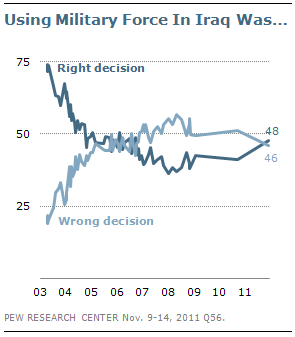
What's significant in this, I think, is the extent to which the idea of preventative war has been rejuvenated - if it was ever truly discredited. Whatever misgivings the U.S. public had about the Iraq war are fading (alongside, not coincidentally, American attention to what is actually happening inside Iraq) so it is obviously politically safer to muse openly about starting another war.

December 14, 2011

Newt Gingrich and EMPs

Ever since Newt Gingrich began his rise in the polls, I was meaning to dust off his repeated warnings about the dangers of an electro-magnetic pulse weapon and what it says about his foreign policy judgment. However, the New York Times beat me too it. Dan Drezner picks up the story and compares Gingrich's hyperventilation over EMPs to his nonchalance about the potential impacts of climate change:

This is fascinating. On the one hand, you have a long-term cataclysmic threat to the planet that commands the consensus of an overwhelming majority of experts in the field. On the other hand, you have a long-term cataclysmic threat to the United States that commands nowhere close to the same level of consensus. Based on his rhetoric, Gingrich wants urgent action to be taken on the latter, but not the former. Why?

I'm not bringing this up to suggest that Gingrich is a buffoon. He could plausibly argue that a lot of people are harping on climate change while only Gingrich can call attention to the EMP possibility. It's possible that the costs of preventive action on climate change are much greater than dealing with EMP (though if that includes preventive attacks on Iran and North Korea, I'm dubious).

What I'm wondering is whether there is a partisan divide in assessing threats, as there is in assessing economic principles. I wonder if conservatives are far more likely to focus on threats in which there is a clear agent with a malevolent intent, whereas liberals are more likely to focus on threats that lack agency and are more systemic in nature (climate change, pandemics, nuclear accidents, etc.)

Another way to look at this is that conservatives tend to be more focused on threats which can be addressed with military force, while liberals are more likely to worry themselves about threats that require a lot of international cooperation to address. They pick threats that reinforce political narratives about the role of the military and international cooperation. The judgments are self-serving ones.

That said, we shouldn't lose sight of the buffoonery aspect here.

December 2, 2011

Does the GOP Have a Plan for Asia?

The foreign policy debate in the GOP primary has been something of a non-event, but Galrahn raises some important issues:

The Republican candidates, one of which is likely to replace Barack Obama unless the President can learn economics in the next 12 months, are almost certain to adopt the Obama doctrine for Asia that centers on US primacy. All evidence suggests that US political leaders cannot take any political stand except one that focuses on US primacy in Asia now and forever. This is a fools gold, but no one ever said politics wasn't foolish.

So we are left to search for other leaders, whether civilian or military, who are ready to promote visions of Americas future foreign policy in Asia and around the world that is congruent with the very real possibility that China may indeed have the largest economy in the world by 2025 - just 15 years from now. If China becomes the worlds largest economy, would that disrupt American primacy in Asia? President Obama's policy record isn't very good, indeed he isn't running a reelection campaign based on his record in case you haven't noticed, so there is certainly no evidence this new Obama Doctrine for Asia will be successful. There is also little evidence that anyone is thinking about a Plan B.

As China builds up military resources and capabilities commensurable with their economic growth, how should the US respond? Whose strategic vision of the future includes US prosperity and security regardless of whether China is the largest economy in the world or not?


November 30, 2011

Pew Poll: A Swing Toward Dems on Foreign Policy?

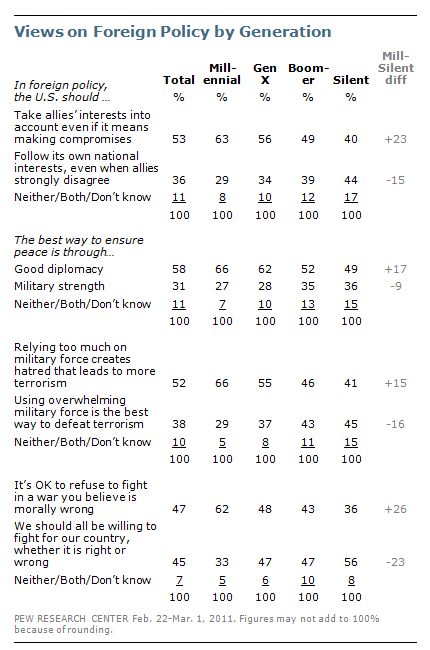
A Pew poll parses American views on foreign policy and national security. It's being presented as a generation gap - and that's obviously there - but it seems the bigger story is that the general public's policy preferences on foreign policy line up much closer to the Democratic party line than the more hawkish quarters of the GOP. Take a look at the responses:


pew%20fp%20views.gif

Perhaps this is why Ron Paul is faring well in a GOP field that's otherwise tripping over itself to sound hawkish.

November 23, 2011

Huntsman & Egypt

Yesterday I wondered how the GOP candidates would handle a question about Egypt in last night's debate. Andrew Sullivan didn't think they'd be up to addressing it substantively:

Does Greg think that any of them save Huntsman has a clue? The whole notion of making prudential judgments like this in changing circumstances and unknowable futures is alien to the current crop. If they cannot fit it into an ideological structure, they are at a loss.
Unfortunately, we didn't find out as Wolf "Blitz" Blitzer declined to ask them and no one in the audience had the opportunity to bring it up.

But Huntsman did give us some inkling of where he stood, proclaiming emphatically that America's "interest in the Middle East was Israel." Not Israel's security or military edge, just Israel itself. On its own, it's a somewhat curious statement - like a politician declaring America's "interest in Europe is France."

Taken seriously, I would interpret it to mean that Huntsman would take a somewhat dim view toward democracy in Egypt, since Egyptian sentiment writ large is far less accommodating to Israel than the military dictatorship currently in place.

November 22, 2011

State Capitalism: Good for Jobs?

Charlie Szrom thinks the Obama administration's foreign policy has failed to create jobs because, in part, the administration has not engaged in the same kind of state-capitalism that marks the economies of China and Russia:

The second policy set consists of those government actions that directly influence the sales, bids, and operations of American companies. In regions such as Central Asia, Africa, and Latin America, American companies often face steeper odds in winning new business than firms from countries whose governments provide more support.[Emphasis mine]

I'm confused. I thought conservatives believed that private enterprise would flourish if the government just got out of the way.

How Would the GOP Handle Egypt?

egyptround2.jpg

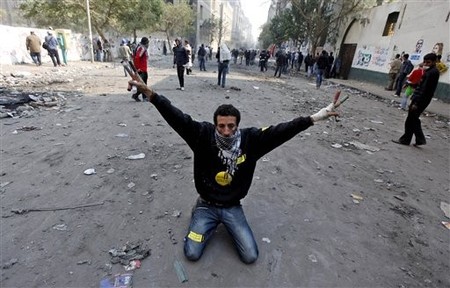
The escalating protests in Egypt have underscored the extent to which the removal of Hosni Mubarak - historic though it was - was a far cry from instituting a truly democratic government under civilian control. Egypt's military rulers appear to be back-peddling but it's unclear just how far they're willing to go to meet protester demands for full civilian control of the government.

All of this puts Washington in something of a bind. On the one hand, there remains a fear of what a truly democratic Egypt will produce (i.e. the empowerment of the Muslim Brotherhood). On the other, there are concerns that backing the military's attempt to crush democratic reforms will only fuel a dangerous long-term resentment among Egyptians.

The Obama administration hasn't really broken clearly in either direction, but it seems like there are three broad choices: 1. continue to send American tax dollars to Egypt's military, even (or perhaps, especially) if they maintain their grip over Egypt's political and economic institutions - the better to keep the Muslim Brotherhood out; 2. refuse to send American tax dollars to Egypt's military rulers until they release their grip on those institutions; 3. refuse to send American tax dollars to Egypt irrespective of what they do.

Tonight the GOP nominees are holding a debate on U.S. foreign policy and it will be interesting to see what position, if any, they'd endorse. I think you'd get a hardy endorsement of number three from Ron Paul but it's not clear to me how the others would break on the question. (And a shameless in-house plug, we'll be hosting a live blog tonight for the GOP debate with a number of foreign policy analysts and journalists. You can tune in here at 8pm EST.)

(AP Photo)

November 14, 2011

If You Were Khamenei's Adviser...

So Mitt Romney did indeed clarify what he would do against Iran's nuclear program if measures short-of-war failed, saying "of course" he'd take military action against Iran.

So you're an adviser to the supreme leader and you hear American politicians promising to bomb your country. Does this make you: 1. recommend an acceleration of the nuclear program in the hopes of deterring such an attack; 2. recommend shuttering the program in the hopes of avoiding one?

November 11, 2011

How Far Will Romney Go Against Iran?

Si vis pacem, para bellum. That is a Latin phrase, but the ayatollahs will have no trouble understanding its meaning from a Romney administration: If you want peace, prepare for war.

I want peace. And if I am president, I will begin by imposing a new round of far tougher economic sanctions on Iran. I will do this together with the world if we can, unilaterally if we must. I will speak out forcefully on behalf of Iranian dissidents. I will back up American diplomacy with a very real and very credible military option. I will restore the regular presence of aircraft carrier groups in the Mediterranean and the Persian Gulf region simultaneously. I will increase military assistance to Israel and coordination with all of our allies in the region. These actions will send an unequivocal signal to Iran that the United States, acting in concert with allies, will never permit Iran to obtain nuclear weapons.

Only when the ayatollahs no longer have doubts about America's resolve will they abandon their nuclear ambitions. - Mitt Romney

There is some evidence to support the argument that Iran will only change course if it feels legitimately threatened, but consider the evidence: in 2003, shortly after the U.S. invasion of Iraq, Iran sent feelers out to the Bush administration to begin talks. In other words, just to get the negotiations rolling, the U.S. had to invade another country. That's a pretty high bar!

This suggests that none of Romney's proposed measures could really do the trick, which begs a critical question: what is he willing to do next? Multiple U.S. administrations have declared that a nuclear Iran is unacceptable, and yet none have been willing to use force against Iran to stop it. Surely Iran's leadership is slowly being conditioned to think that such threats are hollow - whether coming from a Republican or Democrat.

To make Romney's "si vis pacem, para bellum" strategy work, you have to actually be willing to go to war - otherwise, you run the risk of having your bluff called. Is Romney willing to do this? Someone ought to ask him.

November 3, 2011

The Failures of Obama

Peter Feaver argues that President Obama has succeeded when he followed in President Bush's footsteps:

What explains the overall pattern? Friedman points to the correct answer: where Obama has continued along policy lines laid out by Bush, he has achieved success, but where he has sought to make dramatic changes, he has failed. The bigger the change, the bigger the failure. Not surprisingly, Friedman presents this as a critique of Bush ("Obama and his national security team have been so much smarter, tougher and cost-efficient in keeping the country safe than the "adults" they replaced. It isn't even close, which is why the G.O.P.'s elders have such a hard time admitting it."). Friedman's sneer about the "adults" is unmistakable and it causes him to miss the obvious: where Obama has embraced that "Bush adult" worldview, it has gone well for him and for America. Where he has not, it has not. Indeed, where he has listened to Friedman and other bien pensant types, it has gone very poorly indeed (cf. Israel-Palestine peace process). And where he attempted a major shift in American grand strategy (elevating climate change to be a national security threat co-equal with WMD proliferation and terrorism) he has made almost no progress whatsoever.

I think a good case could be made that the Obama administration has succeeded in its execution of U.S. foreign policy because it has avoided any massive mistakes. There have been, of course, plenty of mistakes and missteps. But none, I would argue, have set the U.S. back to the point where it would be difficult to recover from.

I think Feaver is right that the Obama administration has borrowed from the Bush administration's playbook with some success, but there's an Iraq-sized hole in this narrative. The Bush administration did not, by any means, get everything wrong. They got some things right. But the mistakes that were made - the decision to occupy Afghanistan following the fall of the Taliban and the decision to invade and occupy Iraq - were consequential ones. It cannot truly be said that the Obama administration is simply reading off the Bush playbook, because that playbook involves the invasion and occupation of a large, Middle Eastern country.

"I didn't screw up too badly" isn't a very compelling campaign slogan, but when it comes to U.S. foreign policy at least, there are worse things.

October 10, 2011

War Through Strength

My general rule is to discount most of what is said during campaign season since: 1. politicians will say anything to get elected; 2. events can (and should) meaningfully change positions once a candidate becomes an office-holder.

That said, since Mitt Romney's foreign policy speech is being hailed by many neoconservatives as a welcome return to American strength, it's worth pointing out that it's built on a non-sequitor:

Third, the United States will apply the full spectrum of hard and soft power to influence events before they erupt into conflict. Resort to force is always the least desirable and costliest option. We must therefore employ all the tools of statecraft to shape the outcome of threatening situations before they demand military action. The United States should always retain military supremacy to deter would-be aggressors and to defend our allies and ourselves. If America is the undisputed leader of the world, it reduces our need to police a more chaotic world. {Emphasis mine}

While I certainly wouldn't argue with the need to retain military supremacy against would-be adversaries, the highlighted section isn't true. If America acts in the manner described by Romney - which is a role it has followed arguably since 1990 - it means a constant resort to policing the world by force. Since the later half of the Cold War and its aftermath, when American power was at its apex, when America was "indisputably" the leader of the world, the pace of American military interventions and conflicts soared.

The "peace through strength" philosophy would be appealing if it were actually true, but in the current application there's very little that's peaceful about it. It would be one thing if the U.S. retained a preponderance of military power but only used it when absolutely necessary. That would truly be "peace through strength." But the variety being peddled by Mr. Romney and his cheerleaders is the perpetuation of war and interventionism in the name of maintaining hegemony over the world. The "peace" part is not much in evidence.

September 20, 2011

Rick Perry Makes the Case for Israel

Speaking of strategic debate, Rick Perry offers his case for the U.S. alliance with Israel:

Perry, an evangelical Christian who leads the opinion polls among Republican presidential hopefuls, told several dozen New York Jewish leaders that Obama's Middle East policy was "naive, arrogant, misguided and dangerous."

"As a Christian, I have a clear directive to support Israel. Both as an American and as a Christian, I am going to stand with Israel," Perry said.

Important to note that the Reuters piece doesn't mention whether Perry offered further arguments on behalf of the alliance, so this may not actually be the whole of his case.

September 15, 2011

Rubio's Wilsonianism

Florida Senator Marco Rubio gave another foreign policy speech this week that laid out what I think can reasonably be described as a very Wilsonian view of the world. In it, he makes the following claim:

There are still vast forces of evil seeking to destroy us. The form of the threat has changed since Truman’s time. But evil remains potent—and America remains the strongest line of defense, often the only line of defense.

"Vast forces of evil." It's interesting that the only way to justify the Wilsonian premise is by marshaling factually dubious descriptions of the world. Earlier in the speech he calls out Iran and North Korea, alongside the instability and danger caused by terrorist enclaves in Pakistan, Yemen and Somalia. Evil (or better, dangerous), for sure, but "vast"?

Rubio also makes a rather curious statement about China, singling them out for their desire to "dominate" East Asia. This after an entire speech dedicated to the premise that the U.S. has a duty and obligation to see its preferred system of government imposed globally and that there is "no corner of the world" we can safely turn our back on. If a member of the People's Liberation Army declared that China could not be safe in a world that did not embrace one-party state capitalism and that the goal of Chinese policy should be the subversion of governments everywhere that did not conform to its view of how society should be ordered, we would all be rightly alarmed.

In fact, the most curious thing of all about Rubio's foreign policy speech - which Marc Thiessen hailed as a "clear foreign policy vision"- is its lack of substance. There is no mention of Europe's sovereign debt crisis (which, in case you haven't noticed, is having a rather direct impact on the U.S. economy) and outside of the reference above, there is absolutely no mention of China or the rise of Asia and what U.S. policy should be in response. Rubio isn't a presidential candidate, so maybe it's unreasonable to expect anything other than Wilsonian boilerplate, but it's certainly not a "clear" vision of anything.

September 7, 2011

Huntsman's Foreign Policy: Asia-Centric

huntsman.jpg

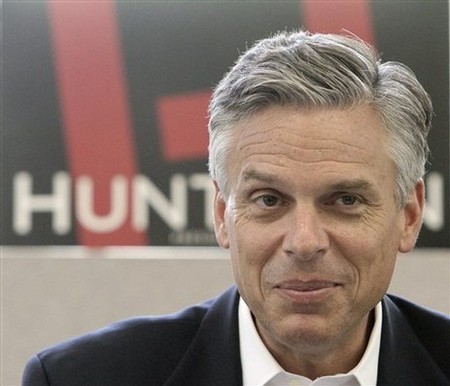
Jon Huntsman is a long-shot for the GOP presidential nomination, but according to this piece by RCP's Scott Conroy, that's definitely going to leave a void in the adult discussion of U.S. foreign policy:

“We have a generational opportunity to clean up the map, and that’s going to require us to take a look at where we are, where we’ve deployed, and to make sure what we’re doing is consistent with American foreign policy interests and that it’s serving the taxpayers of this country,” Huntsman told reporters after his brief remarks to the few dozen Republicans on hand. “We’ve fought the good fight in Afghanistan for 10 years, and we don’t need 100,000 troops there, and we don’t need to be nation-building, and we shouldn’t. We have 50,000 troops in Germany, and I’m here to tell you: The Russians aren’t coming anymore.”...

“I think we’re going to be looking more at a Pacific-centric strategy in the 21st century,” he said. “That’s where the rising militaries are, that’s where the trade routes are going to be most prominent, so I’m by no means an isolationist; all I’m saying is, let’s deploy our interests based on a realistic look at the globe and a realistic look at our national security needs.”

When you compare that to what, say, a Rick Perry has said - in prepared remarks no less - the contrast is striking. That said, the usual caveat about what candidates say during a campaign applies.

(AP Photo)

September 1, 2011

Don't Bother Listening to Presidential Candidates

So why is Perry warning against military adventurism? Like Bush, Perry is seeking the presidential nomination of a Republican Party divided on foreign policy. President Barack Obama’s military interventions, like Clinton’s before him, have newly hatched Republican doves in Congress.

Bush had to contend with Pat Buchanan, a conservative candidate who opposed a large military role overseas, first in the Republican primaries and later as a third-party candidate. Bush wanted to appeal to Buchanan’s supporters. This time around, Perry is running against fellow Texan Ron Paul, an even more outspoken foe of foreign wars.

Under this scenario, the easiest thing to do is stress areas of agreement among Republicans: No U.S. troops serving under foreign command. Foreign policy based on vital national interests. Secure the nation and act according to our strategic interests.

Other than the veiled implication that the current Democratic administration isn’t doing those things, such statements leave a lot of room for interpretation. As a result, Perry’s foreign policy speeches are no more useful in predicting what he would do as president than Bush’s were. - W. James Antle III

I think it's fair to say this about almost any candidate capable of winning a general election, including President Obama. It's better to look at the consensus that informs elite members of Washington's foreign policy class for cues as to how a potential candidate would govern. There are, to be sure, some divergences between the two political camps at this rarefied level, but they're a lot narrower than political rhetoric would suggest.

Apology Tour

I wonder if Mitt Romney would apologize for this:

The United States government has made the shocking admission that its 1940s-era scientists deliberately infected Guatemalans with sexually transmitted diseases - and even gave a dying woman syphilis.

The horrifying revelation was made this week by a panel commissioned by President Obama to investigate the dark chapter in American medical history.

More than 1,300 Guatemalans were given various STDs between 1946 and 1948 to see if the diseases could be treated with penicillin, and at least 83 people died during the trials, the panel discovered.

The findings, some of which were revealed to the White House last year, prompted Obama to call his Guatemalan counterpart to apologize.

July 15, 2011

Isolationism and Primaries

Michael Cohen's recent contribution to the American Isolationism debate is a solid read, but I believe he makes a more inadvertent revelation toward the tail end of his piece:

In the 1990s, when I served in the Clinton Administration as a foreign policy speechwriter, my colleagues and I regularly trotted out the claim that Republicans, by questioning the President's foreign policy positions, were returning to the isolationist spirit of the 1920s, '30s and '40s. It wasn't, but the sobriquet was an effective one that brought with it connotations of appeasement and weakness in the face of foreign threats.

Its return today, as well as the ease and frequency with which it is made, are a reminder that a step away from foreign policy orthodoxy and toward a position of urging restraint -- no matter how tepid -- can make one susceptible to the isolationist charge. It's only from the perspective of that orthodoxy would the recent warnings of American overstretch could be considered a retreat from the global stage.

In other words, "Isolationism," at least in its present context, is a political word having very little to do with any real policy, and once the dust settles on the Republican primary process the Washington foreign policy consensus will reemerge - leaving little time or tolerance for debate on matters abroad.

The eventual Republican nominee won't beat this president on foreign policy matters; if Obama loses, it'll be due to the flailing domestic economy. Obvious observation, perhaps, but it seems to be forgotten every time foreign policy analysts and experts start pulling their hairs out over the supposedly puerile nature of our IR dialogue.

These debates about "Isolationism" and "retrenchment" can be a bit frustrating, but we should probably enjoy them while they last. Once "generic Republican candidate" becomes a real person the political debate will likely shift toward jobs and the economy, leaving the Washington foreign policy community quietly waiting for the dust to settle.

July 12, 2011

A Realist Turn

Daniel Trombly thinks that realism's current vogue is a false spring:

To be blunt, anybody hoping for realism and restraint in American foreign policy is setting themselves up for failure if they put their trust in the inherent wisdom of the mass public to provide a sound guide for foreign policy. It is true that after serious disasters in American foreign policy or prolonged wars, the public does tend to tack a seemingly “realist” course in foreign policy matters. However, a “realist’ inclination that only evinces itself in a politically meaningful way after enough time has passed for thousands of lives have been lost or billions of dollars spent is not a very useful constraint on the interventionist tendencies of the US government.

I'm not sure how much of this supposed realist turn is driven by public opinion or by politicians angling to differentiate themselves.

July 2, 2011

James Traub's Elitist Ignorance

It's so boringly predictable when elite foreign policy writers and critics of the Republicans - but I repeat myself - who generally pay exactly zero attention to the candidates on the right in between election cycles, gloss over differences in policy and experience in the interests of furthering their biases about the right. It's an inevitable experience every four years: the Republican candidate is painted as a naive, blunt rube, with none of the sophistication and insight on global engagement of the savvy, worldly Democrat.

Of course, if the right's weakness is generally blunt swagger, the left's is wavering incoherence. Democratic presidents are just as capable of making serious mistakes as Republicans in their approach to global affairs, and an attitude of denial to go with it. But no matter: forget their actual travel or policy experience - this is the way things are.

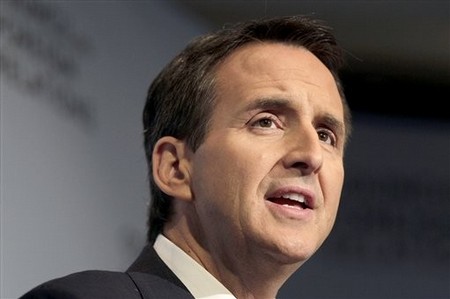
Comes now James Traub with another tiresome little "Republicans are stupid and incoherent" essay, in this case regarding Tim Pawlenty. Traub peers down his nose at the former Minnesota governor's recent appearance at the Council on Foreign Relations to share his foreign policy views. "The very fact that Pawlenty chose to deliver the speech in the sanctum sanctorum of the foreign policy establishment rather than at, say, the Heritage Foundation, constituted a rebuke to the yahoos in the party," Traub writes.

Actually, Pawlenty is continuing his "speaking truths in unfriendly venues" tour, which took him to Iowa to denounce ethanol subsidies, Florida to call for Medicare reform, Washington to blast current entitlement policy, and Wall Street to call for financial reform. His speech to CFR was not intended to cater to the elite, but to achieve note from the Republican base by disagreeing with the establishments' views in its own house. But of course, Traub cannot be expected to pay attention to this.

Continue reading "James Traub's Elitist Ignorance" »

June 30, 2011

Obama's Afghan Dishonesty

obama%20afghanspin.jpg

Peter Beinart dings President Obama for failing to level with the American people about the consequences of a U.S. withdrawal from Afghanistan:

Even if we stayed for 20 years, building a government that can stand on its own might be beyond our capacity. We’d go broke trying, and there is little reason to believe the future of this Afghan government is vital to U.S. security. Barack Obama didn’t even say so in his speech.

But Obama did imply that his administration’s surge has so weakened the Taliban that they’ll trade their weapons for negotiations and eventually join the current government, thus allowing the U.S. to leave an Afghanistan headed towards peace. That’s what Mr. Amini was disputing. There’s an honest way to advocate for withdrawal from Afghanistan and a dishonest way. The dishonest way is to suggest that we’ll leave behind a government that can secure the country and a political process than can end the war. The honest way is to acknowledge that the Afghanistan we leave behind will be a chaotic, ugly place where the Taliban rules large swaths of the country, and much of what we have built may be washed away.

That's a winning message to take into 2012, isn't it?

But seriously, spinning the U.S. withdrawal doesn't make a lot of sense. I suspect most Americans understand that the U.S. will leave Afghanistan much as we found it - at war with itself.

(AP Photo)

The Future of Republican Foreign Policy

pawlentymideast.jpg

Aaron Blake writes today on Tim Pawlenty's hawkish stance on foreign policy, a position he identifies as being an attempt to distance the former Minnesota governor from the rest of the field - or more accurately, from Mitt Romney and Jon Huntsman:

Pawlenty appears to be trying to set the issue backdrop and shape the policy debate in the Republican presidential field, laying out high-minded goals and daring his opponents to jump on board.

To some extent, Pawlenty’s aggressive approach has worked. The Pawlenty campaign’s comments critical of Romney and Huntsman on foreign policy have fed a debate about the GOP’s supposed isolationism.

Romney’s campaign made clear immediately after the debate two weeks ago that he hadn’t shifted his foreign policy in any significant way and remained committed to strong national defense.

Huntsman’s campaign, too, is working to highlight that his position on Afghanistan does not imply any kind of unwillingness to act internationally — rather that he prefers a different approach.

“Jon Huntsman is the only candidate who has the foreign policy experience to know the threat and to understand the best way for America to protect our core national security interests,” Huntsman spokesman Tim Miller said in response to Pawlenty.

On today's edition of Coffee and Markets, I discussed this issue further with Pejman Yousefzadeh, who has been more supportive of Huntsman's campaign but no less skeptical about his position on Afghanistan. Within this conversation, I note my concern about Huntsman's position, and Romney's as well to some degree: that in attacking Obama from the left on America's role in the world, they will take an outlier view within the right's coalition and transform it into something more acceptable.

Continue reading "The Future of Republican Foreign Policy" »

June 27, 2011

Is Huntsman a Republican?

In a post below, Benjamin Domenech argues that Jon Huntsman's foreign policy views are not those of a Republican:

Whether you agree with them or not, even supporters must concede that Huntsman's foreign policy views are a clear rejection not just of George W. Bush, but of thirty years of the views of Republican nominees on the proper attitude toward war fighting and engagement. One does not have to accept the view of Washington's neoconservative elite in order to take a view of America's role in the world that has been consistent in the Republican Party since the post-Nixon era. And Huntsman's foreign policy team - which includes former National Security Advisor Brent Scowcroft, CFR head Richard Haass and former Deputy Secretary of State Richard Armitage, the leaker of Valerie Plame's identity - has already sparked concern among Jewish groups that Huntsman's views on America's relationship with Israel could be as out of sync with Republican values as the rest of his portfolio.

I wonder about this. First, as Ben notes, Huntsman's foreign policy advisors are all... Republicans. Not only that, they're Republicans who have all held senior foreign policy making positions in Republican governments following the Nixon administration. Don't their views and input qualify as authentically Republican?

Second, the Huntsman position that is most at odds with what Ben defines as Republican foreign policy is the argument that the U.S. must withdraw troops from Afghanistan at a faster pace than what General Petraeus reportedly recommended to President Obama. Disagreeing with the military is not only not a rejection of 30 years of Republican foreign policy making - it's completely consistent with George Bush's foreign policy. Defense Secretary Rumsfeld was famous for questioning and even over-riding the military advice of his commanders. Rumsfeld remains, I presume, a Republican.

What Huntsman's initial campaign rhetoric does suggest is that he's willing to question some cherished foreign policy orthodoxies of the neoconservative wing of the Republican party. I think there's room to do that and still qualify as a Republican.

There Is No Growing Isolationism

bachman%20iou.jpg

The most tedious and erroneous meme to grip the 2012 campaign season is now being peddled by no less a figure than historian Niall Ferguson. Ferguson's hook is that the U.S. is indulging in a spat of "IOU-Isolationism." Writes Ferguson:

Welcome to the brave new world of IOU-solationism—the theory that strategic calculation takes second place to nasty fiscal arithmetic. After all, as former secretary of state James Baker has pointed out, interest payments on the federal debt could exceed defense spending in less than a decade. The Congressional Budget Office has even figured out how much cash could be saved by reducing the number of war-ready troops to just 45,000 by 2015: more than $400 billion over the next five years.

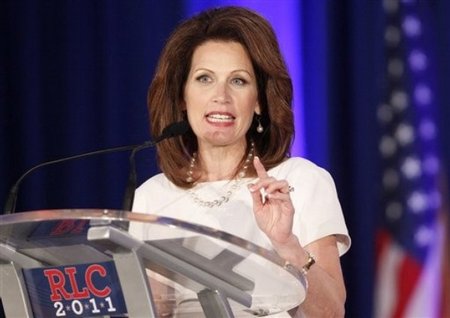
The trouble with holding up complaints about cost from Republican candidates like Romney or Bachmann is that it tells us nothing about a worldview. When it comes to "IOU Isolationism" there's no ideological or strategic objection to Washington's interventionism, just an accounting one. In other words, it has all the hallmarks of a shallow, partisan critique. Economic cycles ebb and flow. Eventually (one hopes) the U.S. will enjoy a bout of more vigorous growth. What will the IOU Isolationists that Ferguson fears do then? I suspect most of them would slide right back into the interventionist consensus.

Ferguson's counter-argument to this phantom menace of isolationism is that we can too afford it. To which one must answer: so what? I can "afford" to light a dollar bill on fire every day for the month of July. It wouldn't bankrupt me or deprive my children of food. But why would I do it?

(AP Photo)

June 24, 2011

The Tea Party Divide Grows

rsz_bachmann62411.jpg

For my part in our brief interview with House Armed Services Chairman Buck McKeon (R-CA) today, I asked whether the era of the Republican hawk is over, or just on hiatus till after the next election. He had an interesting response.

"Conservative Republicans have a three legged stool: defense, fiscal responsibility and social issues. Right now the stool is a little out of balance because fiscal matters are dominating everything, because of the economic shape we're in," McKeon said. "And when the Chairman of Joint Chiefs comes and tells us our most important defense need is our economic stability, that gets a lot of people thinking that's all we should be talking about, to the point where some of them are saying 'Defense should be on the table, Defense should be cut.'"

This fits, of course, into larger concerns Republicans have about the increasing divide between the Washington foreign policy elite and the base of the party - not just the Tea Party, but other fiscal and social conservatives as well. While several Tea Party favorites maintain a generally hawkish stance on Afghanistan and other fronts, their attitude toward Libya has been frustration and disagreement from day one. A recent letter signed by a roster of former George W. Bush appointees and neoconservatives on the issue contains little in the way of anyone who seems to have a firm connection with the right's base. (A chat with an average member of the Tea Party does not typically reveal a high approval rating for William Kristol and Karl Rove, in case anyone was curious.)

When it came time to vote today, McKeon was with the majority of Republicans, but on the opposite side from 89 of his members who successfully blocked an attempt to approve limited funding for NATO/U.S. efforts in Libya. Included in opposition are several darlings of the Tea Party, such as Michele Bachmann, Allen West and several other freshmen.

The question is whether this divide between the neoconservative foreign policy elites and the more conventionally conservative voting base on the right will grow to affect other areas of national security policy as well, beyond just things branded as "Obama's war." Without respected and serious go-betweens who don't have prior bad blood with the base, it's hard to see how McKeon's stool will be rebalanced.

(AP Photo)

Jon Huntsman's Foreign Policy

rsz_huntsman62411.jpg

In a 2012 Republican presidential field with relatively little foreign policy heft, Jon Huntsman has it in spades. The former ambassador and oft-traveled billionaire, heir to a massive chemical conglomerate fortune, is one of the most globally minded candidates in a field of otherwise parochial, or even isolationist, figures within the party.

Talking to his associates from his time in China, one hears near-universal respect for the man and his views of America's role within the world - even to the point of turning his time away from the states in China into a potential political asset, an instance of confronting communists with a case for freedom. They'll tell you Huntsman truly does view his role as one of duty and service to the nation - even to the point of setting aside his Mormon religious views on drinking alcohol to drink the disgusting baijiu liquor which is mandatory at Chinese events (I'm told Huntsman would drink the clear alcohol once and then switch to water, hoping no one noticed after the first round). Huntsman's tenure as ambassador was marked by only one significant public gaffe, a bizarre incident where he attended, then fled, from a Jasmine Revolution protest, attracting attention for the large American flag patch on his arm (he claims he stumbled across the protest by accident).

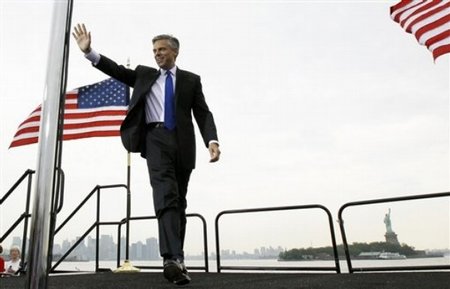
Yet for someone whose campaign has already adopted a view prioritizing global issues, and whose announcement in front of the statue of liberty this week was purposefully constructed to spark recollections of Ronald Reagan's run against Jimmy Carter, Huntsman's publicly-expressed foreign policy views seem to have more in common with Carter than with Reagan.

Without question, Huntsman is the furthest left of any purportedly serious candidate for the nomination when it comes to forming a response to Afghanistan. His press release on the president's remarks this week emphasized his approval for "a safe but rapid withdrawal," but his critique on NBC's Today show went much further. Asked by host Ann Curry whether he thought a drawdown of 30,000 troops by next year was too much or too rapid, Huntsman responded by saying that "I think that we can probably be more aggressive over the next year" in drawing down troops.

Despite the comparisons to John McCain's 2008 presidential run - and on the campaign and organizational side, there are many - Huntsman's statement could not be more at odds with McCain's views on Afghanistan and the necessity of preventing losses of the gains made in the past two years. Like Obama, Huntsman emphasized the need for “nation building at home” (as if the two goals are inconsistent) - but Huntsman went further, saying it was time to "get serious about what needs to be done on the ground, not a counter-insurgency but a counter-terror effort." While nearly every Republican in the race has emphasized the need to heed the advice of the commanders with on-the-ground experience on the front, Huntsman is purposefully setting himself apart in unequivocally rejecting the advice of Gen. David Petraeus and Admiral Michael Mullen, chairman of the Joint Chiefs of Staff, from afar. More significantly, in supporting a more aggressive drawdown to be replaced by a limited counter-terror strategy, Huntsman is essentially endorsing the view by Vice President Joe Biden - a view which proved too rapid and risky even for President Obama.

Whether you agree with them or not, even supporters must concede that Huntsman's foreign policy views are a clear rejection not just of George W. Bush, but of thirty years of the views of Republican nominees on the proper attitude toward war fighting and engagement. One does not have to accept the view of Washington's neoconservative elite in order to take a view of America's role in the world that has been consistent in the Republican Party since the post-Nixon era. And Huntsman's foreign policy team - which includes former National Security Advisor Brent Scowcroft, CFR head Richard Haass and former Deputy Secretary of State Richard Armitage, the leaker of Valerie Plame's identity - has already sparked concern among Jewish groups that Huntsman's views on America's relationship with Israel could be as out of sync with Republican values as the rest of his portfolio.

Rather than playing games of triangulation, Huntsman may simply be saying what he believes. But perhaps the reason he's caught fire with so many leading media figures is that he's saying things they tend to agree with. This is all well and good, and coherent so far as it goes. It's just not very Republican.

(AP Photo)