



Poles head to the polls this autumn to elect a new parliament, and one of the foremost questions on the minds of international observers will be how and whether Poland's foreign policy could change as a result.
Poland's geopolitics, though complex and historically fraught, can today be boiled down to a relatively simple system that comprises relations with three external actors: Russia, the United States, and the European Union. These three relationships will be the main focus for any Polish foreign minister, and will to some degree determine Warsaw's relations with every other country.
The contenders
Currently, it seems unlikely that any party other than the ruling Civic Platform (Platforma Obywatelska, PO) or the main opposition party, Law and Justice (Prawo i Sprawiedliwosc, PiS), could win those elections. Both are nominally conservative parties, though the PO has tacked hard to the left and now sits at the Polish political center, while the nationalist PiS's economic policies favor heavy government intervention.
The Democratic Left Alliance (Sojusz Lewicy Demokratycznej, SLD), a leftist, social-democratic party founded by and still including many former communist politicians, has been in a tailspin ever since it fell out of power in 2005. At this point the SLD, which received about 10 percent of the vote in parliamentary elections four years ago, cannot be considered a contender to win. The rural-oriented Polish People's Party (Polskie Stronnictwo Ludowe, or PSL) is also unlikely to collect more than some 5 percent of the vote. The PSL traditionally plays the kingmaker role. The party, which is part of the PO-led governing coalition now, typically focuses on domestic issues, and if they do join a coalition after the elections, they are unlikely to vie for the foreign minister's seat.
Turning up the heat
Any changes to Poland's foreign policy are thus likely to be a matter of volume - the fundamentals will not change much, especially with Poland's diplomatic options subject to the constant pull of the three big planets in its geopolitical solar system. Poland must remain on guard for possible Russian aggression; that will force it to rely more on NATO, and specifically on American guarantees of intervention. With three-quarters of its trade occurring with other EU member states, and billions in structural funding heading Poland's way from Brussels through 2020, Poland will have no choice but to remain pro-EU, doing whatever it can to keep the bloc from dissolving under the threat of a British or Greek exit, while also looking to increase its voice on the European stage and its clout within the union.
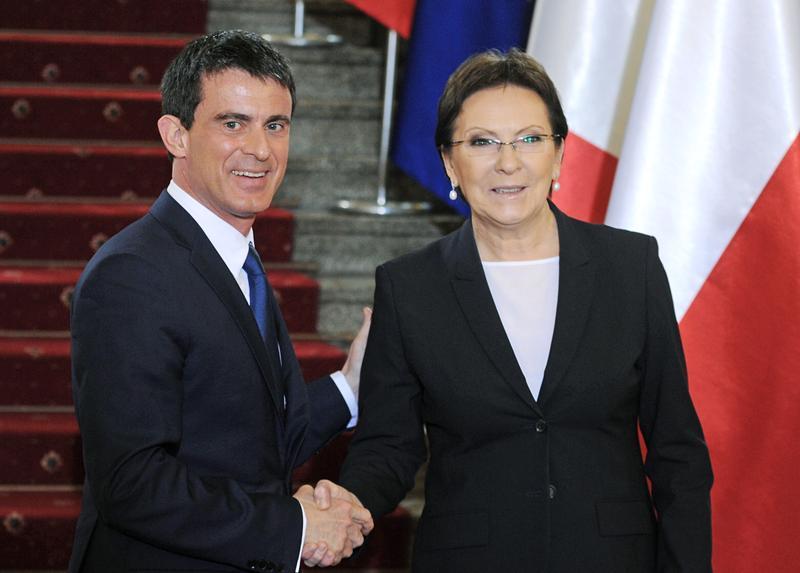
Polls have been close, but the ruling PO has retained a slight edge over the PiS in recent weeks. Late last year, after former Prime Minister Donald Tusk, Poland's first ever premier to win re-election, was appointed president of the European Council, Ewa Kopacz took over to lead the government. The Cabinet shakeup that ensued moved RadosÅ?aw Sikorski from foreign minister to speaker of Poland's lower house of parliament (nominally a promotion for him). Sikorski is a foreign policy stalwart with a strong reputation throughout the Continent, while his replacement, Grzegorz Schetyna, has little foreign policy experience. Yet Poland's foreign policy remained consistent even after Tusk departed. Poland criticizes Russian aggression, but that criticism doesn't shape policy. Warsaw continues to see the United States as its main defense guarantor, with a strong emphasis on drawing as much U.S. support - especially troops - to Poland as possible. And the European Union is treated as a significant, positive driver of economic prosperity.
If Kopacz wins her first parliamentary election as prime minister, little will change in the way Poland looks to the world. If she wins big, she may feel able to rid herself of Schetyna, who was handed the foreign policy portfolio in exchange for the votes of a large faction he leads within the party.
The broad strokes of Polish foreign policy will remain the same if the PiS wins the parliamentary elections and forms a government. Warsaw's rhetoric, however, will heat up. Jaroslaw Kaczynski, who served as prime minister from 2006 to 2007, will vent sharper anti-Russian views and will be more vocal in courting the United States, while de-emphasizing cooperation within the European Union.
Kaczynski and his party have always played on anti-Russian sentiment in Poland. But since the 2010 plane crash that took the life of his twin brother Lech - Poland's president at the time - and 95 others just outside of Smolensk, Russia, he has made that strategy the centerpiece of his party's foreign policy positions. Many PiS members still believe Moscow downed the plane. Still, beyond making angry political speeches or instigating the odd diplomatic spat, there will be little that a PiS government would do differently than the PO when it comes to Russia. While it might feel protected by the guarantee of NATO's Article 5, PiS does not want war with Moscow.
What PiS will do, however, is make a more concerted effort to lock in strong relations with the United States. The party will do even more than the PO has so far to insist that the United States place a large, permanent contingent of troops on Polish soil as a guarantee against Russian aggression. Were the Americans to decline, relations could sour somewhat, though Poland has no choice but to abide by Washington's decisions. There is no other ally that could step in to offer Poland serious defensive aid.
Under PiS stewardship, relations with the European Union would deteriorate. The party's Catholic base dislikes what it sees as EU-imposed secularism, so social reforms mandated by the European Union on issues such as gay rights or women's equality would not be a priority. PiS leaders of course know how crucial trade with Warsaw's European partners is, and they recognize the importance of the billions of euros in EU funding that Poland receives. Challenges to Brussels from a PiS-led government in Warsaw would therefore be limited to countering EU social reform efforts, and seeking to undermine German leadership of the bloc.
Poland's parliamentary elections this year will be a turning point: Will it continue with the same ruling party led by a new prime minister, or will it swing back to a conservative-nationalist party whose leadership garnered a reputation for being prickly and petulant during the middle part of the last decade? Whichever of the two leading parties wins, the main tenets of Poland's foreign policy will remain the same, with fluctuations possible in the strength of the rhetoric and the policy emphasis. Any major transformation, if it comes, will be the result of outside events rather than internal politics.
(AP photo)
