



Poor old Labour.
Roundly defeated in an election in which all of the polls (and, ahem, most of the pundits) pointed toward victory, the party limps on in Westminster. Labour lawmakers gamely engage in parliamentary battles. They usually lose, facing as they do an increasingly dominant Conservative Party that seems to have forgotten its needle-thread majority in its rampage, much the way an aging striker occasionally racks up the goals in an improbably late golden season.
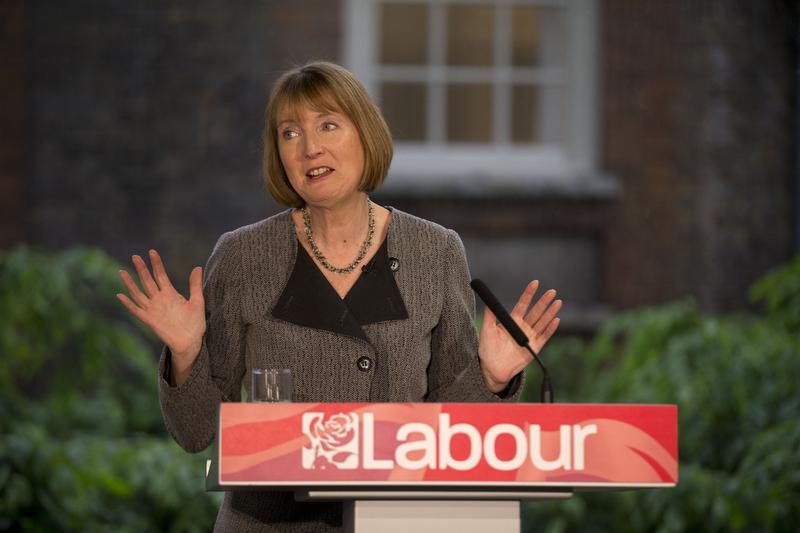
Amid an interminable leadership contest, the Labour Party is headed in the interim by longstanding stalwart Harriet Harman - so (in)famously politically correct that she is often lampooned as "Harriet Harperson" - who is serving her second stint as party caretaker. It is fair to say that Her Majesty's Loyal Opposition is in trouble.
Bereft of real leadership in this interregnum, the Labour Party has been split most recently by Harman's unpopular decision to abstain rather than vote against the Conservative Party's latest cuts to the United Kingdom's generous benefits system - a decision against which almost 50 of her parliamentary colleagues rebelled.
Let me express an unfashionable view: Harriet Harman is doing what an opposition leader ought to do, but often does not: acting on what seems genuinely right, rather than doing what's easy, and opposing for the sake of opposing. UK benefits are high. But while she is doing the right thing, it's probably less out of principle and more for conventional political reasons - preparing her apparently reluctant party for a return to government one day. Harman realizes that the Conservative policy is wildly popular, and that while opposing it may be easy within the party, it does no favors to the cause of Labour's electoral future. Most British people agree that one should not be better off on benefits than in work. Labour's inability to straightforwardly agree with that point - as Harman is sort-of now doing - harmed the party at the General Election held in May.
Had Harman continued in that failed vein, she would have been cheered by her side, but not by the public. She would have walked into what one observer wisely termed "the irresponsibility trap" set for her by the government. But it was a lose-lose situation for Labour's stand-in leader. The decision not to oppose the cuts led this week to a wonderfully pathetic parliamentary meltdown. Harman seemed more interested in shouting at lawmakers on her side who voted against the measure than in following her own party's political instincts.
So Labour was torn between looking out of touch with its own base on welfare, and appearing too "pro-welfare" in general; between aversion to risking its own political base, whose voters in large part are more affected by the proposed changes than is the traditional Tory voter, and seeking to return to the mainstream; and between respect for Harman and loyalty to candidates for the party's leadership. These last had, as anyone might understand, sided with the majority view of the electorate-to-be on the left who will decide the next leader.
In short: The Tories split the opposition brilliantly.
We now have a Government that can do almost whatever it wishes, with its decisions subject to little scrutiny due to the weakness of the opposition. This is bad, no matter what one thinks of the particular parties in and out of office. We might, for example, have had more scrutiny of the Home Office's attempt to snoop on the emails, text messages, and phone record data of everyone in the country if the opposition were on task. (After all, the very same plan was defeated not once, but three times in the last Parliament alone, so the opposition strategy should not be too hard to grasp.)
More broadly, the British political agenda is dominated by foreign affairs issues - Grexit, Iran, immigration into the European Union and so on. This is interesting, given the near-total absence of these issues during the election campaign. The most potent issues thereafter are Britain's attempt to renegotiate its standing within the European Union - enough for an article itself, one which I will write shortly - and a national issue threatening once again to become an international one: Scottish nationalism. The Scottish National Party, which now seats more than 50 MPs at Westminster, plays to a different supporter base than Labour and is pursuing a very different strategy. After all, the SNP is not looking for a plan to reach 10 Downing Street. Unlike Labour, this means SNP lawmakers do not need to appeal to the English voter. They spur on the left-wing instinct within Labour and are arguably the most effective opposition party at present. While Labour MPs are timid, cowed, and lacking in confidence, the SNP's new intake are lively, creative, and distinct in their views. They are well organized and entirely unafraid to oppose.
But the SNP's task at Westminster is more straightforward. The party needs to make enough noise and stamp out enough English-only issues to bring about a reoccurrence of a Scottish independence referendum. Like the Tories after 1997, Labour is left to find its sense of certainty and purpose once again. That process only begins with selecting a new leader, rather than ending there. That's the challenge for all four of the leadership contenders: Shadow Health Secretary and centrist-cum-union candidate Andy Burnham; Shadow Home Secretary Yvette Cooper (somewhat liberated on the campaign trail by the defeat of her husband, Ed Balls, in his own seat); Shadow Health Minister Liz Kendall (the token Blairite, alas unlikely to win); and Jeremy Corbyn, a firebrand left-wing outsider. Several Labour lawmakers apparently voted Corbyn into the process in order to ensure that his views were represented in the vote. They might now regret their act. Corbyn is presently way out in front when party members are polled.
One more try?
It is certainly hard to second-guess the "selectorate," given that almost two-thirds of them have joined the Party since the last leadership contest, in 2010. Whoever wins, the party's loyalists presently ask themselves, will "one more heave" work? Will presenting Labour as the ideological opposition be enough to win in 2020? History suggests not. Recently defeated leader Ed Miliband tried just that. The party would be better advised to seek to reclaim the center from Cameron and his resurgent Chancellor, George Osborne. As David Frum put it, if the electorate said no when you offered ham and eggs, then offering double ham and eggs doesn't sound like much of a plan.
It's not all bad for the red team. In a generally terrible election for them, May 2015 saw the party add some very strong new reinforcements. My firm will soon release a nice glossy guide to the up-and-coming MPs within this Parliament, but without giving away the store I think I can safely say that the rising stars from the ranks of Labour newcomers include Keir Starmer, the most high-profile of Labour's new intake, having spent five years as the director of Public Prosecutions and head of the Crown Prosecution Service; Tulip Siddiq, formerly of Amnesty International, with a strong political pedigree as granddaughter of former Bangladeshi Prime Minister Sheih Mujibur and niece of current Bangladeshi Prime Minister Sheikh Hasina; and Stephen Kinnock, a former director for the World Economic Forum whose father Neil was former leader of the Party, whose mother Glenys is a former foreign minister and Member of European Parliament, and whose wife is former Danish Prime Minister Helle Thorning-Schmidt.
This trio, along with several others from their intake, promises to revivify the Labour Party in time - even if the present generation of leaders can't get its act together. In the meantime, Labour should take comfort from the wise words of Rocky Balboa. When you're in opposition in Westminster, he almost said, it's not about how hard you can hit - it's about how hard you can get hit and still keep on moving forward.
(AP photo)
