


Despite calling the breakup of the Soviet Union in 1991 one of the greatest catastrophes of the 20th century, Russian President Vladimir Putin apparently considers the process that gave birth to the USSR as containing the reason for its eventual demise.
It turns out Putin dislikes the idea of autonomy that was at the core of the creation of the 15 Soviet republics and numerous administrative units that eventually made up the Soviet Union. Many such autonomous regions were formed in accordance with ethnicity and nationality; non-Russian populations formed official republics such as Armenia, Uzbekistan, Turkmenistan and Ukraine, and many regions across Soviet Russia, such as Tatarstan, Chechnya, Ingushetia, Dagestan, and many others, followed the same principle. Speaking at the Council on Science and Education a few days ago, Putin was surprisingly critical of the role of Vladimir Lenin, the leader of Soviet Revolution and the Soviet Union's creator. Responding to a comment that Russian leadership should attempt to control the direction of "national thought" - i.e. public opinion - Putin said it is indeed necessary to control the flow of ideas, but only so that such measures can lead to correct results, "and not as happened under Vladimir Ilyich [Lenin's leadership]."
Said Putin: "Ultimately, many such ideas led to the collapse of the Soviet Union - thoughts like autonomy and so on. This laid an atomic bomb under the foundation of the Russian state that blew up later on."
Perhaps Putin is having second thoughts about the independence shown, in actions and in public statements, by leaders of certain autonomous regions across Russia - Chechnya especially. Under Putin's leadership, Russia crushed Chechen military opposition in the war of 1999-2000. Moscow then forged a strongly pro-Russia region by giving almost complete autonomy to Chechen leadership under its president, Ramzan Kadyrov.
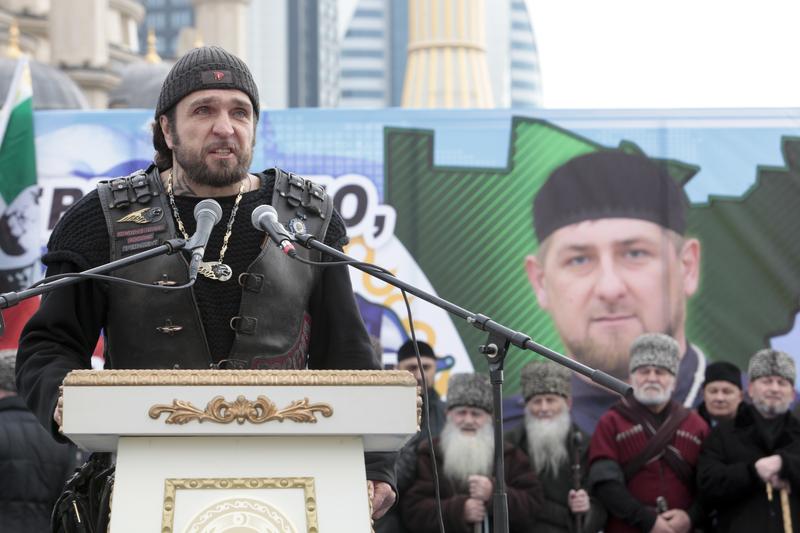
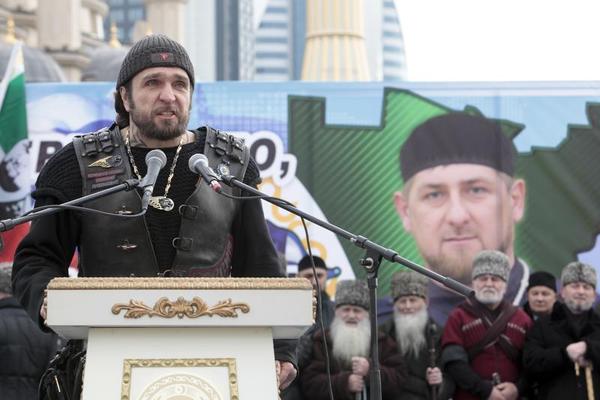
Today, Kadyrov is one of the most staunchly pro-Putin and pro-Russian politicians in the country, even as his increasing prominence and closeness to Putin is making many Russians uncomfortable. Last week, Kadyrov organized a massive rally in Grozny, Chechnya's capital. According to official press release by Chechen administration, "the demonstrators are going to express their unconditional support for Russian President Vladimir Putin, and the head of the Chechen Republic, Hero of Russia Ramzan Kadyrov, in an effort to counter the hostility against our country by hostile forces and to encourage all to rally around the leadership of Russia and present a united front against representatives of destructive forces that recently launched a full-scale information war against the Russian Federation."
It is worth noting that as similar demonstrations across the Russian Federation support Putin and the Russian state, this rally takes place in the very city that was nearly razed to the ground in the First Chechen War and was seriously damaged in the second confrontation. Ethnic Chechens and the Russian military could hardly have been further apart, in that stretch of history, in their feelings toward the Russian state.
Fast forward to 2016, and Kadyrov is acting as one of the sole safeguards of the country that previous Chechen leaders wanted to leave by all means necessary. His administration spared no words to name those who "harm the Russian state:"
"These political imbeciles with the names Shenderovich, Navalny, Khodorkovsky [the last two are in the liberal opposition], and other traitors decided to recast our country into the abyss of bloody ethnic and religious strife. These people decided to sweep away our statehood and our sovereignty. They opened their mouth against our national leaders, President Vladimir Putin, and the national and spiritual leader of the people of the Chechen Republic, Ramzan Kadyrov. No coup will pass in Russia! We have a national leader!"
Its worth noting that Putin was not quizzed on his antipathy towards autonomies in his speech at the Council on Science and Education - otherwise the issue of Chechnya would probably have to be discussed openly. On one hand, this autonomous region and its leadership are now part of Russia and are pro-Putin - but only two decades ago they fought for independence in one of the bloodiest modern conflicts. Go figure...
(AP photo)
