Main

September 28, 2011

How to Get Fired (S. African Newsreader Edition)

Mark Esterhuysen shows you how it's done:

A South African radio presenter has gone out with one almighty bang - dropping the f-bomb repeatedly in a ferocious rant before storming out of the studio.

Mark Esterhuysen, 23, invited listeners to follow his blog and signed off with "peace, love, respect, anarchy" after a vitriolic tirade that featured the f-word 13 times, The Daily Mail reported.

The Johannesburg presenter kicked off his graveyard shift as normal, then took aim at anything and everything, from racism to capitalism.

He described his working situation as "f***ing wage slavery graveyard shit" and said "F*** racism" three times in the 40-second spray.

You can listen to the profanity-laced tirade here.

July 28, 2011

Zimbabwe After Insane Inflation

zwpnqr1afuiclrqaq-fg9g.gif

Zimbabwe has long been synonymous with economic dysfunction. The country's inflation rate hit an amazing 231 million percent in 2008 and four out of every five adults in the country were unemployed. Today, Gallup notes that Zimbabweans are reporting improvements in their economic circumstances:

Zimbabweans appear to be benefiting from two consecutive years of economic growth and efforts to bring hyperinflation under control. Eighteen percent of Zimbabweans surveyed by Gallup in 2011 report "living comfortably" on their present household incomes -- double the 9% who said so in 2009. The 16% who reported they are "finding it very difficult" to get by is down significantly from 31% in 2009.

June 6, 2011

The True Size of Africa

true-size-of-africa.jpg

A neat info-graphic via Nicole Kallmeyer (click on the photo for a full-size view).

January 11, 2011

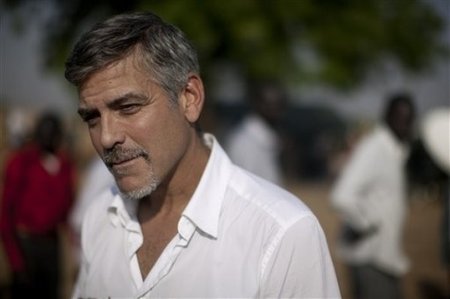
Clooney and Sudan

clooney.jpg

It's always a bit of a question whether celebrity attention to a foreign policy issue is an asset or just a self-aggrandizing distraction. In the case of George Clooney's activities in Africa in support of a celebrity-funded satellite project, which have come under some criticism this week from Foreign Policy's Joshua Keating and other cynics:

George Clooney's "anti-genocide paparazzi" seems to be dominating nearly every transmission coming out of south Sudan this week. Clooney, along with the Enough Project, Harvard researchers, and some of his wealthier Hollywood friends, have hired satellites to monitor troop movements along the north-south border, particularly the oil-rich region of Abyei. Clooney, active for years in the Save Darfur movement, has also become something of a celebrity spokesperson for the independence referendum. Naturally, the international humanitarian blogosphere's snark brigade is out in force.

Laurenist: "If you're anything like George Clooney, you lounge around on your yacht off the coast of Italy thinking up ways to save Africa."

Texas in Africa: "While John Prendergast, George Clooney, and other advocates who don't speak a word of Arabic have been raising fears about violence for months … the likelihood that a genocide or war will break out immediately seems to me to be slim to none."

Wronging Rights: "Clooney has described it as 'the best use of his celebrity.' Kinda just seems like he's trying to recruit a mercenary for Ocean's Fourteen."

I'm not one to overemphasize the impact of a celebrity or his wealthy friends, but in this case, I have a hard time seeing what Clooney's doing that's so wrong. The western-focused communications reality of today is that your cause needs an American face, a recognizable and likable one. As Mark Leon Goldberg of UN Dispatch points out, "does anyone really think that Sudan’s upcoming referendum would be covered on a National Sunday morning broadcast without George Clooney’s handsome face to greet viewers?"

Continue reading "Clooney and Sudan" »

December 29, 2010

A Test of African Democracy

Mark Goldberg on why the post-election standoff in Ivory Coast matters:

Since the end of the Cold War, elections have been de rigeur in most of Africa. Most of the time the incumbent or his party wins handily and that’s that. Other times, the incumbent uses violence to reinforce his position. Sometimes challengers use violence to reinforce their position. But only once has an incumbent peacefully transferred power after losing an election.

What is remarkable about Cote D’Ivoire is that, so far, everyone is saying: “Enough is enough.” The African Union, the regional group ECOWAS, the UN, France and the United States are calling on Gbagbo to step down. Full stop. ECOWAS has even issued an ultimatum to Gbagbo: give up power, or we will intervene and forcible oust you.

This is a big test — both for the prospects of free and fair elections in Africa and of the ability of the African Union to support democracy across the continent. If African-led diplomacy is able to engineer Gbagbo’s ouster, other leaders might think twice before fomenting violence after losing an election.

November 15, 2010

How to Survive a Pirate Hijacking

The European Naval Force for Somalia has released a helpful brochure in the event that you find yourself captured by Somali pirates. The advice is here. (pdf) Among its many recommendations:

Be aware that the ransom payment process is very stressful for the pirates and they may be more agitated than normal. Try to avoid contact with the pirates at this time. Confine yourself to established routines and behaviour patterns so as not to attract unnecessary attention on you. It may be some days after payment before you are released. Do not expect to be released immediately....

Khat is a common drug used in the Somali region. If the pirates onboard your vessel use this or other drugs, you should be careful to avoid any confrontations whilst they are under the influence of such substances. You should not be tempted to take drugs, other than for legitimate medical conditions, whilst in captivity. The taking of drugs may offer temporary relief, however the negative effects of withdrawal symptoms and increased tension due to cravings could result in unnecessary violence from your captors.

[Hat tip: Danger Room]

September 3, 2010

Rape in Africa

Grim news from the Congo:

The number of rape victims from a four-day rebel attack in eastern Congo a month ago has risen to more than 240 and will likely go higher, aid officials said Thursday
Gallup offers up some polling on 18 sub-Saharan nations confirming that rape is seen as a pervasive problem in the region:
Majorities in nearly all 18 sub-Saharan African countries surveyed in 2009 say rape is a major problem in their countries. A median of 77% of sub-Saharan Africans see rape as this much of a problem, but in six countries, the percentage saying this reaches 90% or higher.

May 10, 2010

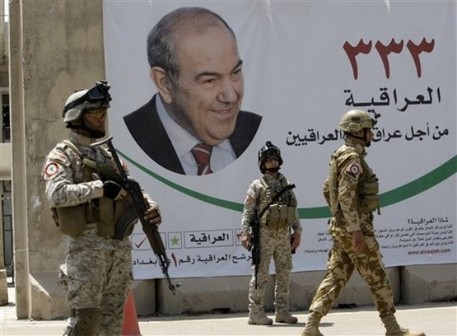
Plan B: Freedom?

rsz_iraq051010.jpg

Looking back on President Obama's Cairo speech, George Packer wonders if the so-called freedom agenda has become too cynically applied:

this Administration will devote its energy to repairing relations with foreign governments, and will not risk them for the sake of human rights. Where the stakes are low, as in the West African nation of Guinea, the Administration speaks out against atrocities, with positive effect; but where there’s a strategic interest, as in Ethiopia, which has jailed dozens of journalists and opposition politicians, the policy is mainly accommodation.
What if people around the world want more than a humble adjustment in America’s tone and behavior? What if American overtures to nasty regimes fail, because those regimes have a different view of their own survival? Then the President will have to devise a fallback strategy—preferably one that answers the desires of the people who applauded in Cairo, and doesn’t leave another generation cynical about American promises. [Emphasis added. - KS]

But isn't part of the problem that the so-called freedom agenda has become a de facto, as Packer puts it, "fallback strategy"? If the United States should learn anything from the previous administration, shouldn't it be that using the rhetoric of freedom as window dressing or, even worse, a "fallback" for policy failures only corrupts and sullies the very word itself?

For want of an actual freedom agenda, the American president is often asked to speak out against every petty despot and dictatorship around the world. But the United States cannot, I hope it goes without saying, invade and occupy every undemocratic country allegedly in need of liberation. Were it even effective - which, even in the cases of Iraq and Afghanistan, would be a rather untenable claim - it's simply not sustainable.

I believe a big part of the problem is the way in which we measure success and failure in American foreign policy. If, getting back to Packer, it's the American president's job to combat global cynicism, then we are in a lot of trouble. I think sequence matters, and if the United States wants to address freedom it should first start with basic human needs such as health. George W. Bush - for everything he got wrong about Iraq and Afghanistan - seemed to understand this in the case of Africa.

It might also be helpful to retain the moral high ground while discussing a sustainable freedom agenda. Which, for example, is more likely to engender global cynicism: the American president's failure to speak out against Ethiopia, or Americans publicly debating whether or not a U.S. citizen deserves his Miranda rights simply because he's a Muslim?

(AP Photo)

March 29, 2010

Video of the Day

Today's video of the day focuses on one of the few terrorist or insurgent organizations that claims to be Christian, the Lord's Resistance Army in central Africa:

To learn more about the Lord's Resistance Army, you can read a summary of the organization, a summary of the Ugandan Civil War, a summary of the Human Rights Watch Report, and the report itself.

For more videos on topics from around the world, check out the RealClearWorld videos page.

March 11, 2010

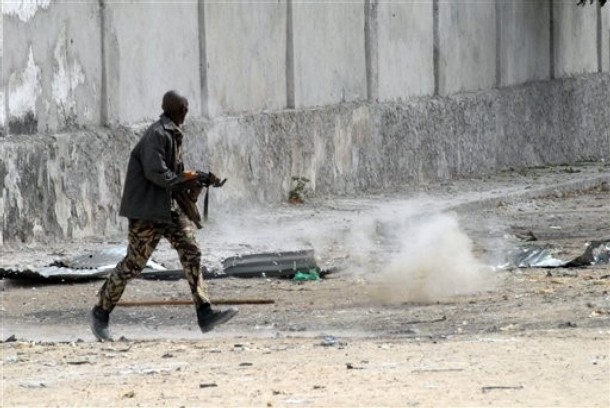
A New Plan for Somalia

somalia.jpg

Over the weekend, the New York Times reported on a covert U.S. effort to aid the Transitional Federal Government in Somalia in its battle to establish control over the country. As the fighting intensifies, the Council on Foreign Relations' Bronwyn E. Bruton has a new report out calling for a new approach. From the summary:


Bruton argues that the current U.S. policy of supporting the TFG is proving ineffective and costly. The TFG is unable to improve security, deliver basic services, or move toward an agreement with Somalia’s clans and opposition groups that would provide a stronger basis for governance. She also cites flaws in two alternative policies—a reinforced international military intervention to bolster the TFG or an offshore approach that seeks to contain terrorist threats with missiles and drones.

Instead, Bruton advances a strategy of “constructive disengagement.” Notably, this calls for the United States to signal that it will accept an Islamist authority in Somalia—including the Shabaab—as long as it does not impede international humanitarian activities and refrains from both regional aggression and support for international jihad. As regards terrorism, the report recommends continued airstrikes to target al-Qaeda and other foreign terrorists while taking care to minimize civilian casualties. It argues for a decentralized approach to distributing U.S. foreign aid that works with existing local authorities and does not seek to build formal institutions. And the report counsels against an aggressive military response to piracy, making the case instead for initiatives to mobilize Somalis themselves against pirates.

I think we need to set the bar for military support much higher, especially when it comes to civil wars in failed states. The threat of an al Qaeda safe haven is serious, but as the recent "JihadJane" revelations make clear, we're going to face a terrorist threat with or without failed states. And the rush to try and deny al Qaeda a foothold might very well create worse problems down the road, specifically new sets of enemies in the states where we're pouring in guns and enabling certain factions to prevail over others.

(AP Photo)

January 25, 2010

Tourism Boomed in Africa in 2009

While the rest of the world suffered through the Great Recession, Africa enjoyed a booming year in tourism:

Africa witnessed a tourism boom in 2009, while the tourism industry suffered a general decline amid the economic slowdown, according to the UN World Tourism Organization (WTO).

The latest edition of the UNWTO World Tourism Barometer said that growth returned to international tourism in the last quarter of 2009 contributing to better than expected full-year results.

International tourist arrivals for business, leisure and other purposes are estimated to have declined worldwide by 4 per cent in 2009 to 880 million.

The full report from the UN World Tourism Organization can be found here.

December 21, 2009

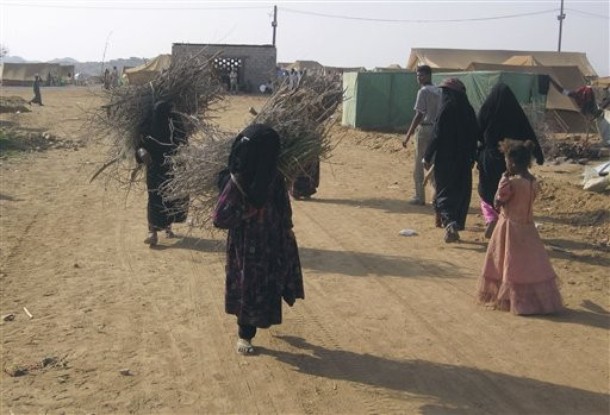
Is the U.S. Repeating Cold War Mistakes?

yemen2.jpg


One of the most intense debates during the early years of the Cold War was the extent to which "indigenous" communist movements were really that, or whether the Kremlin was a global puppet master, manipulating everything. Many in the U.S. at the time tended see communism as a monolith and the Kremlin as the hidden hand, secretly directing events. The reality was more nuanced. The Kremlin did extend its influence into other states, but it couldn't control all of them (see Ukraine and China, for instance). Just because a country "went communist" did not ipso-facto mean that it would take its marching orders from Moscow.

One of the consequences of the U.S. viewing communism as a monolith was the tendency to plunge the U.S. into a series of damaging, even catastrophic, interventions that didn't really reduce Soviet power but did take a bite out of U.S. strength. When we viewed global communism through more sophisticated eyes, we were able to pry apart China and Russia and begin to shore up our position after Vietnam.

No historical analogy is perfect, but we seem to be in a similar dynamic with respect to al Qaeda and "Islamic terrorism" more generally. After 9/11, there was a lot of talk about a broad-based war on terrorism that would tackle not just al Qaeda but groups like Hamas and Hezbollah and states like Iran and Iraq which were seen to facilitate terrorism (but not, of course, the states actually responsible for whipping up the Sunni jihadist whirlwind - Saudi Arabia and Pakistan). It was an undifferentiated lump and we would vanquish it all.

Two wars later, we have an administration that appears eager to scale back the conceptual framework of the war on terrorism into something more bite-sized. But even if the Obama administration would like to pare back to the more discrete goal of defeating "al Qaeda," the job has been made more difficult by the emergence of "like-minded" terrorists with only a tenuous connection to the "core" group inside Pakistan.

This poses a particular problem, I think, for U.S. policy towards Somalia and Yemen. Both are war-torn countries dealing with some insurgent elements that have links to al Qaeda. Do these groups share al Qaeda's core goals of bloodying the U.S. so we'll withdraw support for Arab autocrats? Will these individuals facilitate attacks against American targets in North Africa and beyond? And - most importantly - is that a threat worth taking military action against when weighed against other risks?

These seem like the kind of questions we need to be addressing before stuff like this:

The United States provided firepower, intelligence and other support to the government of Yemen as it carried out raids this week to strike at suspected hide-outs of Al Qaeda within its borders, according to officials familiar with the operations.

Those raids, the AFP reports, killed 49 civilians.

There are good reasons for using force against terrorist targets, and if the New York Times' report is to be believed, those targeted in the Yemen attack had fled Pakistan and so could plausibly be linked to the "core" al Qaeda threat which we are rightly concerned about. But the military is a blunt instrument and given the roiling instability in both Yemen and Somalia, it would be nice if the administration offered some kind of serious defense of its actions rather than just waving a hand and saying "al Qaeda," as if that's sufficient. Particularly because it seems intent on advertising its role in this attack.

(AP Photos)

October 21, 2009

Coming to America

Charles Wesley Mumbere—nurse's aid by day, Ugandan king by birth:

No word yet on Mumbere's "queen to be."

Check out more great stuff on the RCW video page.

September 15, 2009

Africa's Unimaginable Carnage

According to Gérard Prunier, 5.4 million people have been killed in Central Africa in the past decade in the biggest loss of life since World War II. Stephen Walt marvels at how such carnage could fly under the Western radar for so long. It is, unquestionably, a shocking humanitarian disaster, but I think it also exposes the weakness in the contention of both Susan Rice and President Obama that the security of American people is "inextricably linked to those of people everywhere."

Clearly, with such unfathomable carnage occurring in Africa with hardly a recognition, that's not the case.

July 22, 2009

Save Save Darfur?

John Boonstra believes it may be a critical moment for Darfur advocacy:

Most savvy Darfur advocates already know this, but the time for sloganeering and awareness raising is long past (and endured well past what should have been its expiration date). In some respects, the kind of misguided, generalist "stop genocide" tactics that one could find in early Save Darfur campaigns and that are so maligned by critics like Mahmoud Mamdani have affected the position we find ourselves in now, in which rhetoric that generates a lot of heat but no light can supplant directed action. This is not entirely the fault of vapid aims by advocacy organizations, to be sure; policymakers actually need little excuse to make noise instead of policy, and stopping genocide provides the perfect soundbite.

Darfur advocacy organizations for the most part adapted their tactics, targeting their energies and substantial constituencies toward specific aims, such as deployment of UN peacekeepers and the provision of long-needed helicopters. Some have had more, and some less, success (and in ways intended and unintended) than others, but the trickiest of them has always been the promotion of a robust peace accord.

This may be simply past the ability of advocacy organizations to effect, as Mark suggests, but it could also represent a stunning opportunity for transforming the nature of grassroots foreign policy campaigns. If the "Darfur movement" is successful in navigating the complicated and unsexy terrain of policymaking, then it will be a major victory for Darfur, for citizen activism, and for democracy.