Main

March 11, 2010

A New Plan for Somalia

somalia.jpg

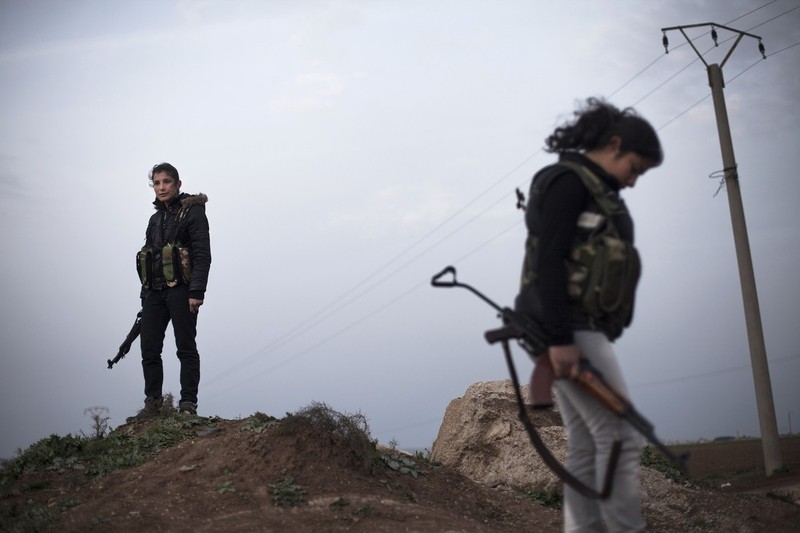
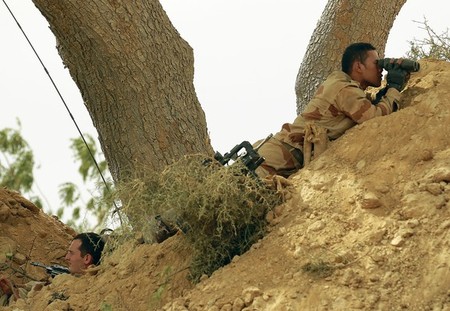
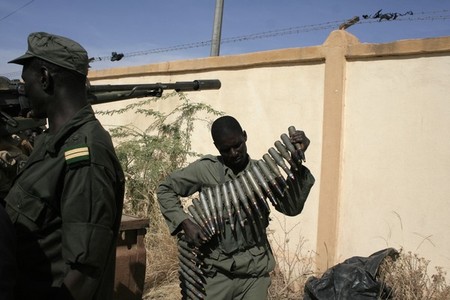
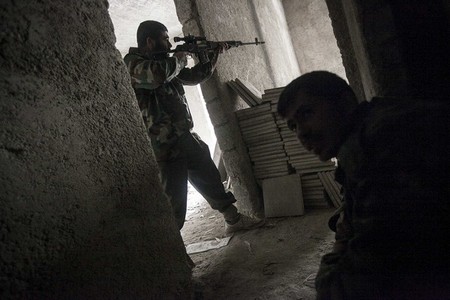
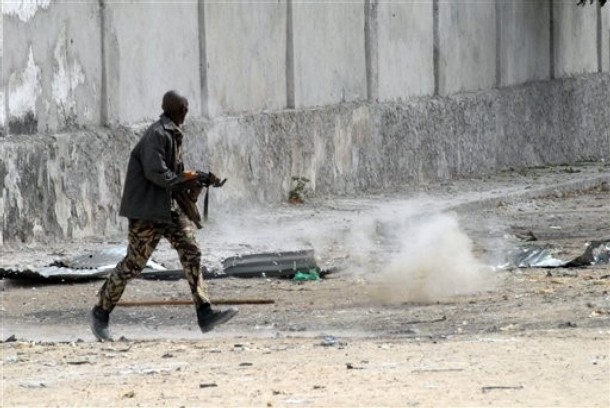
Over the weekend, the New York Times reported on a covert U.S. effort to aid the Transitional Federal Government in Somalia in its battle to establish control over the country. As the fighting intensifies, the Council on Foreign Relations' Bronwyn E. Bruton has a new report out calling for a new approach. From the summary:


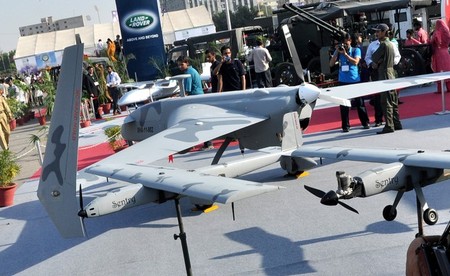
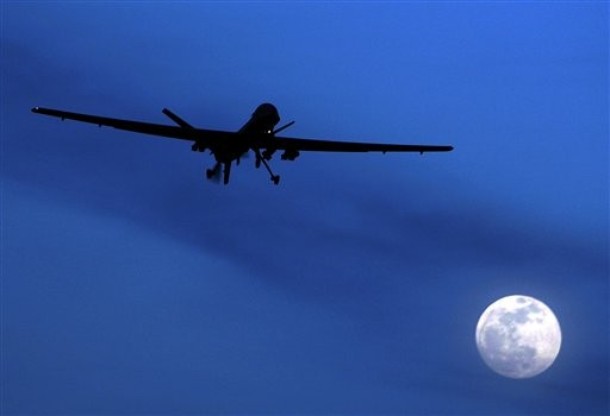
Bruton argues that the current U.S. policy of supporting the TFG is proving ineffective and costly. The TFG is unable to improve security, deliver basic services, or move toward an agreement with Somalia’s clans and opposition groups that would provide a stronger basis for governance. She also cites flaws in two alternative policies—a reinforced international military intervention to bolster the TFG or an offshore approach that seeks to contain terrorist threats with missiles and drones.

Instead, Bruton advances a strategy of “constructive disengagement.” Notably, this calls for the United States to signal that it will accept an Islamist authority in Somalia—including the Shabaab—as long as it does not impede international humanitarian activities and refrains from both regional aggression and support for international jihad. As regards terrorism, the report recommends continued airstrikes to target al-Qaeda and other foreign terrorists while taking care to minimize civilian casualties. It argues for a decentralized approach to distributing U.S. foreign aid that works with existing local authorities and does not seek to build formal institutions. And the report counsels against an aggressive military response to piracy, making the case instead for initiatives to mobilize Somalis themselves against pirates.

I think we need to set the bar for military support much higher, especially when it comes to civil wars in failed states. The threat of an al Qaeda safe haven is serious, but as the recent "JihadJane" revelations make clear, we're going to face a terrorist threat with or without failed states. And the rush to try and deny al Qaeda a foothold might very well create worse problems down the road, specifically new sets of enemies in the states where we're pouring in guns and enabling certain factions to prevail over others.

(AP Photo)

March 10, 2010

The Israeli-Palestinian Conflict

Walter Russell Mead has another long post up about Israel and anti-Semitism which touches on some of the questions I raised here. It's well worth reading in full and again, he makes a number of points I agree with. To wit:

I’m not trying to grade the incommensurable suffering of people around the world, but if we compare the attention and care that the international community has extended to the Palestinians with our attention and support for other victims in other places, a disturbing pattern emerges. Whatever the wrongs of Israel’s occupation policy — and I agree that there are some — the Palestinians, especially in the West Bank but even in Gaza, live much better than many people in the world whose suffering attracts far less world attention — and whose oppressors get far less criticism. I would much rather be a Palestinian, even in Gaza, than a member of a minority tribe in the hills of Myanmar, or almost anyone in the Eastern Congo or Darfur. Millions of children in Pakistan and Indonesia have less food security, less educational opportunity and less access to health services than Palestinians who benefit from UN services (to which the United States is historically the largest single contributor) that poor people in other countries can only dream of.

This is obviously true. It's especially in the Arab world, where the treatment of the Palestinians is subjected to no end of scrutiny while the grotesque human rights abuses of Arab regimes, Sudan, etc., are studiously ignored or minimized. Sri Lanka recently experienced a massive humanitarian catastrophe following a campaign against Tamil insurgents, and few people worked up much outrage about it (something that miffed Kevin quite a bit).

But I think there's a very important distinction here that Mead skips right over: by virtue of its aid and diplomatic support, the U.S. is implicated in Israel's behavior in a way that it simply is not with other countries. So one can agree with Mead, as I do, that Israel's treatment of the Palestinians does not rise to the world-historical level and nonetheless still argue that American policy toward Israel needs to be considered on the basis of that treatment (or more accurately, the ramification that that treatment has for American security).

This of course leads to the question of whether Israel's actions with respect to the Palestinians are having any negative impact on American security. This isn't physics, where cause and effect are as clear as billiard balls bouncing off one another, but there is a sufficient body of thought that does posit a direct link that it's worth taking seriously. Supporters of Israel - such as Dennis Ross and David Makovksy - acknowledged in their book that the Israeli-Palestinian conflict is a major grievance in the Arab world and contributes to the terrorist threat we face, which is why attempting to solve the conflict is such an urgent priority. The 9/11 Commission referenced the radicalizing effect of the conflict. Other analysts, such as Peter Bergen, who have studied terrorism have cited the existence of the Israeli-Palestinian conflict as a contributing factor to the rise of anti-American terrorism. And clearly, the conflict is a staple of al Qaeda propaganda. To take one recent example, Humam al-Balawi the Jordian bomber who killed 7 CIA officers in Khost, Afghansitan cited the war in Gaza as a catalyst of his radicalism.

At a minimum it suggests to me that violence in the Congo - which, we all agree, is objectively worse than the Israeli-Palestinian conflict in terms of the humanitarian toll - is nonetheless not as relevant to American security as the Israeli-Palestinian conflict is. And I think that fact goes much further than anti-Semitism to explain the disproportionate emphasis given to the Israeli-Palestinian conflict, at least in the United States.

Mead has promised some further posts on the subject but he notes that:

The core points I want to make aren’t about whether American foreign policy toward Israel is a good thing or not, but this debate is so politicized that if you criticize the thesis that American policy toward Israel represents the power of American Jews people assume that you are part of the lobby.

But why exempt a critical issue here? Isn't it just as important to debate the actual merits of our policy and not only whether people hold anti-Semitic views about its origins? I agree that it's important to root out and expose anti-Semitism wherever it rears its ugly head. But as Mead acknowledged in his post, one can be critical of aspects of U.S. policy towards Israel and not be an anti-Semite. So why not address the arguments of those critics too? If all you're going to do is flag the anti-Semitic critics and arguments and pass lightly over the ones that aren't, you set up a debate that defacto paints all critics of American policy toward Israel as anti-Semites.

March 8, 2010

Video of the Day

We thought we had this guy for a bit on Sunday:

As it turns out, we did not. I must confess that I was a little bit disappointed, because Adam Gadahn is the first person indicted for treason in years, and watching this video he is not helping his case.

For more videos on topics from around the world check out the Real Clear World videos page.

March 6, 2010

Is the U.S. Helping or Hurting In Somalia?

somalia.jpg

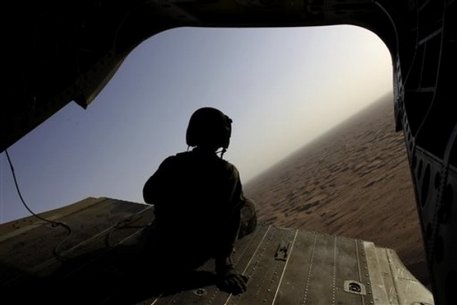
In Afghanistan, the United States has chosen to combat an insurgency with connections to al Qaeda with a 100,000 troop strong counter-insurgency (not counting the tens of thousands of troops contributed by NATO allies and local Afghan forces). In Somalia, the Obama administration has taken a different approach to much the same problem:

Most of the American military assistance to the Somali government has been focused on training, or has been channeled through African Union peacekeepers. But that could change. An American official in Washington, who said he was not authorized to speak publicly, predicted that American covert forces would get involved if the offensive, which could begin in a few weeks, dislodged Qaeda terrorists.

“What you’re likely to see is airstrikes and Special Ops moving in, hitting and getting out,” the official said.

Over the past several months, American advisers have helped supervise the training of the Somali forces to be deployed in the offensive, though American officials said that this was part of a continuing program to “build the capacity” of the Somali military, and that there has been no increase in military aid for the coming operations.

The Americans have provided covert training to Somali intelligence officers, logistical support to the peacekeepers, fuel for the maneuvers, surveillance information about insurgent positions and money for bullets and guns.

The Obama administration is reportedly worried about a Yemen-Somalia axis where al Qaeda fighters flow between the two countries, setting up training camps and a staging area for international attacks. It's a legitimate worry, and if the choice is between an Afghan-style counter-insurgency/nation building effort, and the kind of assistance the administration is offering, I think the Somalia template is preferable, because it puts Somalis and not Americans, on the front lines.

But we have to be on guard here as well. If we wind up enabling a government takeover, and that government is corrupt and brutal, it will not only galvanize further revolts, but it will direct the ire of Somalis against the U.S. That kind of blowback would take a bad situation and potentially make it much, much worse.

(AP Photo)

February 24, 2010

Hamas Leader's Son - an Israeli Spy

The Mossad's been getting beat up these past few days but this is pretty astounding:

The son of one of Hamas’s founding members was a spy in the service of Israel for more than a decade, helping prevent dozens of Islamist suicide bombers from finding their targets, it emerged today.

Codenamed the Green Prince by Shin Bet, Israel’s internal security service, Mosab Hassan Yousef, the son of Hamas co-founder Sheikh Hassan Yousef, supplied key intelligence on an almost daily basis from 1996 onwards and tracked down suicide bombers and their handlers from his father’s organization, the daily Haaretz said.


There was a piece in the Atlantic a while back on British efforts to penetrate the IRA that had similar high-level double agents.

Targets and Tactics, Ctd.

Israeli opposition leader Tzipi Livni on the Dubai hit:

“Every terrorist must know that no one will support him when a soldier, and it doesn’t matter what soldier, tries to kill him, whether it is in the Gaza Strip, Afghanistan or Dubai,” Livni said. “I don’t expect the world to welcome the killing of terrorists, but I do expect the world to not criticize it.”

Livni said she did not know who was responsible for the killing of Mabhouh. She mocked the criticism Israel has taken from the international community for the assassination.

“What was disproportionate this time?” she asked. “Was there a disproportionate use of passports?"

And were every terrorist of equal value or consequence, Ms. Livni might have a valid point here. But as Larison explained a few days ago, Hamas is in fact a political reality that Israel must accept. If this assassination actually brought Israel closer to a political resolution in Palestine, then I'd say the consequences of stealing passports and carrying out a hit with total disregard for its allies were well worth it for Israel.

But what has this assassination actually accomplished? Will it deter Iranian weapons sales to Hamas? Not likely. Does it deter Hamas? Not likely. Has it created yet another martyr for Hamas to parade around the Gaza Strip? You bet.

George Friedman of STRATFOR explains:

We are not writing this as pacifists; we do not believe the killing of enemies is to be avoided. And we certainly do not believe that the morally incoherent strictures of what is called international law should guide any country in protecting itself. What we are addressing here is the effectiveness of assassination in waging covert warfare. Too frequently, it does not, in our mind, represent a successful solution to the military and political threat posed by covert organizations. It might bring an enemy to justice, and it might well disrupt an organization for a while or even render a specific organization untenable. But in the covert wars of the 20th century, the occasions when covert operations - including assassinations - achieved the political ends being pursued were rare. That does not mean they never did. It does mean that the utility of assassination as a main part of covert warfare needs to be considered carefully. Assassination is not without cost, and in war, all actions must be evaluated rigorously in terms of cost versus benefit.

In short, actions have consequences, and thus the benefits of those actions had better outweigh the consequences. I see no evidence that this murder, while no doubt gratifying, has actually gained Israel much of anything.

But then again, Washington is as much to blame for this, as we provide no serious oversight or regulation to go along with the tremendous sums of money and military aid we provide to Israel. The cost/benefit of leaving one terrorist dead in Dubai likely never factored into the calculation, because why should it? Who cares what the United Arab Emirates thinks? The UK? Whatever, they'll fall in line.

Of course, a truly global war against asymmetric enemies indifferent to borders and conventional conflict cannot be prosecuted in this fashion. If this is, as Ms. Livni argues, all one big war of good against evil, then the good guys need to talk to each other. They need to trust each other. They need to grow their own ranks. None of that was accomplished in Dubai.

A true War on Terror requires allies and principles. The United States learned this lesson the hard way in Iraq, but it's one Israel refuses to ever learn.

February 22, 2010

Targets and Tactics

rsz_predator022210.jpg

Max Boot writes:

Funny how no one seriously objects when U.S. Predators carry out similar hits on al-Qaeda operatives but the whole world is in uproar when the Israelis target members of Hamas — an organization that is morally indistinguishable from al-Qaeda. The Dubai uproar only highlights once again the double standard to which Israel is constantly subjected. But Israel cannot and should not use that double standard as an excuse to avoid taking vital action in its self-defense. The leaders of terrorist organizations are legitimate military targets, and Israel should spare itself the agonizing and hand-wringing over this targeted killing.

Daniel Larison pounces:

As atrocious and appalling as their past and present conduct is, Hamas still retains in much of the non-American West some minimal legitimacy as a major faction in Palestinian politics. Hamas and Al Qaeda may be morally indistinguishable, but politically they have very different standings in the eyes of many other states. Israel’s major regional ally Turkey has a ruling party that is somewhat sympathetic to Hamas, while it is resolutely hostile to Al Qaeda and its affiliates. These are rather obvious political distinctions that Boot ought to understand, and the Israeli government must also understand these things. It is pointless to pretend that these distinctions don’t exist and to complain that the different reactions to drone strikes and the Dubai assassination prove a double standard. Whether or not there should be a double standard, Israel’s government has to take for granted that there is one. If Israel’s patron and the global superpower can get away with something, however misguided it may be, it does not always follow that it can act with the same impunity.

Well put, but let me take it a step further and dismiss the notion that any double standard exists at all in this case. It's a convenient rhetorical crutch I suppose to scream hypocrisy every time a critique is made of Israeli behavior, but this time around it just doesn't pass muster.

Since he doesn't say, I'm left to assume Mr. Boot means predator strikes in Pakistan, and not Afghanistan. These strikes are the product of U.S.-Pakistani coordination spanning two administrations and two regimes in both Washington and Islamabad, respectively. The predators are likely based inside Pakistan, and the strikes are carried out with approval - albeit quiet and reluctant - from Islamabad.

Larison disapproves of the drone strikes, and I certainly won't deny him that right. Personally, I consider them the least bad alternative to a bad policy of prolonged regional occupation. If we're going to maintain a military presence in the region, then we should be targeting specific al-Qaeda-Taliban operatives and taking them out with limited civilian casualties. The drones accomplish this, which is why Pakistani concerns have been less about the civilian casualties involved and more about who gets to pull the trigger.

And there certainly has been debate in the West over these attacks, both public and private ones within the administration itself. Moreover, I cannot think of one pro-drone argument in the last two years that didn't involve a kind of resigned acceptance of the program's relative effectiveness. Who are these predator pom-pom wavers Boot alludes to? Name names, please.

One could go on at length about the differences between drones and Dubai, but let me try to sum it up in one word: sovereignty. What actually makes the drones controversial is the political backlash they create for our allies in Pakistan. Our presence in the country is a shadowy one, and the cost/benefit balance is rather sensitive. Washington views Pakistan as an important ally in an important war, and thus can't do too much to create domestic tensions for said ally. But these are considerations made in conjunction with that government, just as the strikes are ultimately approved and enabled by that government. Just imagine how much harder it would be if Western operatives went into Pakistan, unapproved, and carried out such strikes. The backlash would be both tremendous and justified. Now imagine how the UAE must feel.

The targets in each case may be "morally indistinguishable," but the tactics are not, and that's why Israel - if responsible - is in the wrong here.

(AP Photo)

February 18, 2010

Fighting & Fanning the Flames of Terrorism

terrorism.jpg
Is the Obama administration working at cross purposes in its battle with Islamic terrorism?

On the one hand, we have U.S. forces battling the Taliban in Helmand Province as part of an overall strategy to stabilize Afghanistan before a U.S. draw down begins in 2011. Thus far, the operation appears successful and is being complimented by a number of high-profile Taliban arrests in cooperation with Pakistan. India and Pakistan are engaged in peace talks. By all appearances, the administration's approach to South Asia is bearing (provisional) fruit.

Yet move to the Middle East and the position looks quite different. The administration failed - spectacularly and publicly - in its early efforts to jump start the Israeli-Palestinian peace process. More importantly, it is moving to bulk up its forward military forces in the region in an effort to contain Iran.

It is a well documented fact that the presence of foreign military forces in the Middle East is a driver of terrorism. American forces stationed in Saudi Arabia to contain Iraq were a staple of al Qaeda propaganda throughout the 1990s so much so that former Deputy Defense Secretary Paul Wolfowitz (hardly one to "blame America") cited their removal as one of the salutary effects of the Iraq invasion (never mind that that move injected orders of magnitude more troops into the region). It would be foolish to believe that the U.S. could undertake a similar buildup to contain Iran and not court the same wrath. But that is what the Obama administration is doing. It is fighting and hopefully winning a tactical battle in Afghanistan (and perhaps more if it does reorient the geopolitics of Pakistan and India) while entrenching the dangerous status quo in the Middle East that has driven Arab jihadists into the Pakistani hinterlands in the first place.

Hopefully the terrorist threat is now small enough that even with the negative dynamic in place in the Middle East we can contain it through intelligence work and homeland security. But such a reactive posture is bound to fail on occasion.

(AP Photo)

February 16, 2010

Dubai Releases "Hit Squad" Video

Two weeks ago a Hamas commander was killed in his hotel room in Dubai. Now the authorities have released CCTV video showing the assassins tracing the man's movements:

The assassins had passports from a variety of European countries and now that their faces have been plastered all over Dubai, the awkward diplomacy begins. Here's the Daily Telegraph:

The Foreign Office was investigating how the identities of six innocent Britons — at least three of whom lived in Israel — came to be used by the alleged hit team...

As police in Dubai released CCTV footage of the suspects yesterday, some of the Britons whose identities were stolen voiced their anger after waking up to discover that they had been named in the plot.

"I have not left Israel for two years and I certainly have not been to Dubai recently," said Kent-born Paul Keeley, 42, a builder who has lived on a Kibbutz in northern Israel for the past 15 years.

"When I first heard about this I immediately looked to make sure my passport was still there and it was. It has not been stolen, so I don’t know what on earth has happened.


I'm obviously in no position to tell what's going on, but it does strike me as extremely problematic to steal an innocent person's identity to carry out an assassination. Of course, there's almost certainly a lot more to this story.

February 9, 2010

Al-Qaeda, Yemen

An unfortunate name for one village in Yemen.

February 8, 2010

DADT and the GWAT

Danny Kaplan, writing on Israeli policy in the pages of Foreign Policy, is puzzled by the American debate over gays in the military:

In Israel, military authorities have kept gay enlistment a minor concern by sticking to a minimal strategy: officially acknowledge the full participation of gays and at the same time ignore them as a group that may require special needs. Gay soldiers do not receive, and do not expect to receive, any special treatment in combat settings. It is simply a non-issue. If the U.S. government will adopt a similar course, it could enjoy not only a more liberal military, but also, perhaps, a more combat-effective one where the focus is on defeating the enemy rather than questioning fellow soldiers.

At a time when Americans are attempting to lead a campaign against terror and foreign dictatorships in the name of democracy, they should be more apprehensive of what is happening in their own military backyard.

I'd rather leave the domestic components of this debate to the Politics side of things, but I can't help but feel that DADT proponents are missing a great opportunity to accentuate the values Americans are fighting for in the so-called Global War Against Terrorism. If such a war does exist on a global scale, and it's indeed a societal conflict, what then does a stated policy of hiding gay servicemen and women say to our enemies about the sincerity of Western values? If radical Islamists advocate the torture of homosexuals in public squares, what then is the Western response?

February 4, 2010

U.S. Views on What Causes Terrorism

Pollster James Zogby takes to the pages of Forbes to highlight some recent data:

Our questions about the motivations of terrorists to attack the U.S. found the right and left with very different perceptions on all of the choices we offered except one, our support for Israel. Fifty-eight percent said it was a significant factor in terrorist motivation, and that percentage varied little across all demographic groups, including political ideology. It was cited somewhat more by First Globals (69%).

Support for Israel ranked third among the seven possible motivations. Here are the results for how many overall thought each was a significant factor:

69% - Resentment of Western power and influence;

58% - Making Islam the world's dominant religion;

58% - Support for Israel;

34% - Death and damage caused by the U.S. military;

32% - Western freedoms;

27% - Poverty;

19% - Psychological disorders.

12% - Others

Zogby goes onto note how widely divergent the views are between Democrats and Republicans:


For example, making Islam dominant was called significant by 84% of Republicans, but only 35% of Democrats. On the impact of casualties caused by our military, 52% of Democrats said it was significant, compared with 11% of Republicans.

It's pretty shocking how widely divergent and politicized these views are. Personally, I don't understand why people insist on creating an "either/or" dynamic with respect to what's driving Islamic terrorism. It's a complicated problem. Why can't it be driven by both a desire to spread a fundamentalist religious belief and as a reaction to military actions that kill Muslims? The interplay of both issues, I think, is at the root of the problem.

January 29, 2010

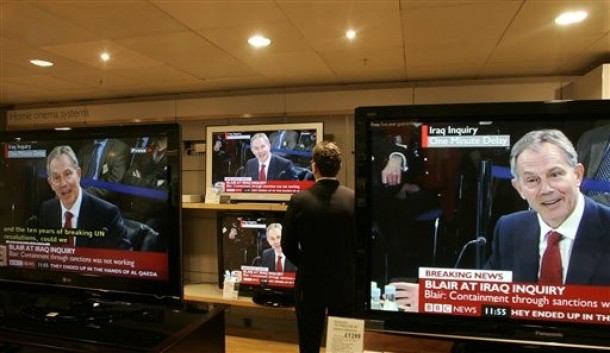
Tony Blair's 9/11 Defense

TonyBalir.jpg


Appearing before the Chilcot Inquiry, former British Prime Minister Tony Blair defended his decision to join the U.S. invasion of Iraq:


Looking greyer than when he was in office, Blair told the inquiry that the British and American view changed "dramatically" after 9/11.

"Here's what changed for me: the whole calculus of risk," he said. "The point about this terrorist act was over 3,000 people had been killed, an absolutely horrific event. But if these people, inspired by this religious fanaticism, could have killed 30,000, they would have [done].

Blair went on to argue that Saddam's WMD program was an intolerable risk after 9/11. This is a fairly common line of argument regarding Iraq but it doesn't hold up logically. What 9/11 demonstrated was precisely the opposite - that no state would dare run the risk of attacking the United States directly, or providing aid to a terrorist group with the purpose of striking such a blow. The only government al Qaeda could count on for any official support was the Taliban and to call them a government is a fairly charitable description.

Al Qaeda proved to be such a lethal menace precisely because it had no state sponsor and no territorial vulnerability. The idea that 9/11 proved that deterrence was futile is erroneous, if anything, 9/11 confirmed that deterrence is still a viable concept, at least when dealing with states.

But there is also an element of the absurd in pointing to Iraq as a potential source of WMD for al Qaeda. Shortly after 9/11, we learned that Pakistani nuclear scientists had met with bin Laden. We learned further that Pakistan's chief nuclear engineer had created an extensive black market peddling nuclear material and blueprints for constructing nuclear weapons. We knew for a fact that Pakistan was a nuclear weapons state, while no one seriously believed that Saddam had a nascent, let alone functional, nuclear program.

If there was any state where one could make a plausible claim about the potential for WMD to be slipped to al Qaeda, it would have been Pakistan, not Iraq.

(AP Photo)

January 27, 2010

Off Shore vs. Counter-Insurgency

Afghanistan.jpg


The Washington Post reports:


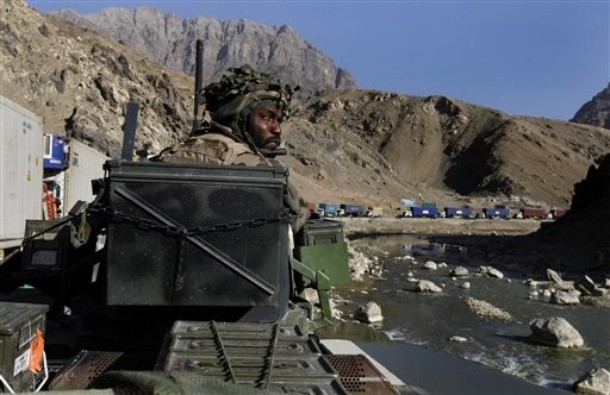
U.S. military teams and intelligence agencies are deeply involved in secret joint operations with Yemeni troops who in the past six weeks have killed scores of people, among them six of 15 top leaders of a regional al-Qaeda affiliate, according to senior administration officials.

The operations, approved by President Obama and begun six weeks ago, involve several dozen troops from the U.S. military's clandestine Joint Special Operations Command (JSOC), whose main mission is tracking and killing suspected terrorists. The American advisers do not take part in raids in Yemen, but help plan missions, develop tactics and provide weapons and munitions. Highly sensitive intelligence is being shared with the Yemeni forces, including electronic and video surveillance, as well as three-dimensional terrain maps and detailed analysis of the al-Qaeda network.

This is, in rough outline, what George Will, Robert Pape and others had advocated for Afghanistan as an alternative to nation building. I guess we're going to get a real life experiment in which is the most effective.

(AP Photo)

January 26, 2010

Bin Laden & the Palestinians

palestinains.jpg

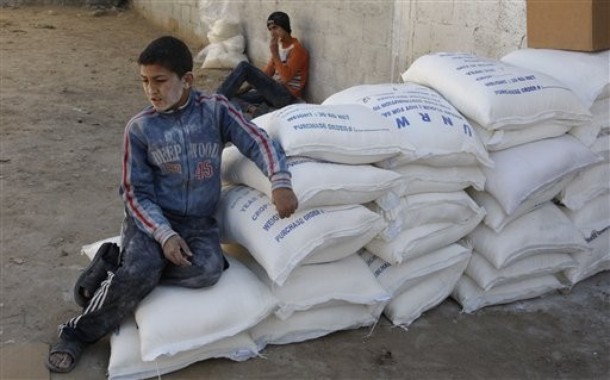
Osama Bin Laden's recent invocation of the Palestinian's plight has led a number of people (Bruce Riedel, Marc Lynch, Daniel Larison, among others) to argue that this underscores the need to bring the Israeli-Palestinian conflict to a conclusion and deny al Qaeda a potent propaganda tool. Here's Matt Duss:


Failure to move the parties toward a just resolution hurts U.S. credibility in the region, and constantly refills a propaganda well from which our enemies continue to draw.

And Andrew Sullivan:


It would not remove or emasculate the more irredentist factions, the Qaeda core, the Saudi nutjobs, and the Mumbai maniacs. But it would help shift the paradigm in which they can use the daily humiliations of Arabs in the West Bank or the horror of the Gaza attack as ways to move the Muslim middle.

There are numerous problems with this approach, starting with the pretty obvious point that none of the relevant parties are interested in making peace. The U.S. has demonstrated, for decades, that it is unable (or unwilling) to bring the two parties to a settlement and the Obama administration has just provided us with a case study in the futility of trying. No matter where you place blame for this state of affairs, the fact of the matter is that the U.S. has not been able to bridge the gap between the Israelis and Palestinians and nothing about the current peace process overseen by George Mitchell should give us any confidence that this is about to change.

But I think the focus on trying to end the conflict is looking at the problem the wrong way. For the United States, the basic issue is not the lack of peace - there are lots of places around the world that are not at peace but are nonetheless not a source of anti-American propaganda and jihadist recruitment. Rather, it is our involvement in the conflict that is ultimately the issue.

At the end of the day the U.S. has a limited ability to control what the Israelis and Palestinians do. But we can control what we do. If we are seriously concerned that sustained hostilities pose a direct threat to our security (and many people obviously don't believe this), then it seems to me the more sensible thing to do is to disentangle ourselves from the mess and not try in vain to clean it up.

(AP Photo)

January 12, 2010

How Does This End?

nigeria.jpg

The Cable's Josh Rogin passes along a report from the State Department that warns that Yemen, Somalia, Nigeria could be the next terrorist safe haven:

As the United States widens its understanding of the terrorism threat to include countries like Yemen and Somalia, its neighbor across the Gulf of Aden, the State Department inspector general's office is warning about another potential breeding ground for insurgents: Nigeria.

Of course, the underwear bomber Umar Farouk Abdulmutallab hailed from there, but his case is seen as an aberration because he grew up in the most advantageous of circumstances. But according to a new report made public Monday, Nigeria is at risk of becoming the same type of breeding ground for violent extremism that America is now battling in so many other places around the globe.

As many people have said repeatedly, you could break the back of al Qaeda in Af-Pak and still have a global terrorism problem on your hands.

Perhaps more importantly, as Matthew Yglesias intimates, we've now defined our national security interests in such a way that we cannot feel secure in the world so long as their are pockets of insecurity anywhere. That is not a rational view of defense but paranoia. Unfortunately, it's a view promoted as assiduously by progressives - including the Obama administration - as neoconservatives.

It's also worth asking just how much more expensive it would be to eschew global nation building and instead invest the money in developing an energy economy that does not rely overwhelmingly on petroleum.Having influence over the Middle East is great and all, but in a world where the U.S. economy wouldn't grind to a halt without oil, I don't see a lot of downsides to letting China enjoy the fun of wielding influence in the region.

(AP Photos)

January 11, 2010

Applying COIN to the Global War on Terrorism

mcchrystal.jpg

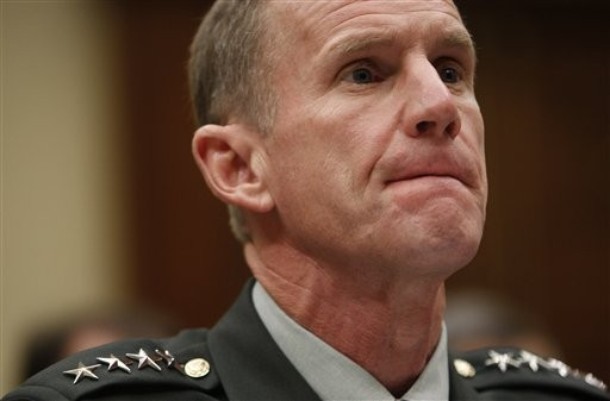
In an interview with Der Spiegel, General Stanley McChrystal lays out the general theme of counter-insurgency:

At the end of the day, a counter-insurgency is decided by people's perceptions and by how people feel. I think any war like this is not a battle between material. It's not about destroying the enemy's cities. It's not even about destroying their army, their fighters. You have to weaken the insurgency. But it's really about convincing the people that they want it to stop and they ultimately will. The most effective way for us to operate is to be really good and effective partners with our Afghan counterparts, because it's not a technical problem, it's a human problem.

I think McChrystal is correct here. But what's troubling is that Washington has not extrapolated this understanding to the global war on terrorism. After all, al Qaeda is reportedly in 60 countries. The failed Christmas Day bomber was a Nigerian, schooled in London and equipped in Yemen. The threat we face is global in nature and while we've embraced counter-insurgency doctrine in one theater, we seem to be indifferent to its precepts in others:


For now, however, the U.S. has chosen to meet the global threat of Islamic radicalism with what some would dub (in the Afghan context) a "narrow counter-terrorism" approach. We use intelligence to pick off al-Qaeda operatives on the battlefield, or police and investigative work to derail plots already set in motion, while mostly ignoring the psychological and political milieu from which radicalization occurs. To date, though, such an approach has been fairly effective. Terrorists have managed to kill scores in Europe (Madrid and London) but have yet to reprise a 9/11-scale atrocity inside the United States.

While al-Qaeda is infamously known for spacing its attacks out over several years, it has also been faced with unprecedented pressure since 9/11. U.S. and allied efforts may have permanently crippled al-Qaeda's ability to launch mass casualty attacks on American interests. (Of course, if that's true, it would severely undermine the counter-insurgent's case for a stepped up commitment to Afghanistan). On the other hand, we may simply be in a lull before the next massacre.

Unfortunately, we won't know until it's too late.

What we do know is that technology will only advance, allowing smaller groups of individuals to perpetrate ever more lethal attacks. The Internet ensures that even if physical safe havens such as Afghanistan become inhospitable, like-minded holy warriors can still find support and perhaps technical training in "virtual safe havens." We know too that while targeted military action and investigative work can yield tactical successes, America could well remain behind the strategic curve if broad swaths of the Middle East or pockets of Western Europe's Muslim community remains sympathetic to bin Laden's narrative.

Ironically - while there is a broad cross-section of elite opinion willing to countenance a truly massive investment in Afghanistan to win ordinary Afghans away from the Taliban - there is scant discussion, much less the political will, to embark on a strategic reorientation of America's Middle East policy and apply some basic precepts of counter-insurgency to that wellspring of jihadism.

(AP Photos)

January 8, 2010

The Garrison State

garrison%20state.jpg

David Shorr makes a good point regarding President Obama's insistence that America won't "hunker down" in the face of the jihadist threat:


The policy questions have to do with the dangers of making ourselves a garrison state; as a matter of political worldview, it has to do with how the terrorists ("THEM") loom in our consciousness. When it comes down to it, the essence of Cheneyism is that you can never overstate the threat from the terrorists, never be too dark in your assmptions, never do too much to counter them.

What's interesting here is that for decades now, Washington has (at least partially) justified an interventionist foreign policy as vital to avoid turning America into a garrison state. The idea was that we would erect a "defense in depth" and intervene abroad to forestall developments which could, eventually, close off the world to the United States and thus force a change in the American way of life.

But now a lethal, transnationalist terrorist group is bringing us the Garrison State through the back door.

When an earlier era generation of policy-makers were confronted with the prospects of the Garrison State, they oriented American foreign policy in such a way to avoid that. Clearly, the threat today pales in comparison to the international threats of the 1930s and 1940s, so a similarly sweeping change is almost certainly not going to happen.

Instead, as Shorr implies, we're going to have to learn to live with terrorism as a persistent feature of our society.

(AP Photos)

January 4, 2010

Admitting You Have a Problem

obamayementerrorism.jpg

Stephen Walt sounds off on the crotch-bomber:

Second, most of the commentary about the attack focused on the breakdown in security procedures and possible intelligence failures, but for me the real issue is to ask why groups like al Qaeda want to attack us in the first place. With a few exceptions, this is a question that rarely gets much scrutiny anymore; pundits just assume "terrorists" are inherently evil and that’s why they do evil things. (And some American extremists recommend that suspects like the Gitmo detainees be summarily executed without trial. I kid you not). But we really do need to spend some time asking why terrorists are targeting us, and whether we could alleviate (though not eliminate) the problem by adjusting some aspects of U.S. foreign policy.

In particular, I'm struck by the inability of most Americans to connect the continued risk of global terrorism with America's highly interventionist global policy. One can have a serious debate about whether that policy is the right one or not; my point is that we are kidding ourselves if we think we can behave this way and remain immune from any adverse consequences.

This is a point I've harped on as well and it's important to emphasize that the "most Americans" Walt refers to also includes senior officials in the previous and current administrations responsible for counter-terrorism policy. From Peter Baker's big piece in the Times today:

And so perhaps the biggest change Obama has made is what one former adviser calls the “mood music” — choice of language, outreach to Muslims, rhetorical fidelity to the rule of law and a shift in tone from the all-or-nothing days of the Bush administration. He is committed to taking aggressive actions to disrupt terrorist cells, aides said, but he also considers his speech in Cairo to the Islamic world in June central to his efforts to combat terrorism. “If you asked him what are the most important things he’s done to fight terrorism in his first year, he would put Cairo in the top three,” Rahm Emanuel, his chief of staff, told me....

....Yet even some of the Bush appointees were ready for change, appealing to Obama to revamp the struggle. “Mr. President-elect, we’re doing things very well, but we’re losing the messaging war,” Michael Leiter, the director of the National Counterterrorism Center, told him a week after the election, according to an official informed about the session. A significant share of the global population thought America was at war against the rest of the world, Leiter maintained. “You have an opportunity to change that message, to change how the struggle is perceived,” he said.
Obama was receptive to that mandate. “We’re going to do that,” he replied....

The entire subtext of the Obama administration argument is that the principle U.S. policies that catalyze Islamic terrorism were implemented circa 2001. True, those policies poured gasoline on the fire, but the fire was burning before George W. Bush took office. The kindling was American support for autocratic Middle Eastern governments, its support for Israel, and stationing of combat forces in the Middle East. Combine that with Islamic fundamentalism and you have the combustion that is the global terrorist threat. It is frankly delusional to think that a mere speech, however well intentioned, can suppress these flames.

The basic problem, as Walt eludes to, is that Washington has zero interest in re-examining these policies in light of the terrorist threat associated with them. And so instead we pretend that the two are fundamentally disconnected. It's not a matter of American policy making people angry, the Obama administration seems to be saying, it's a matter of them not understanding American intentions. We're "losing the messaging war" - and so a good speech can shore things up.

This mindset is not only patronizing to its intended subjects in the Arab and Muslim world, it's patronizing to Americans.

What the Obama administration cannot, apparently, do, is have an adult conversation with the American people about U.S. policy in the Middle East. Why not simply say that on balance the threat from international terrorism is a small price to pay to maintain American hegemony in the Middle East? It's what they obviously believe. And not without merit - American hegemony not only contributes to oil's safe transit to world markets but ensures that other states - particularly potential competitors such as China - have to rely on America to keep the flow going, thus giving us crucial leverage in the zero-sum world of international politics. They could argue that the costs imposed on the U.S. by terrorism are less than those that would result from a policy change in the Middle East. Given the mix of motivations that propel someone to actually become a terrorist, they could also argue that the causal links between American policy and Islamic terrorism are so diffuse (and the problem already so widespread) that an American policy change at this late stage wouldn't even work to reduce the threat.

None of that would be very difficult for President Obama, who is, if nothing else, an effective communicator. But instead, this is all ignored in favor of a self-serving and infantilizing narrative that it's all a big misunderstanding - that we have a "communications" problem.

(AP Photos)

Through a Partisan Haze

Former Bush administration homeland security official Frances Townsend offers her take on how to handle the burgeoning jihadist threat from Yemen:

The Obama administration needs to take a clear, tough line with Yemen: Take care of the terrorism problem within your borders so you are no longer a threat to the United States and our allies in the region, or allow the international community to come in and clean it up for you. The time for polite diplomacy is long past.

Matthew Yglesias isn't impressed:

But is excessive politeness really the reason Barack Obama hasn’t threatened a full-scale invasion of Yemen unless the Yemeni government undertakes unspecified measures to “take care of the terrorist problem”?

It seems to me that just 18 months ago the President was one George W Bush, a discredited and unpopular figure who liked to go out of his way to be rude to foreign countries, and even there these tactics weren’t being employed. Why? Well because when the right was in power a “Yemen hawk” inside the administration would have had to say what, exactly, she wanted done and what the risks and tradeoffs might be. But from an out of power perspective, it’s party time. On to Yemen!

While this is unquestionably true, I don't think sketching out maximalist "solutions" has anything to do with being a "hawk" per-se but being a partisan operative. If you are primarily motivated by a desire to wound political opponents, position yourself for a future job in an administration or protect your legacy, you will make arguments in the fashion that Townsend does above. (And in her defense, the format was not the place for a long discourse on "what should be done with Yemen." Perhaps her specific ideas have a lot more merit than a few paragraphs can reveal.)

We saw this with much of the Democratic party and Afghanistan in the 2008 election. There was a lot of enthusiasm for fighting on the "central front" of the war on terrorism when it was convenient to burnish Obama's Commander in Chief credentials. When it came to actually making the decision, there was considerably less enthusiasm for a troop surge. Ditto Sudan, where there was a lot of tough talk before the Obama administration took office about stopping the genocide, and not much since.

Partisanship puts demands on our foreign policy debate that are hard for the subject to bear: it reduces complexities to Manichean certainties and it offers easy solutions to problems that can't be solved - and that's when it's not being blatantly dishonest. There's no escaping it, it's just the way the political incentives work.

January 3, 2010

The Point of Terrorism

airportsecurity.jpg

Mark LeVine reminds us that terrorism is asymmetric warfare:

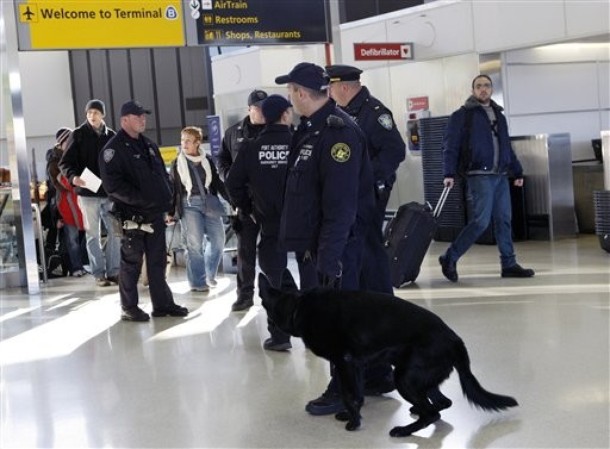
Think about it. One angry young man with about three ounces (around 80 grams) of explosive material, $2,000, and a pair of specially tailored underwear has completely disrupted the US aviation system.

It does not even matter that he failed to blow up the plane.

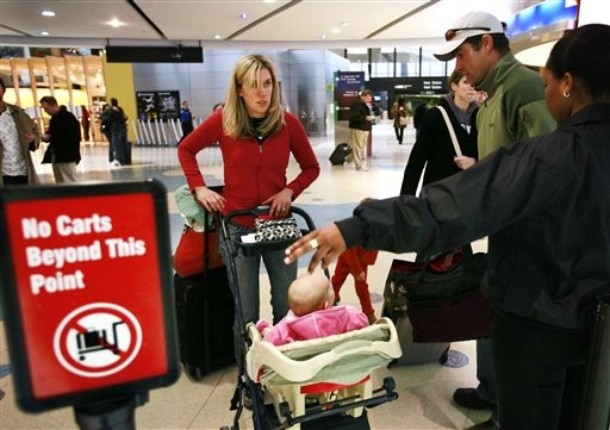
The costs associated with preventing the next attack from succeeding will measure in the tens of billions of dollars - new technologies, added law enforcement and security personnel on and off planes, lost revenues for airline companies and more expensive plane tickets, and of course, the expansion of the 'war on terror' full on to yet another country, Yemen.

And what happens when the next attacker turns out to have received ideological or logistical training in yet another country? Perhaps in Nigeria, which is home to a strong and violent Salafi movement, or anyone of a dozen other African, Gulf, Middle Eastern or South East Asian countries where al-Qaeda has set up shop?

Will the US ramp up its efforts in a new country each time there is an attempted attack, putting US "boots on the ground" against an enemy that is impossible to defeat?

Such a policy would fulfill al-Qaeda's wildest dreams, as the US suffers death by a thousand cuts, bleeding out in an ever wider web of interconnected and unsustainable global conflicts.

If the Obama administration wants to win the war on terrorism, it seems a good first step is to not play into our enemy's hands.

(AP Photos)