Main

February 7, 2012

Preemption and International Law

Mario Loyola wants international law to enshrine a doctrine of preventative war:

The right of early preemption against threats like Iran’s nuclear program must become an international norm of general acceptance if preemptive threats are to have any deterrent value. Current norms — and the diplomatic strategies derived from them — have only incentivized Iran to sprint toward nuclear weapons. The strategy of increasingly onerous sanctions may be painful for Iran, but it implies that military strikes are off the table as long as further sanctions are in prospect. Thus, starting with the first Security Council sanctions in 2006, Iran knew that it had several risk-free years ahead of it to develop WMD.

The only principle that can justify early preemption against a WMD threat is one that calls on dangerous regimes to be transparent in their dispositions. What you could call “regime transparency” is the key. This is the cardinal principle that was all along missing in the Bush administration’s justification for war against Iraq. The burden of proof should have been on Saddam to demonstrate the non-threatening nature of his weapons programs. In the long run, such a burden could be met only by a regime that was itself essentially transparent, in which the business of government was conducted in an orderly and law-abiding way.

I don't see how this is a practical or desirable standard. Enshrining the doctrine of preventative war around inherently subjective and conditional terms such as "dangerous" or "non-transparent regimes" seems to open the door to all kinds of questions: dangerous to whom? How dangerous? What constitutes a lack of transparency? And so on. What, in other words, stops Russia from claiming the right to attack Georgia preemptively if it purchases U.S. military equipment? What is the normative case against China attacking Taiwan or Iran attacking Saudi Arabia if these states increase their lethality through U.S. arms purchases?

Obviously, you can embrace a policy that states that only the United States has the prerogative to attack other countries on a preemptive basis, but I highly doubt many countries would be interested in enshrining that as "international" law.

Loyola bases his argument on the existence of nuclear weapons:

The “general principle” for preemptive self-defense is that you can preempt an “imminent attack” but nothing more. That rule is ridiculous, and will sooner or later prove suicidal. Because of the instantly deliverable nature of nuclear weapons, waiting for firm intelligence of an imminent threat is a reckless game of chicken in which the claimed right of preemption is triggered only when it is almost too late to make any difference.

But what's new here? Nuclear weapons have been "instantly deliverable" for many decades now. The U.S. has been able to deal with this unfortunate reality rather well, as the record of nuclear wars and nuclear attacks since 1946 seems to suggest.

December 27, 2011

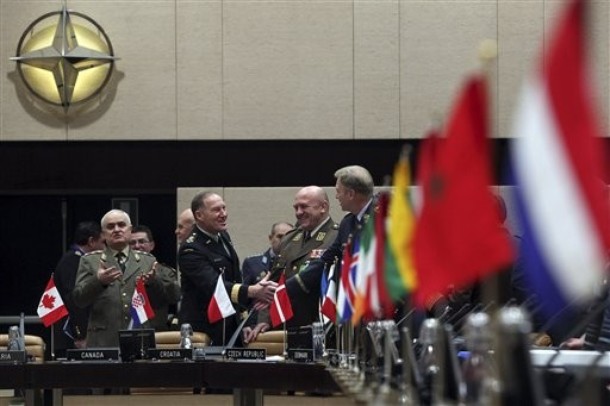
Keeping NATO Relevant

Via Larison, Kori Schake's piece on why NATO is worth saving serves up an interesting meditation on how an alliance ostensibly formed for defensive purposes is being warped to serve the needs of intervention:

The big risk is not whether the alliance can win whatever wars it chooses to fight. It can. The risk is that NATO will choose not to fight, that its members will withdraw into their own narrowly defined interests, close to home.

But notice how this concern stands in contrast to NATO's original intention, as described by Schake:

NATO’s membership has more than doubled to 28 countries since its inception in 1949, but its basic principle remains the same: “The Parties agree that an armed attack against one or more of them in Europe or North America shall be considered an attack against them all.”

Many Washington policymakers want to keep NATO in business to provide some kind of multilateral imprimatur on their various international adventures, but European defense budgets point pretty clearly to another reality - Europe itself is not facing any serious military threats and many European countries are scaling back their defense budgets (a trend accelerated by the Eurozone crisis). The great irony is that NATO could remain relevant in this era or austerity by actually serving as a conduit to collective defense - allowing member states to enjoy cost-savings by eliminating duplicate capacities. But instead it's being torn apart by those who insist it fight wars of choice - not wars of self-defense.


December 22, 2011

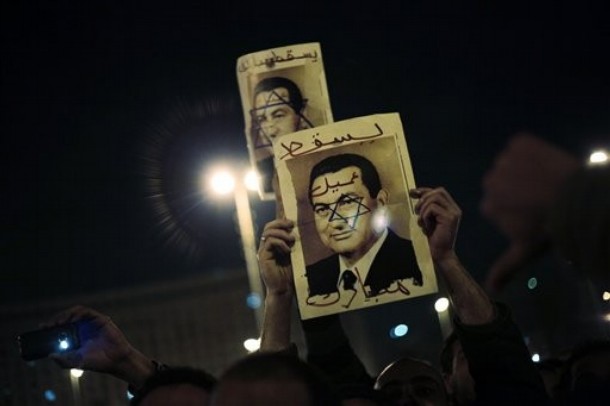
Maintaining Leverage Over Egypt

Andrew Exum argues that American leverage in the Middle East shouldn't be traded away so lightly:

The principle problem is one that has been in my head watching more violent crackdowns in Bahrain and Egypt: the very source of U.S. leverage against the regimes in Bahrain and Egypt is that which links the United States to the abuses of the regime in the first place. So if you want to take a "moral" stand against the abuses of the regime in Bahrain and remove the Fifth Fleet, congratulations! You can feel good about yourself for about 24 hours -- or until the time you realize that you have just lost the ability to schedule a same-day meeting with the Crown Prince to press him on the behavior of Bahrain's security forces. Your leverage, such as it was, has just evaporated. The same is true in Egypt. It would feel good, amidst these violent clashes between the Army and protesters, to cut aid to the Egyptian Army. But in doing so, you also reduce your own leverage over the behavior of the Army itself.

But all of this begs an important question - leverage for what? The idea is that the U.S. invests in places like Bahrain and Egypt because it needs or wants something in return. During the Cold War, it was keeping these states out of the Soviet orbit. In the 1990s and beyond, it was ensuring these states remained friendly with Israel and accommodative to U.S. military power in the region. Today, what? What is it that U.S. policy requires from Egypt and Bahrain that necessitates supporting these regimes during these brutal crack downs?

December 13, 2011

Is COIN Dead?

Trefor Moss agrees with a growing number of analysts that counter-insurgency is on the way out:

These are probably very good reasons for reorienting NATO and the U.S. military away from COIN – but not, it seems to me, the best or most obvious one. COIN should be abandoned because it’s time to accept that it simply hasn’t worked.

Counterinsurgency was always a paradoxical idea that involved the simultaneous waging of war and peace on the same country: you shoot the bad guys and build schools for the good guys. Afghanistan, though, was always resistant to these neat distinctions. The bad guys didn’t always seem so bad, and we were never quite sure if the good guys were really on our side.

Even so, politicians, military commanders and think tankers often maintained that the problem in Afghanistan wasn’t COIN itself, but rather the inadequacy of the doctrine’s implementation. In theory, yes, counterinsurgency could have delivered in Afghanistan – if there’d been a million more troops and a trillion more dollars. Or if the terrain hadn’t been so impenetrable, or the tribal politics so inscrutable. Or if Karzai hadn’t been Karzai, and Pakistan hadn’t been Pakistan...

COIN was wreathed in so much hype that for a long time there was a general, uncritical acceptance that it was the right and only way. But in the end, Afghanistan left counterinsurgency looking like intellectual naivete: a smart idea on paper that was utterly unworkable in real world conditions.

Another important aspect of the counter-insurgency debate is not whether or not it worked or "could work" if adequately-resourced, but whether the U.S. should really put itself into a position where it needs to suppress an insurgency in the first place.

Put another way, if the U.S. had to do Afghanistan over again, would it have been better to apply the approach used at the early outset of the war (special forces and air power) without any commitment to reconstruction, nation building or political reform?

Libya is a bit instructive in this regard. Post war Libya is quite unstable - with armed militia groups holding out against what is nominally the governing authority in the country. It may yet collapse into a full-blown civil or tribal war. But the U.S. accomplished the goal of killing Gaddafi and running his family out of power and won't be stuck with large numbers of troops in the country and billions of dollars on the line should things get ugly.

The entire recourse to counter-insurgency, then, was indicative of a larger and more important failure in American strategy - the imposition of goals for Afghanistan that were far too broad and ambitious given the nature of the conflict the U.S. found itself in after 9/11. COIN is very much like asking whether we can clean up a mess after we've made one - a good question, but better to figure out how not to make the mess in the first place.

December 12, 2011

On Practicing What One Preaches

Imagine if the US government, with no notice or warning, raided a small but popular magazine's offices over a Thanksgiving weekend, seized the company's printing presses, and told the world that the magazine was a criminal enterprise with a giant banner on their building. Then imagine that it never arrested anyone, never let a trial happen, and filed everything about the case under seal, not even letting the magazine's lawyers talk to the judge presiding over the case. And it continued to deny any due process at all for over a year, before finally just handing everything back to the magazine and pretending nothing happened. I expect most people would be outraged. I expect that nearly all of you would say that's a classic case of prior restraint, a massive First Amendment violation, and exactly the kind of thing that does not, or should not, happen in the United States.

But, in a story that's been in the making for over a year, and which we're exposing to the public for the first time now, this is exactly the scenario that has played out over the past year -- with the only difference being that, rather than "a printing press" and a "magazine," the story involved "a domain" and a "blog." - Mike Masnick

Secretary of State Hillary Clinton urged countries not to restrict Internet freedom in a speech in The Hague, The Netherlands, on Thursday.

"After all, the right to express one’s views, practice one’s faith, peacefully assemble with others to pursue political or social change — these are all rights to which all human beings are entitled, whether they choose to exercise them in a city square or an Internet chat room," Clinton said. "And just as we have worked together since the last century to secure these rights in the material world, we must work together in this century to secure them in cyberspace." - The Hill

Indeed.

November 29, 2011

Why the Secret War Stays Secret

Roger Cohen is concerned about President Obama's proclivity for covert war:

So why am I uneasy? Because these legally borderline, undercover options — cyberwar, drone killings, executions and strange explosions at military bases — invite repayment in kind, undermine the American commitment to the rule of law, and make allies uneasy.

Obama could have done more in the realm of explanation. Of course he does not want to say much about secret operations. Still, as the U.S. military prepares to depart from Iraq (leaving a handful of embassy guards), and the war in Afghanistan enters its last act, he owes the American people, U.S. allies and the world a speech that sets out why America will not again embark on this kind of inconclusive war and has instead adopted a new doctrine that has replaced fighting terror with killing terrorists. (He might also explain why Guantánamo is still open.)

But it's clear why Obama does not do this. Consider Cohen's obvious assertion - that covert war invites repayment in kind. Washington has, to a remarkable degree, ring-fenced this idea from polite discussion. (Exhibit A - this Bob Schieffer interview with Ron Paul.) Common sense dictates that a sustained bombing campaign in places like Pakistan, Yemen or Somalia - or a sustained campaign of assassination and sabotage in places like Iran - will provoke a response. Even if the policy is justified on the grounds of an imminent threat (and in some discrete cases I think it is), it's obvious that people not associated with al-Qaeda or Iran's nuclear program will resent, perhaps violently, having their country bombed or assaulted from afar.

Staying silent about these activities not only preserves operational secrecy but inhibits a real debate about the costs and benefits of covert war so that the next time a terrorist does manage to do something awful his (or her) justifications can be reduced to banalities like a "hatred of freedom." Consider the curious assertion from the administration's counter-terrorism adviser John Brennan that absolutely no civilians have been killed by American drone strikes since Obama took office. It is a dubious claim, to put it mildly, but sustaining this illusion is critical to shielding Washington from any culpability for its action.

November 22, 2011

GOP National Security Debate Live Blog

RealClearWorld will be cosponsoring a live blog with the American Enterprise Institute during this evening's Republican national security debate.

Be sure to join us tonight as foreign policy experts analyze the debate and answer your questions.

Scheduled participants include:

Carl Cannon, Washington Editor, RealClearPolitics
Daniel Larison, Contributing Editor, The American Conservative
Greg Scoblete, Editor, RealClearWorld
Jeremy Lott, Editor, RealClearBooks
James Joyner, Managing Editor, Atlantic Council
Jonathan Schanzer, Vice President of Research, Foundation for Defense of Democracies
Justin Logan, Director of Foreign Policy Studies, Cato Institute
Richard Cleary, Research Assistant, American Enterprise Institute
Sally McNamara, Senior Policy Analyst for European Affairs, Heritage Foundation

October 28, 2011

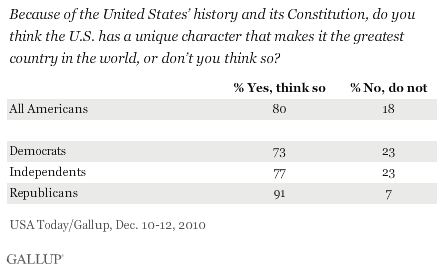
Can Exceptionalism Guide U.S. Foreign Policy?

Writing in National Review, Marion Smith takes issue with Stephen Walt's take-down of America's exceptionalism. In it, Smith offers proof of why the U.S. is uniquely virtuous among nations:

How about the American commitment to end European imperialism in North America, leading to the Monroe Doctrine? Secretary of State John Quincy Adams worked so that neither Spain nor France reclaimed their revolting colonies in Latin America. At the same time, America rebuffed British attempts to secure an imperial foothold in North America through an Anglo-American military alliance. Despite America’s military weakness, Adams — the principal author of the Monroe Doctrine — believed it would be “more candid, as well as more dignified, to avow our principles explicitly” and reject an alliance, rather than appear to “come in as a cockboat in the wake of the British man-of-war.” By championing the cause of the newly independent Latin American republics in Europe, and being the first established nation to recognize the new nations, a young U.S. advanced its principles abroad, promoting a new system of “justice” for one-third of the globe.

Of all the places to defend morality in American foreign policy, Latin America (!) following the Monroe Doctrine would be about the last place I'd start. That aside, Smith offers some forward-looking guidance:

Rejecting the source of our goodness — our true principles — will dash any hopes for future greatness. As Alexis de Tocqueville noted, “America is great because she is good, and if America ever ceases to be good, she will cease to be great.” In the 21st century, Americans need to learn from the examples of our earlier statesmen who prudently applied our exceptional principles to the constantly changing circumstances of international affairs.

So what would this mean in the case of, say, Bahrain, where the government has murdered its own citizens and jailed doctors who cared for wounded protesters? The Obama administration had signaled it would go ahead and sell them U.S. weapons anyway, but has now held that up pending a State Department review on human rights. Is forgoing that sale the exceptional thing to do?

October 3, 2011

Interventionism

Alexander Downes has a good piece studying the history of regime change and whether it works. You really should read in full but I'll pull out this:

Regime change is nothing new to the United States. Since the defeat of Napoleon in 1815, the United States has been the world’s foremost practitioner. Of the roughly one hundred cases of externally imposed regime change in that period, the United States has been responsible for more than twenty. These are only the “successful” attempts.

Talk about exceptionalism! And you would think with all this practice we'd have gotten it down by now...

September 29, 2011

U.S. at Cross-Purposes in the Middle East

Hillel Fradkin and Lewis Libby have a long essay on America's fading position in the new Middle East:

Taken together, these trends have called into question a number of strategic concepts on which American diplomacy in the Middle East has rested for decades:

• that a prosperous and democratic Turkey, anchored in the West, would, by example, draw other Muslim countries westward;

• that the failures of fascism, communism, and Shia theocracy, coupled with the enticements and pressures of a global economy, would in time lead the region, with Western help, to realign toward a liberal future in the broader community of nations;

• that the peace Israel reached with Egypt and Jordan would in time radiate outward into peace with other Arab states, and thus minimize the prospects of a major regional war;

• that the world community would prevent states in the region from getting nuclear weapons; and

• that regional divisions and American strength would prevent forces hostile to the US from dominating the region.

I think what's evident from the above checklist of regional priorities is that they had failure baked in. The U.S. has had a mixed track record when it comes to preventing a major regional war - there was one almost every decade since 1970 - and two of them involved the United States. Nor is it clear why Washington expected that the Middle East would, with "Western help," realign to a "liberal future" as it simultaneously stopped hostile states from dominating the region and prevented them from acquiring nuclear weapons. "Western help" was (and is) directed toward illiberal states in the region as a bulwark against "forces hostile to the United States." The process of doing one thing undermines the other.

Put in more concrete terms: is there anyone who sincerely believes that you can support the Saudi monarchy to check Iran while simultaneously "helping" that same monarchy dissolve itself in the name of Western liberalism? It's sounds like a self-evidently absurd position and yet, it's being held up as something Obama has failed to do...

September 22, 2011

NATO in the Old Age Home?

Elizabeth Pond:

NATO won't be dismantled. Instead, it will move to an old people's home. Sure, member-state officials will drop by Brussels now and then to pat auntie on the head, but they won't expect her to do any heavy lifting.

This pungent metaphor was coined by veteran U.S. diplomat Robert Blackwill at the conference that kicks off the transatlanticists' high season each fall. Surprisingly, virtually everyone at the Geneva palaver of the International Institute for Strategic Studies last weekend agreed.

Americans across the political spectrum blame the decay of history's longest alliance on the free-riding Europeans' slashing their defense budgets after the fall of the Berlin Wall. Reciprocally, Europeans blame the decay on American hyperpower hubris in starting the Iraq war and failing to end the Afghan expedition before the quagmire—thus overextending the West, incubating America's present war fatigue, and giving the last laugh to Iran in the Mideast and China around the globe.

The truth is that the existential threat to Europe is located in the balance sheets of their national banks and the southern states of the Eurozone. And that is something that the U.S. and NATO, for all their military might, are unable to save them from.

September 21, 2011

The Strategic Case for Israel

Rick Perry did indeed give a more strategic argument on behalf of Israel during his speech yesterday, saying "Israel’s security is critical to America’s security."

Daniel Larison says it ain't so:

If we went through all of the allies deemed “critical” to our security, we would find that a large number of them could be fairly described as “a very small country that simply isn’t very important.” Indeed, many of our allies have become our allies because they hope to enhance their security at U.S. expense, and oddly enough many Americans have convinced themselves that it is imperative that we cooperate. These alliances and patron-client relationships often make sense for the other party, but very few of them make sense for the U.S. any longer.
I think the key phrase here is "any longer." It made sense to stack up a series of dependencies in the Cold War, when there was a reasonable chance of an all-out war with the Soviet Union. In today's world, the odds of a major great power war have diminished and where there is a heightened chance, it's in Asia, not the Middle East. Of course, the Middle East would be important in such an instance, since its natural resources would fuel the belligerents, but that doesn't mean a Cold War-era template should do the heavy lifting of protecting America's interests.

See also Andrew Exum.

September 15, 2011

Don't Play Ahmadinejad's UN Game

rsz_iran91511.jpg

The 66th session of the United Nations General Assembly convened this week in New York City.

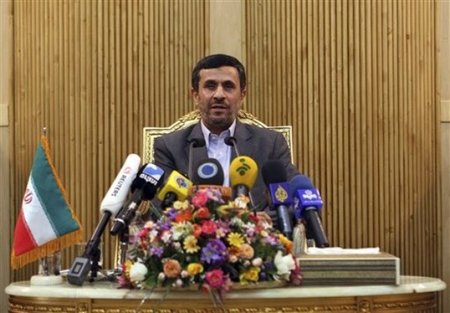
Libya’s ousted Brotherly Leader and Guide of the Revolution Muammar Gaddafi dare not show his face due to an International Criminal Court arrest warrant upon his head for crimes against humanity. Venezuela’s President Hugo Chavez cannot attend either because of ongoing chemotherapy. But Iran’s President Mahmoud Ahmadinejad intends to be there.

We will no longer be entertained and infuriated by scenes of Chavez sarcastically speaking about satanic sulfur in 2006 or Gaddafi disdainfully chucking the UN charter over his shoulder in 2009. Nonetheless, Ahmadinejad plans on yanking the West’s chain yet again. He will distribute a book on alleged atrocities committed against Iran and Iranians by American, British and Soviet forces during World War II, the semi-official Mehr News Agency reports:

Ahmadinejad will go to New York late this week, taking 1000 English copies of Documents on the Occupation of Iran during World War II. Iran’s occupation by the Allies during World War II is an international issue. This book contains many documents referring to the abuses inflicted by the Allies against the Iranian people.

The five-volume work is to be presented as evidence at the UN General Assembly, a parallel story in the Tehran Times notes:

to demand compensation from the Allies for violation of Iran’s neutrality during that world conflict.

So even though his comrades from the Mad Hatter’s Tea Party cannot be there, Iran’s chief executive will do his best to incite American, British and Russian emotions – and he is well accomplished at provoking negative responses. But unlike Alice, officials in Washington, London and Moscow should not respond in anger. Paying no attention to his theatrics will deny Iran’s president the pleasure he seeks.

Let’s not give Ahmadinejad a tale to spin for Chavez when he flys to Caracas after the New York visit.

(AP Photo)

September 6, 2011

Here's the Obama Doctrine

Obama's Libya policy may not amount to a doctrine, but it did establish two principles. Last March, Obama explained that we must intervene when there's a risk of massacres or genocide, but we can never do so alone unless Americans are directly at risk.

At face value, I find this borderline repugnant. America shouldn't be the world's policeman, but neither should we make it a matter of principle to say we won't stop genocide when and where we can simply because no one will join our posse. - Jonah Goldberg

I doubt that the Libyan war established the principles that Goldberg claims here. But I do think the war established a principle, and a very important one at that: the U.S. will no longer be an occupying power.

The Libyan war, combined with the Obama administration's lethal expansion of special forces and drone attacks in Somalia and Yemen, drive this point home. The U.S. will continue to wage what can only be called a "war" on terror, but one that is far more asymmetrical and under the radar. This is almost certainly for the good. While drone campaigns will undoubtedly radicalize some (especially if they're used hyper-aggressively), they're far less radicalizing than a large scale troop presence in a foreign country.

August 29, 2011

Neoconservatism RIP?

Peter Beinart pens an obituary for neoconservatism:

Post-9/11, neoconservatism posited that jihadist terrorism was the greatest foreign-policy threat of our age, a threat on par with Nazi Germany and the Soviet Union. And it insisted that the only way to defeat that threat was to remake the Middle East through military force.

Today, by contrast, it is increasingly obvious that the real successor to German fascism and Soviet communism is not Al Qaeda, whose mud-hut totalitarianism repels the vast majority of Muslims. It is China’s authoritarian capitalism, the first nondemocratic ideology since the 1930s to challenge the idea that democracy is the political system best able to promote shared prosperity. And not only is Al Qaeda sliding into irrelevance, its demise is being hastened by exactly the narrowly targeted policies that neoconservatives derided.

I think this is something of a misreading. Before 9/11, and almost immediately thereafter, neoconservatives identified Iraq as a major threat. During the 1990s, they were also actively stumping for a more confrontational approach to China - something that has resumed as the war against al-Qaeda has moved further to the margins. And let's not forget Iran. In other words, neoconservatism doesn't rise or fall on a particular set of enemies, it's a way of thinking of the world and America's role in it (which, incidentally, has an endless capacity to identify enemies abroad). Agree or disagree with it, it's not going anywhere.

I do think Beinart is correct when he writes that: "Post-9/11 neoconservatism was a doctrine that rejected limits. Now that limits are becoming, painfully, the centerpiece of American political debate, it’s no longer a plausible vision of America’s relationship to the world."

August 19, 2011

Why America Is Losing

Stephen Walt declares the wars in Afghanistan and Iraq "lost" and offers a rationale:

More broadly, these wars were lost because there is an enormous difference between defeating a third-rate conventional army (which is what Saddam had) and governing a restive, deeply-divided, and well-armed population with a long-standing aversion to all forms of foreign interference. There was no way to "win" either war without creating effective local institutions that could actually run the place (so that we could leave), but that was the one thing we did not know how to do. Not only did we not know who to put in charge, but once we backed anybody, their legitimacy automatically declined. And so did our leverage over them, as people like President Karzai understood that our prestige was now on the line and we could not afford to let him fail.

This is very true, but it also underscores a point I have tried to make repeatedly since these wars began. Namely, that Washington defined the terms of victory, and those terms were inflated and untenable. There was no reason for the U.S. to "lose" the war in Afghanistan after toppling the Taliban and routing al-Qaeda, but by staying and constantly moving the goal-posts in the direction Walt describes above, a "loss" became baked-in.

But it also reflects where and how wars are fought today. The U.S. was able to "create" or rather, rebuild, institutions in Japan and Germany because both were functioning, coherent states before they were defeated. They also suffered unimaginable devastation. The U.S. was (thankfully) not going to fire bomb Iraqi cities or drop atomic bombs on Kandahar. Nor was it "at war" with Afghanistan or Iraq before invading and occupying either country. At best, it was at "war" with regimes that only partially represented their countries or sub-national movements that had taken root in those countries.

What's more troubling about both the Iraq and Afghanistan wars is not that the U.S. was defeated in its over-reaching ambitions but that large segments of its foreign policy making class choose to paper over this (because they were complicit) or are in a mad-rush to find the next arena for their adventurism.

August 10, 2011

Government Activism

Jennifer Rubin wants some:

Deeply regrettable.

That’s actually one way to describe the peculiar mix of indifference and incompetence that characterizes President Obama’s foreign policy. Why didn’t we call for Assad’s ouster months ago? Why didn’t we take charge in Libya, short-circuiting Moammar Gaddafi’s reign of terror? Why were we mute during the 2009 Green Revolution? When Russian operatives set off bombs in Georgia? When China arrested more high-profile dissidents? It is a long and ignominious record of indifference and appeasement, mixed with pompous pronouncements of our good intentions.

So we'd replace pompous pronouncements of our good intentions with pompous pronouncements of our outrage. Where would that get us?

August 8, 2011

Decline of the American Empire?

china%20modern.jpg

Stephen Walt wonders when it was the U.S. empire started to decline. His answer: the first Gulf War. Here's the rationale:

Unfortunately, the smashing victory in the first Gulf War also set in train an unfortunate series of subsequent events. For starters, Saddam Hussein was now firmly identified as the World's Worst Human Being, even though the United States had been happy to back him during the Iran-Iraq War in the 1980s. More importantly, the war left the United States committed to enforcing "no-fly zones" in northern and southern Iraq.

But even worse, the Clinton administration entered office in 1993 and proceeded to adopt a strategy of "dual containment." Until that moment, the United States had acted as an "offshore balancer" in the Persian Gulf, and we had carefully refrained from deploying large air or ground force units there on a permanent basis.

I think if we're going to pin the blame for a deepening U.S. role in the Middle East on anything it wouldn't be the Gulf War but the Carter Doctrine - that was what put the U.S. on the path toward an interventionist posture in the region. The Gulf War and the dual containment that followed were in many ways the logical heir to that doctrine.

But I'm not convinced that the Gulf War is really responsible, per se, for U.S. decline, mostly because "decline" is more of a relative phenomena (although we certainly haven't helped ourselves of late). That being the case, I'd argue that Deng Xiaoping's market-oriented reforms in China, which kicked off three decades of economic growth, have probably played a much more significant role in the narrowing of the power gap than America's post-Gulf War blunders.

(AP Photo)

August 1, 2011

Whither Exceptionalism

exceptionalism%20america.jpg

It's taken as a given in many quarters of Washington's foreign policy establishment that one critical role the U.S. should play internationally is patiently mentoring the world in the ways of government and freedom. Now that we have edged within a hair's breath of a self-imposed default, I wonder - will the enthusiasm for American exceptionalism wane among America's foreign policy commentariat? Even if - as looks likely as of this writing - a deal is hammered out, the U.S. has not covered itself or its political institutions in glory...

(AP Photo)

July 20, 2011

Containing Pakistan

David Rothkopf thinks the U.S. should form an alliance with India to contain Pakistan:

Pakistan is America's ally, of course. We say it all the time. Unfortunately, Pakistan also harbors our enemies, supports our enemies, tolerates the intolerable by our enemies, and is therefore also our enemy. Not all of Pakistan, of course. Just some of the most influential of its elites and institutions as well as substantial cross-sections of its population.

Pakistan therefore has no one to blame for the steady deepening of the security ties between the United States and India than itself. As containing the problems within Pakistan through cooperation with the Pakistanis looks increasingly difficult, it is only natural that the United States should simultaneously develop a Plan B approach. That approach is containment and it necessarily must involve a partnership with India.

I think a tighter partnership with India is very much in America's interests, but not because it's going to somehow squeeze Pakistan into abandoning its support for militant groups. In fact, if the U.S. is frustrated with Pakistan's behavior now, it beggars belief that we'll somehow get more cooperation out of them by teaming up with an arch-enemy. Nor is it clear how this will "contain" Pakistan since the use of militant proxies is almost impossible to stop.

What would potentially solve, or at least mitigate, Pakistan's support for militant groups would be a change in the dynamic between itself and India, and to the extent that greater U.S. ties to India could encourage a rapprochement there it's all for the better. But that's unlikely to happen, given how India views outside interference on the Kashmir issue.

July 14, 2011

The Arab Spring and U.S. Interests

Aaron David Miller reflects on the impact the "Arab Spring" will have on U.S. interests in the Middle East:

Democracy, or whatever strange hybrid of popular government, weak institutions, and elite control replaces the autocrats, will be a double-edged sword. And American policies, already marked by contradiction and challenge, won’t escape its cutting edge. The gaps separating American values, interests, and policies could actually grow, and the space available to the United States to pursue its policies—from Iran to Gaza to the Arab-Israeli peace process—could contract. The growing influence of Arab public opinion on the actions of Arab governments and the absence of strong leaders will make it much tougher for the United States to pursue its traditional policies. For America, the Arab Spring may well prove to be more an Arab Winter.

I used to agree with this sentiment, but now I'm not so sure. Consider what American policies in the region currently are:

1. Supporting Israel's military superiority: This can and will continue no matter who is in charge of the various states currently in tumult. Indeed, if democratic governments do take hold in the region and shift away from a "cold peace" with Israel, U.S. commitments would only strengthen. Certain facets of U.S. policy toward sustaining Israel's preeminence - such as bribing Egypt - might be constrained, but certainly not derailed (and let's not forget that Egypt is badly in need of money).

2. Ensuring the "free flow" of oil: U.S. forces stationed in the region ostensibly for this purpose are in countries where either the "Arab Spring" has been crushed (Bahrain) or never flowered in the first place (Kuwait and Qatar). Newly empowered democracies in Egypt and Tunisia might protest this basing, but could they really end it?

3. Containing Iran: This is as much a Saudi interest as an American one, and as long as the Saudis swing their sizable checkbook behind the effort it's sure to have a few takers.

4. Striking al-Qaeda: This is perhaps the most vulnerable of America's interests, since weaker governments and reformed intelligence services might have qualms about torturing people on America's behalf or simply be overwhelmed with other responsibilities to cater to Washington's requests. Still, if the U.S. can keep tight with Jordan and Saudi intelligence the impact could be manageable.

In other words, the major American policies in the region that inflame regional public opinion are also fairly well insulated from that opinion. They may be altered at the margins, but probably won't be completely derailed.

July 12, 2011

A Realist Turn

Daniel Trombly thinks that realism's current vogue is a false spring:

To be blunt, anybody hoping for realism and restraint in American foreign policy is setting themselves up for failure if they put their trust in the inherent wisdom of the mass public to provide a sound guide for foreign policy. It is true that after serious disasters in American foreign policy or prolonged wars, the public does tend to tack a seemingly “realist” course in foreign policy matters. However, a “realist’ inclination that only evinces itself in a politically meaningful way after enough time has passed for thousands of lives have been lost or billions of dollars spent is not a very useful constraint on the interventionist tendencies of the US government.

I'm not sure how much of this supposed realist turn is driven by public opinion or by politicians angling to differentiate themselves.

July 5, 2011

No, We Don't Need Nation Building

It's somewhat disingenuous of Max Boot to equate a desire not to engage in nation building with "isolationism" but I'd prefer to focus on this part of his recent op-ed:

Since the U.S. left Somalia, tail between our legs, it has become a haven for terrorists and pirates. Now an Islamist movement modeled on the Taliban, known as the Shabab, threatens to take over the country. If this were to happen, it would replicate the disaster that struck Afghanistan in the 1990s — another example of what happens when the U.S. refuses to help build a viable state in a country desperately in need of one.

If you want yet another example of how costly our aversion to nation-building has been, look no further than Iraq. The Bush administration associated nation-building with the hated policies of the Clinton administration and refused to prepare for it. The result was that Iraq fell apart after U.S. troops had toppled its existing regime.

What's fascinating about Boot's argument is where it begins - after the U.S. has intervened in Somalia and Iraq. What these two interventions have in common is not simply that the U.S. failed in its efforts at nation building but that neither were necessary at all. Understanding why the U.S. fails at nation building misses the point - it's like complaining that you're not good at plumbing after you've dismantled your sprinkler system and left hoses spewing water everywhere. If you know you don't know what you're doing - and what you're trying to "fix" isn't all that vital - don't do it! Why is this so hard to understand?

UPDATE: Larison pounces as well.

June 24, 2011

The Tea Party Divide Grows

rsz_bachmann62411.jpg

For my part in our brief interview with House Armed Services Chairman Buck McKeon (R-CA) today, I asked whether the era of the Republican hawk is over, or just on hiatus till after the next election. He had an interesting response.

"Conservative Republicans have a three legged stool: defense, fiscal responsibility and social issues. Right now the stool is a little out of balance because fiscal matters are dominating everything, because of the economic shape we're in," McKeon said. "And when the Chairman of Joint Chiefs comes and tells us our most important defense need is our economic stability, that gets a lot of people thinking that's all we should be talking about, to the point where some of them are saying 'Defense should be on the table, Defense should be cut.'"

This fits, of course, into larger concerns Republicans have about the increasing divide between the Washington foreign policy elite and the base of the party - not just the Tea Party, but other fiscal and social conservatives as well. While several Tea Party favorites maintain a generally hawkish stance on Afghanistan and other fronts, their attitude toward Libya has been frustration and disagreement from day one. A recent letter signed by a roster of former George W. Bush appointees and neoconservatives on the issue contains little in the way of anyone who seems to have a firm connection with the right's base. (A chat with an average member of the Tea Party does not typically reveal a high approval rating for William Kristol and Karl Rove, in case anyone was curious.)

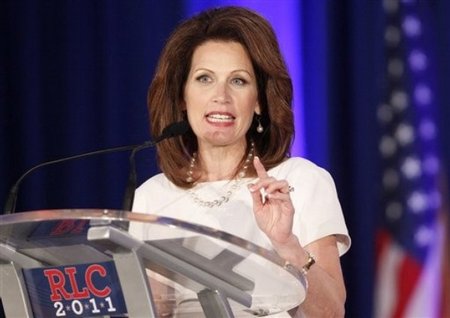
When it came time to vote today, McKeon was with the majority of Republicans, but on the opposite side from 89 of his members who successfully blocked an attempt to approve limited funding for NATO/U.S. efforts in Libya. Included in opposition are several darlings of the Tea Party, such as Michele Bachmann, Allen West and several other freshmen.

The question is whether this divide between the neoconservative foreign policy elites and the more conventionally conservative voting base on the right will grow to affect other areas of national security policy as well, beyond just things branded as "Obama's war." Without respected and serious go-betweens who don't have prior bad blood with the base, it's hard to see how McKeon's stool will be rebalanced.

(AP Photo)

June 16, 2011

The American Interest

Glenn Greenwald claims to be shocked that the Obama administration would priviledge American companies over those from other countries:

Earlier this month, Hillary Clinton hosted a meeting of top executives from a wide array of corporations -- Goldman Sachs, JPMorgan, Halliburton, GE, Chevron, Lockheed Martin, Citigroup, Occidental Petroleum, etc. etc. -- to plot how to exploit "economic opportunities in the new Iraq." And one WikiLeaks "diplomatic" cable after the next reveals constant government efforts to promote the interests of Western corporations in the developing world. Nonetheless, the very notion that the U.S. wages wars not for humanitarian or freedom-spreading purposes, but rather to exploit the resources of other nations for its own large corporations, is deeply "irresponsible" and unSerious. As usual, the ideas stigmatized with the most potent taboos are the ones that are the most obviously true.

Really? I think it's just the opposite. There's no real stigma around the idea that the U.S. seeks to maximize its economic advantage or energy security through foreign policy. What else is it supposed to be doing?

It's true, as Greenwald notes, that there is often a taboo around discussing this so blatantly and crassly at the political level. Presidents are expected to engage in ritualistic paeans to universal human rights and paint the U.S. in the best light possible. But outside of some soaring presidential rhetoric, is the idea that the U.S. would seek to advantage its commercial interests when dealing overseas a "taboo?"

Hardly.

Remember Secretary of State James Baker's rationale for the first Gulf War? "Jobs, jobs, jobs."

It was obvious from the start that one of the primary reasons the West took such an active interest in Libya's humanitarian crisis was because of its oil. There has been no shortage of articles dealing with Libya's oil, its impact on the war or the role it has played in motivating countries like Great Britain to intervene in Libya's civil war. This is hardly hush-hush.

(Mind you, I don't think it was wise for the U.S. to intervene in Libya - no matter how much oil the country has - nor do I think the military should be used to tee-up preferential resource contracts for U.S. corporations.)

June 15, 2011

Is There a GOP Shift on Foreign Policy?

The hawkish consensus on national security that has dominated Republican foreign policy for the last decade is giving way to a more nuanced view, with some presidential candidates expressing a desire to withdraw from Afghanistan as quickly as possible and suggesting that the United States has overreached in Libya.

The shift, while incremental so far, appears to mark a separation from a post-Sept. 11 posture in which Republicans were largely united in supporting an aggressive use of American power around the world. A new debate over the costs and benefits of deploying the military reflects the length of the conflicts in Afghanistan and Iraq, the difficulty of building functional governments and the financial burden at home in a time of extreme fiscal pressure.

The evolution also highlights a renewed streak of isolationism among Republicans, which has been influenced by the rise of the Tea Party movement and a growing sense that the United States can no longer afford to intervene in clashes everywhere. - Jeff Zeleny

I very much doubt there's any kind of shift occurring. First, vague declarations on the campaign trail have no meaningful relation to how a candidate would govern if he or she were elected. Second, we've seen this movie before. In 2000, then-candidate Bush promised a "humble" foreign policy that would eschew nation building. We all know how that turned out.

The fact of the matter is that any significant "shift" in GOP foreign policy won't happen at the level of presidential hopefuls angling for the limelight. It will occur when the bureaucrats and policy-makers that would staff a future Republican administration turn meaningfully from the doctrines and orthodoxies that have shaped "Republican" foreign policy in the past. Is there evidence that such a shift is occurring? I don't see it ... do you?

Religion and Foreign Policy

romney%20fp.jpg

When one writes an article on foreign policy and religion one should be prepared to demonstrate more than a passing knowledge of either. Furthermore, one might wish to avoid using a sexual reference as a title. This piece by Molly Worthen fails on all accounts.

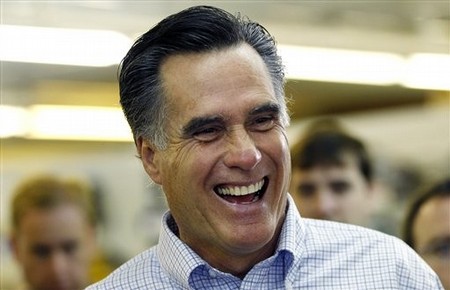
First, Worthen fails, as many scholars do, to distinguish between Mormonism generally and any given church. For the record, Mormonism includes varying cultural and religious traditions across the United States and world that accepts the Book of Mormon as scripture. There are many religious organizations, the Church of Jesus Christ of Latter-Day Saints being by far the largest, and the one to which Mitt Romney and John Huntsman belong. However, Mormon culture and traditions may have significantly different policy recommendations than the organization of the LDS Church.

Secondly, Worthen does not go beyond a very cursory examination of any Mormon doctrine, or culture which may impact foreign policy. Does she intend to imply that Romney might be pro-France because he was a missionary there, or that Huntsman might somehow favor Taiwan? Furthermore, Mormon scriptures have a great deal of political content, and not one is cited throughout the article (for example the extensive discussion of war in Alma 43-62).

Third, Worthen does not address foreign policy at all within her article. Indeed, it reads like a term paper on Mormon’s adapted for a foreign policy audience. The brief discussion of the Mormon version of American Exceptionalism is interesting, but American Exceptionalism is an assumption, not a policy, and has informed everyone from JFK to George W. Bush. Her sense that Mormons tend to be pragmatic even appears to me to be correct, but pragmatism is also an approach rather than a policy.

Finally, Worthen introduces extremely spurious information. She informs us that “Rumor has it that the CIA and FBI treat the Mormon faith as a de facto background check and recruit more heavily on the campus of Brigham Young University than almost anywhere else” - an assertion preposterous on the face of it. Moreover, apparently, "today's most famous Mormon guru [is] Glenn Beck,” as if a talk show host has sway either within the church or the foreign policy community.

Presidential elections and foreign policy are far too important to treat so lightly. While some may argue that it is unimportant what a person’s religion is, I believe that this is a topic worthy of discussion, if for no other reason than people do have concerns about it. Nevertheless, one must approach this topic carefully and responsibly.

It is not as though there is not abundant information on the topic readily available to the public. Speaking on the LDS Church, it has made all of its scriptures, statements and nearly all of its publications available online. Additionally, many scholars study LDS and Mormon culture in a political context including Harold Bloom and Armand Mauss. Furthermore, the LDS Church operates a university with a respected political science department, which includes Valerie Hudson who has written on both LDS religion and foreign policy! Finally, there are a variety of public figures in the recent past who could be looked to for inspiration including, but certainly not limited to Mo Udall, Ezra Taft Benson, J. Reuben Clark, and of course Brent Scowcroft.

(AP Photo)

June 8, 2011

U.S. Interests After the Arab Spring

After America’s withdrawals from Iraq and Afghanistan and the constraint to our strategic reach produced by the revolution in Egypt, a new definition of American leadership and America’s national interest is inescapable. - Henry Kissinger

One would think this would be the case, but is it? Few of the leading Republican candidates at the moment have engaged seriously with this question, content to recycle bromides defending the existing orthodoxy. The Obama administration has blithely set about digging another hole for the U.S. in Libya. Any attempt to argue for a narrower set of American interests in the Greater Middle East are met with cries of "isolationism." This is not an environment conducive to a sober reappraisal of U.S. interest in the Middle East.

June 6, 2011

A New Russian-U.S. Arms Race?

Richard Lourie argues that the U.S. and Russia may be heading towards a new arms race:

On May 20, Russia’s top generals made what Time magazine called “a startling admission of weakness.” In their opinion, by 2015 the NATO missile defense system would neutralize both Russia’s ICBMs and its submarine-based ballistic missiles. That could be devastating for Russia because, as defense analyst Ruslan Pukhov points out, for “relatively little expense, Russia’s nuclear forces support the country’s status as a great power, provide a military deterrent to other major powers and enable it to maintain moderately sized conventional forces.”

But Pukhov also demonstrates that the generals are wrong about the 2015 date — or were just making noises as part of the bargaining process. Russia’s nuclear arsenal will not be significantly stymied by the system NATO wants to put in place. But once in place, that system could provide an excellent base for a more elaborate system that could indeed neutralize Russia as a nuclear power. Since Russia has no leverage over the United States and NATO, its only choice would be to upgrade its own heavy, ground-based multistage missiles. In other words, Russia and the United States, without in the least meaning to, may be backing into a new arms race.

June 3, 2011

Paul Ryan's Imagination

paul%20ryan%20exceptional.jpg

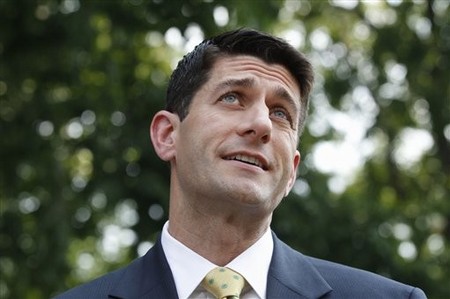
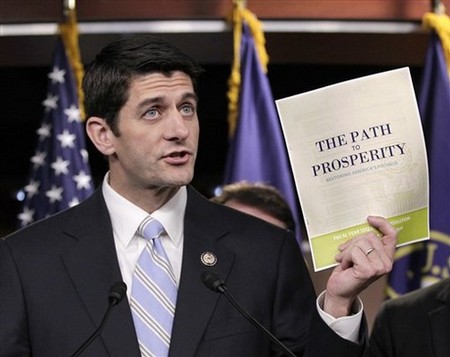
Representative Paul Ryan offers what the Weekly Standard's Michael Warren calls an "embrace of American Exceptionalism" during a foreign policy speech. It includes this rather odd warning:

A world without U.S. leadership will be a more chaotic place, a place where we have less influence, and a place where our citizens face more dangers and fewer opportunities. Take a moment and imagine a world led by China or by Russia.

While we're at it, we can imagine a world led by elves and wizards because that's just about as likely to happen as a world "led" by China or Russia.

Neither China nor Russia is interested - let alone capable - of "leading" the world. Russia can barely tame the very weak and often thoroughly corrupt countries directly on its border. At the height of Soviet power (and, more importantly, at the height of Communism's ideological appeal), it couldn't rule the world.

Similarly, China has not shown any inclination that it wishes to dominate the global system the way the United States does. Not even the more alarmist projections about its military capabilities claim it is seeking global power projection as a prelude to global dominance. Besides, China has made a tidy profit lending the United States money while we burnish our global leadership in places like Iraq and Afghanistan. Places where, incidentally, the U.S. sacrifices blood and treasure and China gets mineral and oil rights. Talk about exceptionalism!

Global leadership is not a prize that other countries are aspiring to. At worst, nations are looking to beef up their capacity to exert regional influence or raise the cost of American interference. We should argue about when and where that posses a threat to the United States - not about fantasy stories of Chinese or Russian global domination.

(AP Photo)

May 26, 2011

It's Not the 1930s

Victor Davis Hanson is concerned:

But if America abrogates the preeminent leadership position it has held for the last 65 years, wouldn’t the world look a lot like it did in the pre-American days of the 1930s? Then, a Depression-era United States was just one of many powers, and was reluctant to assert leadership abroad.

In other words, the post-American world could look a lot like the rather terrifying pre-American version of seven decades past. Why in the world would we wish to return to it?


The trouble with these kinds of formulations is that they're hopelessly vague - what, in specific terms, does it mean to "abrogate the preeminent leadership position" and why is this something we're concerned with at the moment? Then there's this:
The so-called international community cared as much in the 1930s about rising, aggressive totalitarian states in Germany, Italy, Japan, and Russia as it does today about ascendant China or Iran.
This essentially refutes Hanson's premise about a "terrifying" post-American world right there. It is absurd to compare Iran to any of those rising powers in the 1930s and while China has the potential to shake things up globally, the idea that their rise is going unnoticed, or unchecked, is simply erroneous. In the 1930s, the U.S. had no military presence in Europe to contain Germany. In 2011, the U.S. has defense treaties with two of China's immediate neighbors and has military bases surrounding the country.

Obviously, things can go very badly abroad without having to rise to the level of Nazi Germany or the Soviet Union, but it behooves us to keep some perspective.

May 25, 2011

Staying in Iraq

Frederick Kagan has a new report (pdf) out making the case for an extended U.S. presence in Iraq beyond 2012. Here's what's in it for the United States:

A long-term strategic military partnership also benefits the United States. It would deter serious Iranian adventurism in Iraq and help Baghdad resist Iranian pressure to conform to Tehran's policies aimed at excluding the United States and its allies from a region of vital interest to the West.

In other words we must stay in Iraq to ensure that we can stay in Iraq.

While Kagan devotes the majority of the report to arguing why U.S. forces should stay within Iraq, he doesn't devote any space to arguing how the U.S. should go about convincing the Iraqi government. And indeed, Kagan admits that the Maliki government is "of two minds" about letting the U.S. retain a military presence in his country after the Status of Forces Agreement expires. One theme Kagan does stress is that Iraq should allow U.S. troops to stay in the country to keep Iraq free of foreign interference. This, for instance, was apparently written without irony:

If Maliki allows the United States to leave Iraq, he is effectively declaring his intent to fall in line with Tehran’s wishes, to subordinate Iraq’s foreign policy to the Persians, and, possibly, to consolidate his own power as a sort of modern Persian satrap in Baghdad. If Iraq’s leaders allow themselves to be daunted by fear of Maliki or Iran, they will be betraying their people, who have shed so much blood to establish a safe, independent, multiethnic, multisectarian, unitary Iraqi state with representative institutions of government. Maliki and Iraq’s other leaders contemplating such a course should beware the persistent dangers of the Arab Spring to would-be autocrats and those who appear to place control of their countries in the hands of foreigners.

Replace "Persian" with "American" and you can make the exact same argument from the standpoint of Iraqi nationalism. Kagan's entire argument is that Iraq's value to the United States hinges, in great measure, on how it can be used to defenestrate Iran. In other words, both the Americans and the Iranians are attempting to use Iraq in much the same way - as a springboard to enhance their power.

May 17, 2011

Why Is American Foreign Policy Militarized?

James Joyner had a good piece in the Atlantic last week asking why perpetual war became an American ideology:

The passionate zeal of the liberal interventionists and neoconservatives satisfies an emotional hunger that has been a part of our political system since the emotion-laden days of the Cold War, when the public first came to view U.S. foreign policy as a tool of good to be deployed against evil. Both ideologies use the language of morality and appeal to our shared humanity. People want to do something about tragedy and it's easy to persuade them that doing the right thing will be worthwhile. Realists may often be right, but they are rarely convincing.

I think that's right, but something's missing. I don't think we can explain the post-Cold War interventionist streak in U.S. foreign policy in just ideological terms, although I think the notion of "American leadership" has played an important role in pushing the U.S. in this direction. As Joyner notes, the disappearance of the Soviet Union left the U.S. without a competitor to push back against various foreign adventures, but I think there's more to it. When it comes to national security policy, Washington has engaged in the same kind of corporate book-cooking that would make Goldman Sachs proud. In other words, America has done a lot of "off balance sheet" accounting in the national security realm, all in an effort to shield the voter and tax payer from the true costs of various policy pursuits.

First, there is the sidelining of Congress in decisions of war and peace (a sidelining which they have all too enthusiastically consented to). Rather than a serious debate, the executive branch positions interventions as a fait accompli. No one takes seriously the idea that Congress should "declare war" before troops are dispersed. Second, there's a refusal to pay for wars by raising taxes. During the Bush years, we ran a guns and butter economy, with generous social spending and tax cuts, all while prosecuting two major ground wars. Third, there has been a refusal to resource counter-insurgency efforts by expanding the Army through conscription. There are good arguments against a draft, but surely one reason Washington has assiduously avoided the subject, despite the strain on manpower, is that it would make an interventionist foreign policy much harder to sustain.

May 14, 2011

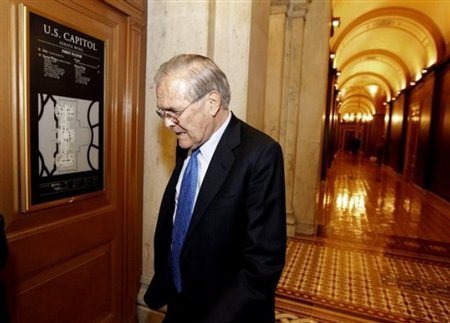
Rumsfeld on WikiLeaks

rsz_rummy51411.jpg

Stepping aside from the ongoing back and forth blasts between Sen. John McCain and former Attorney General Michael Mukasey on waterboarding, it's time for another Bush-era official to offer his take on the policies of the time. So Donald Rumsfeld talks WikiLeaks with vindicated verve in today's Washington Post. An excerpt:

The documents should also disprove some myths that have dogged Guantanamo and the reputations of those who honorably serve there. The classified record, for example, confirms that three detainees who died in 2006 were suicides — not, as some have irresponsibly alleged, victims of brutal interrogations. The documents chronicle the lengths to which military guards accommodated Muslim religious sensibilities: sounding a call to prayer five times a day, providing halal meals and touching Korans only with gloves — not flushing them down toilets, as was falsely alleged by one U.S. magazine. There was no policy of mistreatment, much less torture.

The release of this classified information has compromised intelligence sources and methods, risking lives. The documents indicate, for example, that some al-Qaeda members turned and revealed large quantities of information about their colleagues. The cooperation of one Yemeni informant — since released — who fingered dozens of fellow detainees as members of al-Qaeda is now public, making him vulnerable to retribution.

Rumsfeld, one of the original co-sponsors of the Freedom of Information Act, has to smile at the results. In my recent interview with him - full transcript to come - Rumsfeld emphasized that with the release of his detailed documentation tied to his book project, he was interested not in revisionist history, but in putting out the truth about what happened for future historians to study and consider. Rumsfeld again:

Julian Assange hoped that his latest gamble with the lives of intelligence professionals, military personnel and terrorist informants would embarrass the U.S. government and inhibit its ability to strike our enemies. But the WikiLeaks documents, coupled with what we know about how bin Laden’s hiding place was discovered, may be among the clearest vindications yet of the Bush administration’s policies in the struggle to protect America and the free world from more terrorist attacks. They may prove the strongest arguments for keeping open the invaluable asset that is Guantanamo Bay.

(AP Photo)

May 12, 2011

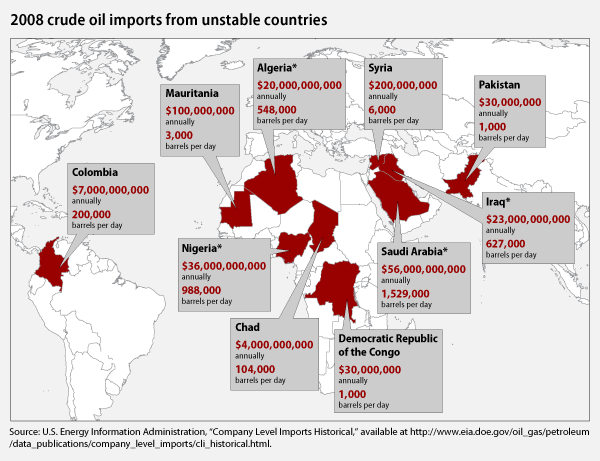
Oil and Terror

When I first joined the Navy, our military footprint in the Middle East consisted of a one-star admiral and three ships. We now have multiple three- and four-star generals, and 150,000 men and women of the armed forces are deployed at great expense to our blood and treasure.

It is no coincidence that as our nation’s reliance on oil has grown, so has our military presence in this area, which is rich in oil and ripe with volatility.

Reforming our energy policy will take time and political will, but the stakes to our national security are too high not to act. It took nearly a decade to find bin Laden. Let’s start our next attack on Al Qaeda right now — working to end our oil dependence. - Dennis Blair

Transforming America's energy economy in the way Blair states is the work of decades. It will do nothing about al-Qaeda or radical recruitment in the short and medium-term. Indeed, this energy independence argument has little to do with U.S. national security - oil wealth will flow to terrorists so long as their are people who need oil and terrorists who need money. American dollars can easily be substituted with Chinese yuan in this regard.

This is actually an argument about whether or not the U.S. should sustain a large military footprint in the Middle East. I'd agree that such a large military footprint in the Mideast is counter-productive and should be reduced, but we don't need to go on a crash course to reduce oil consumption to do that - it could be done in relatively short order for far less money than transforming America's energy economy.

May 11, 2011

Can the U.S. Senate Do Foreign Policy?

Jennifer Rubin thinks she's found a "forceful, clear and unequivocal support for a robust American presence in the world" in the words of U.S. Senator Marco Rubio. So what did Rubio say? This:

I think we’ve taken too long. I think the fact that the administration continues to hold out hope that somehow Assad is going to be a reformer is not the right way to go. I intend, along with a couple of my colleagues this week, to introduce a resolution here in the Senate to act on this issue. And my hope is that this policy will move quickly on voicing support for those on the ground there in Syria who are trying, in a peaceful way, to bring about change to their country. And I think the world has to be so disappointed, I think, that this administration has not been more forceful in speaking out on behalf of freedom and democracy throughout the region, including places like Bahrain.”

Voice support. I hope Assad has braced himself for that.

Meanwhile, Jeffrey Goldberg reports on two other GOP foreign policy poobahs:

Senators John McCain and Joseph Lieberman had passed through a few weeks earlier, to see King Abdullah II. Their visit, I quickly learned, was simultaneously a source of bemusement and irritation for the Jordanian government. The two senators, of course, advocate an assertive foreign policy, and both are associated with neoconservative striving for robust and quick democratization of the Middle East. “They came in and said that Jordan should open up its political space for more parties, and be more aggressive about democratization within the parameters of a constitutional monarchy,” a senior Jordanian official told me. “And then they said, ‘But whatever you do, don’t allow the Muslim Brotherhood to gain more power.’ So they want us to be open and closed at the same time.”

So on the one hand we have a foreign policy of empty declarations. On the other, an incoherent and contradictory set of recommendations. Still, foreign policy is usually an executive branch endeavor anyway. So how is the Senate doing exercising its core, constitutional functions? Josh Rogin reports:

In just over a week, 60 days will have passed since the war in Libya began. But Congress has no plans to exercise its rights under the War Powers Act to either approve or stop the administration’s use of U.S. military forces to fight the army of Col. Muammar al-Qaddafi.

The War Powers Resolution of 1973 allows the president to commit U.S. forces for 60 days without the explicit authorization of Congress, with another 30 days allowed for the withdrawal of those forces.

“The constitutional powers of the President as Commander-in-Chief to introduce United States Armed Forces into hostilities, or into situations where imminent involvement in hostilities is clearly indicated by the circumstances, are exercised only pursuant to a declaration of war, a specific statutory authorization, or a national emergency created by attack upon the United States, its territories or possessions, or its armed forces,” the law states.

But the administration won’t be immediately pressed to follow the law if nobody in Congress intends to enforce it.

I suppose things were worse when American politicians shot each other, but it's discouraging nonetheless.

[Hat tip: Larison]

May 9, 2011

In Isolation

Jennifer Rubin strikes out at "isolationists" in the Republican party:

In sum, there are substantive and political reasons for Republicans to resist the temptation to abandon modern conservatism’s foreign policy (one that is grounded in moral values as well as a canny assessment of the danger of inaction). Whether they will do so depends in large part on the quality of the candidates and the strength of their arguments. If the internationalists are not forceful and effective in debunking the isolationists, as well as successful at the primary ballot boxes, the country and the party will suffer.

As Larison notes, there are no isolationists among Republican presidential contenders, so the charge that the party is trending "isolationist" is silly. What Rubin is really concerned about is that a future Republican nominee might say that he or she is less inclined to intervene in other countries and might seek to recoup some budgetary savings from the defense department. But there's no reason to believe they'd be sincere in this regard. It's useful to remember that, on the intervention side at least, this was how President George W. Bush presented himself to voters in 2000.

May 4, 2011

Should Obama Have Captured bin Laden?

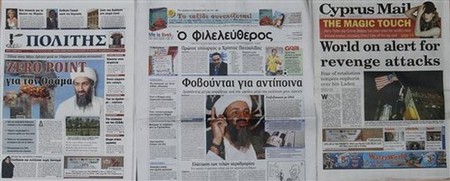
bin%20laden%20capture.jpg

This morning, both John Yoo and Michael Barone hit on the same points I hit on Sunday in more thorough detail. Barone essentially outlines the framework of a political attack on Obama for moving away from his prior promises, but I think, as Barone seems to, that such an attack would be blunted by the fact that Obama ended up closer to the country's center. Only the leftward side of his base dislikes these moves with any intensity, and it's doubtful they'd cast a vote for anyone other than him in 2012.

Besides making the same point, Yoo makes the interesting argument that one side-effect of Obama's embrace of the Bush-era policies he once opposed is a greater willingness to kill terrorists as opposed to capturing and interrogating them. He outlines an argument for why Obama should've considered a capture instead of a kill:

Mr. Obama's policies now differ from their Bush counterparts mainly on the issue of interrogation. As Sunday's operation put so vividly on display, Mr. Obama would rather kill al Qaeda leaders—whether by drones or special ops teams—than wade through the difficult questions raised by their detention. This may have dissuaded Mr. Obama from sending a more robust force to attempt a capture.

Early reports are conflicted, but it appears that bin Laden was not armed. He did not have a large retinue of bodyguards—only three other people, the two couriers and bin Laden's adult son, were killed. Special forces units using nonlethal weaponry might have taken bin Laden alive, as with other senior al Qaeda leaders before him.

If true, one of the most valuable intelligence opportunities since the beginning of the war has slipped through our hands. Some claim that bin Laden had become a symbol, or that al Qaeda had devolved into a decentralized terrorist network with more active franchises in Yemen or Somalia. Nevertheless, bin Laden was still issuing instructions and funds to a broad terrorist network and would have known where and how to find other key al Qaeda players. His capture, like Saddam Hussein's in December 2003, would have provided invaluable intelligence and been an even greater example of U.S. military prowess than his death.

White House counterterrorism adviser John Brennan said Monday that the SEAL team had orders to take bin Laden alive, "if he didn't present any threat," though he correctly dismissed this possibility as "remote." This is hard to take seriously. No one could have expected bin Laden to surrender without a fight. And capturing him alive would have required the administration to hold and interrogate bin Laden at Guantanamo Bay, something that has given this president allergic reactions bordering on a seizure.

Mr. Obama deserves credit for ordering the mission that killed bin Laden. But he should also recognize that he succeeded despite his urge to disavow Bush administration policies. Perhaps one day he will acknowledge his predecessor's role in making this week's dramatic success possible. More importantly, he should end the criminal investigation of CIA agents and restart the interrogation program that helped lead us to bin Laden.

Yoo's argument is probably the best that can be made, philosophically, on this point. But there's little question in my mind that Obama made the right decision. Osama bin Laden is more valuable to the future interests of the United States - and as a statement about our approach to enemies - not as a captured target, legal controversy and living symbol, but as a corpse in the bottom of the sea.

(AP Photo)

Palin on Foreign Policy

palin%20policy.jpg

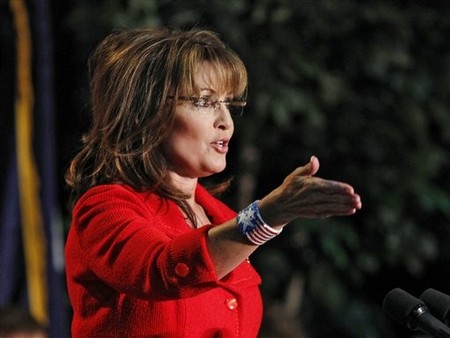
I've criticized the Republican 2012 field on numerous occasions for their lack of foreign policy heft and a profound unwillingness to weigh in on difficult decisions they would have to make as Commander in Chief. It's only fair, then, to share one potential candidate's attempt to frame a coherent approach to foreign policy in the public square - in this case, Sarah Palin in a speech in Colorado this week. Here's the relevant portion:
There’s a lesson here then for the effective use of force, as opposed to sending our troops on missions that are ill-defined. And it can be argued that our involvement elsewhere, say in Libya, is an example of a lack of clarity. See, these are deadly serious questions that we must ask ourselves when we contemplate sending Americans into harm’s way. Our men and women in uniform deserve a clear understanding of U.S. positions on such a crucial decision. I believe our criteria before we send our young men and women—America’s finest—into harm’s way should be spelled out clearly when it comes to the use of our military force. I can tell you what I believe that criteria should be in five points. First, we should only commit our forces when clear and vital American interests are at stake. Period.
Second, if we have to fight, we fight to win. To do that, we use overwhelming force. We only send our troops into war with the objective to defeat the enemy as quickly as possible. We do not stretch out our military with open-ended and ill-defined missions. Nation building is a nice idea in theory, but it is not the main purpose of our armed forces. We use our military to win wars.

And third, we must have clearly defined goals and objectives before sending troops into harm’s way. If you can’t explain the mission to the American people clearly and concisely, then our sons and daughters should not be sent into battle. Period.

Fourth, American soldiers must never be put under foreign command. We will fight side by side with our allies, but American soldiers must remain under the care and the command of American officers.

Fifth, sending in our armed forces should be the last resort. We don’t go looking for dragons to slay. However, we will encourage the forces of freedom around the world who are sincerely fighting for the empowerment of the individual. When it makes sense, when it’s appropriate, we will provide them with material support to help them win their own freedom.

We are not indifferent to the cause of human rights or the desire for freedom. We are always on the side of both. But we can’t fight every war. We can’t undo every injustice around the world. But with strength and clarity in those five points, we’ll make for a safer, more prosperous, more peaceful world because as the U.S. leads by example, as we support freedom across the globe, we’re going to prove that free and healthy countries don’t wage war on other free and healthy countries. The stronger we are, the stronger and more peaceful the world will be under our example.

Some of these principles may sound familiar. A few of them were first expressed back in 1984 in President Reagan’s cabinet. They were designed to help us sharply define when and how we should use force, and they served us well in the Reagan years. Times are much different now, but I believe that by updating these time-tested principles to address the unique and changing circumstances and threats that we face today, they will serve us well now and into the future. Remember, Reagan liked to keep it simple, yet profound. Remember what he would say to the enemy? He’d say, “we win, you lose.”

It's not sophisticated, and it's more passion than policy, closer to campaign rhetoric than thorough commentary. But this expression of a framework from Palin is a vast improvement over the stated remarks from other candidates thus far. It is unacceptable, a year and a half before election day, for serious individuals to still mark foreign policy as "TBD."

A side note: the mission that killed bin Laden ended up hinging on an area where Palin explicitly parted ways with John McCain during the 2008 campaign, siding with Obama on the question of sending a unilateral mission into Pakistan. Obama's major vindication on this is also a minor vindication of Palin on the point, who was slammed internally by McCain campaign staff at the time for expressing this view.

(AP Photo)

May 2, 2011

After bin Laden

rsz_china5211.jpg

In an effort to organize my own thoughts on the killing of Osama bin Laden, I find myself returning over and over again to Peter Beinart's take on the terror mastermind's demise:

President Obama now has his best chance since taking office to acknowledge some simple, long-overdue truths. Terrorism does not represent the greatest threat to American security; debt does, and our anti-terror efforts are exacerbating the problem. We do not face, as we did in the 1930s, a totalitarian foe with global ideological appeal. We face competitors who, in varying ways, have imported aspects of our democratic capitalist ideology, and are beating us at our own game.

Bin Laden was a monster and a distraction. It is good that he is dead, partly because the bereaved deserve justice, but also because his shadow kept us from seeing clearly the larger challenges we face. The war on terror is over; Al Qaeda lost. Now for the really hard stuff; let’s hope we haven’t deferred it too long.

The competitor Beinart alludes to, I'm assuming, is China, and I can't help but wonder if bin Laden's death marks the end of an epoch in American foreign policy. Terrorism obviously isn't going anywhere; it existed prior to 9/11, and it will continue to exist long after. The so-called Global War on Terrorism was less a global understanding than a kind of framework for How The World Works According to Washington. The American military has been and will for the foreseeable future remain the preeminent power on earth, but to justify and rationalize that hegemony there must be rules; a kind of flowchart or S.O.P. to help the Beltway make sense of American power.

The War on Terrorism provided Washington's pundits and policymakers with a handy paradigm, much as the Cold War did throughout the latter half of the 20th Century. Will this change? Will a symbolic death lead to a more substantive reappraisal of American policy? Keep in mind that bin Laden's arguably symbolic termination precedes an actual drawdown of American troops from Afghanistan later this year. So while the generals - and the bloggers, and the pundits, and the pols and the wonks - continue to fight and feud over the last war - will we employ 'COIN' or 'Offshore Balancing' in our next indefinite military campaign? - I can't help but think that the American public has already moved on.

And who can possibly blame them? My own gripe with the War on Terrorism, specifically the Afghan mission, was the apparent indefiniteness of the mission. In a decade full of 'surges' and small accomplishments, rarely has there been as decisive and certain an action as bin Laden's killing. This man attacked us, and now he's dead. Seems simple enough.

That's why I can understand last night's displays of revelry and pure emotion in Washington, New York and elsewhere. After nearly ten years of color codes, TSA molestations and frequent condescension from the intelligentsia, the American people finally got a cut and dry result - a mission truly accomplished.

But where to from here for American foreign policy? For all the shortcomings and confusion that came with the GWOT, it was, at the very least, a doctrine premised on national defense. But if, getting back to Beinart's point, the War on Terror is to be replaced by a doctrine of counter-declinism, deficit hawkishness and Chinese containment, then I fear we may be headed toward an even uglier foreign policy paradigm.

China has gradually crept onto the American radar screen, and Beijing, for its own part, has been a busy bee.

With bin Laden now dead, and U.S. withdrawal (kind of) underway in the Near East, is China the next in line to consume America's imagination and energy? And will Washington follow? What happens, in other words, when one distracted giant finally opens its eyes, only to find another right in front of it?

Update: Evan Osnos gives a rather appropriate take on Chinese reactions to bin Laden's killing.

(AP Photo)

April 20, 2011

Marco Rubio on U.S. Foreign Policy

“There is no replacement for America in the world,” Rubio says. “If America withdraws from the world stage, it will create a vacuum, and that vacuum will not be filled by someone better than us.” - Marco Rubio

I think this sentiment is worth unpacking a bit. First, it's simply not the case that any country could step in to whatever void it is Rubio thinks we'd be creating. There is no country even remotely close to possessing the kind of global force projection or influence that the United States wields. So even if the U.S. "withdrew" from the world stage there isn't even any state capable - much less interested - in filling that void on a global basis. Regionally, it's certainly possible you'd see unfriendly states wield more local influence, but in most regions of the world, the U.S. has very strong and capable allies that will also exert their influence.

And second, what does it even mean to "withdraw" from the world? Not trade with it? Not conduct diplomacy? Not pursue terrorist threats? Who is advocating these things?

April 14, 2011

The Libya Farce

It might be worth pointing out that the thing that has driven Libya to the point where it is in danger of becoming a failed state is the military intervention that did just enough to fracture the country into two parts. Where was all this concern about the Somalification of Libya a month ago when people were calling for turning it into another Somalia by attacking Libya? Escalating the Libyan war and toppling Gaddafi isn’t going to make the Somalification of Libya less likely, but will in all likelihood guarantee the disintegration of whatever political order remains. The U.S. and NATO are in their current predicament because too few people in charge of making decisions paid attention to unintended consequences and worst-case scenarios. Now would be a good time to fix that bad habit. - Daniel Larison

As further evidence of that lack of foresight, now Britain and France are whining that other NATO states haven't taken some of the burden of the Libyan air war off their shoulders now that a stalemate is clearly in the making. But as the U.S. found with its own boondoggle in Iraq, allies aren't keen on being dragged into wars not of their own making with little to no relevance to their own security or interests.

Meanwhile, the U.S. Congress can't quite clear the calendar to discuss Libya:

The Senate probably won't be debating the Libya war anytime soon. Top senators on both sides of the aisle are still negotiating over language for a resolution to express the Senate's view on the U.S. involvement in Libya, while the budget battle pushes the intervention to the back burner.

Congress was upset with President Barack Obama last month for committing U.S. forces to the international military intervention in Libya without seeking congressional consent or even really telling Congress about it in advance. But now, almost a month after the attack began, the appetite in the Senate for holding a full-fledged Libya debate on the floor, much less passing a resolution, just isn't there.

"I don't know if there will be time" to debate a resolution before senators leave town for a two-week recess next week, Senate Foreign Relations Committee Chairman John Kerry (D-MA) told The Cable in an interview on Tuesday.

Is it any surprise that the executive branch doesn't really take Congress seriously when it comes to matters of war and peace?

April 13, 2011

Tea Partiers, 2012 and Foreign Policy

Today I asked Steve Hayward of the American Enterprise Institute, a brilliant fellow and a Reagan scholar, about his thoughts on the potential 2012 field on the daily Coffee & Markets podcast (the question is around the 14th minute). Hayward gives an interesting answer:

Foreign policy was a more salient issue in the sixties and seventies and into the eighties - with the end of the Cold War it's much less so. We're back to almost a pre-World War II model in terms of the weight of foreign policy in electoral politics I think. Reagan, you remember, grew up with the Cold War, and he got a lot of his interest in politics right after World War II - and the Cold War and the communists in Hollywood and so forth. And then in the sixties, during the flashpoint over Vietnam, he was commenting a lot on the Vietnam War.

What's different today is that although we have the post-9/11 world of terrorism, and now three kinetic military actions overseas or whatever they call them now, and although that's going on - and I think this shows in the polls too - and people are concerned about terrorism, it doesn't fix the public's mind in the way the Cold War did, the way things were going in the end of the 1970s, with detente and arms control and the weakness of Jimmy Carter on foreign policy.

It's harder to have a clear view on this if you're an opposition candidate getting ready to run against a president whose foreign policy is opaque at best. That's an interesting question, but we live in different times, and it's harder to make out if you're a candidate right now.

I think Hayward's take is an accurate diagnosis of the politics of this issue, but it doesn't make me any more confident about the ability of the candidates involved thus far in the 2012 stakes, particularly when compared to the president they most admire.

April 8, 2011

Foreign Policy in 2012, Ctd.

Greg Scoblete has an interesting response to my criticism of Mitch Daniels and other Republicans. My basic point in my original post was that Newt Gingrich's opinion on Libya at least has the advantage of getting into specific policy details - while his fellow 2012 candidates are speaking either in neo-isolationist platitudes (Barbour), knee-jerk anti-Obamaisms (Bachmann), or dodging the question entirely (Romney).

I singled out Daniels for particular criticism because while he's clearly forming a niche as the 2012 cycle's wonkish candidate, with a significant base of intellectual support (not a proven winning strategy, but that's beside the point), he also seems loathe to allow for any expression of public thought on foreign policy issues, and has studiously avoided making comments on Egypt and Libya.

Greg, on the other hand, points out that Daniels is merely prioritizing the interests of his day job above the interests of the 2012 political cycle, and that it's better to engage in such activity than to share vacuous platitudes about the country's foreign policy challenges.
This is a perfectly valid response. It hearkens back to an older era of political engagement when politicians weren't expected to have opinions on everything under the sun, and I certainly think that era was healthier on a number of counts. "Better to remain silent and be thought a fool than to speak out and remove all doubt," as the saying goes.

But I would suggest that in this era, Daniels' lack of offerings on this topic are of greater concern. And contra Greg's post, Daniels actually has spoken out on other foreign policy issues in the recent past, albeit in small ways.
Continue reading "Foreign Policy in 2012, Ctd." »

Rothkopf on Ryan's Budget

paul%20ryan.jpg

David Rothkopf lays into House Budget Chairman Paul Ryan's budget plan for a number of reasons, but on one criticism in particular I found his argument both ill-informed and inaccurate:

As White House Budget Director Jack Lew has accurately observed, a "budget is not just a collection of numbers, but an expression of our values and aspirations." Thus, Ryan's budget -- which clearly has been vetted carefully by his fellow Republican leaders -- can be seen as a manifestation of Republican views on everything from how we should treat our parents to what America's role should be in the world. I'll leave it to others to continue the debate on health care. Instead, I would just like to point out that according to the summary of the budget in today's Washington Post, Ryan is proposing spending $27 billion less than the administration's figure of $63 billion on international affairs -- the portion of the budget covering diplomacy and U.S. foreign assistance programs. That 43 percent whack is by far the most draconian of all Ryan's cuts when measured in terms of the contrast between the White House's and Ryan's 2012 proposals.
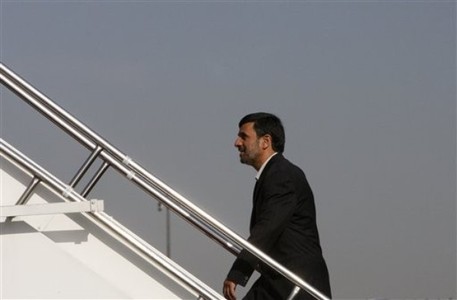
While I can't blame Rothkopf for this mistake, the graphic he refers to is simply not an accurate picture of Ryan's budget. It compared numbers from the Office of Management and Budget (OMB) for Obama to the Congressional Budget Office (CBO) for Ryan - different methodologies, different evaluators - and that's just a completely unfair comparison. (The Post has since updated their graphic, which shows a smaller whack.) And while Rothkopf paints these numbers in severe terms in his lengthy post, the reality is that Ryan's proposal is really just a rewind to 2007. (pdf)

Keep in mind that spending on international affairs (categorized as Function 150) is up 65 percent in real terms over the last decade (staffing at places like USAID is up 76 percent over the same period), and Ryan's proposal meets the funding requests from President Obama for the State Department on anti-terrorism efforts (categorized as Function 970). A combination of these two functions under Ryan's proposal adds up to $41 billion for international affairs - that's just an 11 percent cut from the $46 billion in HR 1.

Keep in mind that much of the increased international affairs spending over the past decade was driven by President Bush's efforts on global health (PEPFAR, Global Fund), developing a new model for foreign assistance (Millennium Challenge Corporation), and the inevitable result of fighting two wars. We can debate what those numbers should be going forward, but in a time of economic belt-tightening, most Americans believe they shouldn't climb forever. As on many counts, Ryan's cuts are actually far more modest and pragmatic than those of his fellow conservatives - Tea Party hero Rand Paul's budget proposal involves cutting nearly all international affairs spending and all foreign aid.

In this context, a three year rewind is hardly the severe cut Rothkopf suggests. And the fact that Rothkopf gets these numbers wrong, then proceeds to frame Ryan's decision to take them back to 2007 levels with a scare-tactic title of "Death panels for diplomacy: Why does Paul Ryan hate American leadership?", indicates the level of seriousness, intelligence, and fairmindedness he brings to such debates.

(AP Photo)

April 7, 2011

In Praise of Rhetorical Restraint

In a post below, Ben Domenech argues that it is "profoundly disturbing" that Governor Mitch Daniels didn't offer an opinion on Libya, or a variety of other foreign policy matters over the past several months. Writes Domenech:

This is fine if one is interested in staying a provincial governor, but it is an unacceptable dodge from anyone interested in being Commander in Chief.

This has to concern anyone on the right who thinks the presidency demands an intelligent and sophisticated foreign policy approach if the mistakes of the Obama presidency are to be avoided.

I beg to differ. In fact, I'd argue it's closer to the opposite. The fact of the matter is that most Republican statements on any foreign policy issue at this stage of the game are vacuous platitudes and talking points crafted by advisers (this would go for the Democrats too were they in pre-primary mode). Many candidates never evolve positions that would rise above that level even during the campaign.

An "intelligent and sophisticated" person would not, in my view, formulate serious foreign policy positions in a matter of weeks in response to media demands that he or she say something profound. Given the gravity and magnitude and pace of change in the Middle East, I think it speaks rather poorly of a candidate to articulate sweeping policy doctrines or give definitive answers on matters of war and peace - particularly when they have a rather important day job that would, presumably, require much of their attention. I would think the people of Indiana might take some comfort in the fact that their governor is focusing on his job rather than a country he has no control over - a country that could also, incidentally, be in a completely difference place in six weeks, let alone six months.

Domenech rightly decries the vacuity of most of the potential 2012 presidential candidates positions on Libya, but this is symptomatic of a glib political culture (one that, again, is not a Republican phenomena but a bipartisan one). Standing aloof from that, at least at this stage, isn't a bad thing, in my view.

The 2012 Republicans and Libya

Scott Conroy's piece at RealClearPolitics on Newt Gingrich includes a reference to a video the former speaker claims justifies his position shifts on Libya. I've criticized Gingrich in the past for shifting on this, so it's only fair to include the counter-argument.

I'll admit I rarely watch the programs he's featured on in this video, so given a fuller context, I see how the shift is tied to Obama's remarks on March 3 - at least according to Gingrich's exploratory committee:

Gingrich said at that time that he could not support using the U.S military for a strictly humanitarian intervention. His message has been clear and consistent. Prior to March 3rd, he would not have intervened but used other means to defeat the dictator, but after the president’s March 3rd statement, he said that only reason to use our military force was to get rid of Qadaffi. He has maintained that position.

Regardless of what you think of Gingrich's shift - and there's no question there was a shift, it's just a question of whether it was a policy inconsistency, or a response to shifting facts on the ground and at the White House - it's worth noting that Gingrich is virtually alone in offering an intelligent commentary on the Libya situation among the potential Republican candidates for 2012. This may be one more example - there are many in the past on domestic politics - of Gingrich being penalized for being too much of a policy wonk, too specific in his arguments where others stick to pat generalities.

The statements from most of his potential foes are nearly all simple negatives: don't use ground troops, don't cater to the United Nations or the Arab League, don't do whatever it is Obama is doing. Tim Pawlenty did exactly this, though at least he has the excuse of doing it first. Mike Huckabee talked in vague terms about a need for an American presence, but does not specify how that will stop any of the killing of citizens he of course deplores. Haley Barbour embarked on what the Wall Street Journal tagged as a "glib trope to the isolationist left." Michele Bachmann gave a response which was just as isolationist, again without offering a solution. All of these individuals are actively engaging the national media - it's absurd that Mitt Romney, by all accounts the Republican frontrunner, thinks he can give a speech slamming Obama's foreign policy and then deliberately avoid reporters' questions on the most pressing foreign policy issue of the day.

Perhaps worst of all, it is profoundly disturbing that Mitch Daniels, a darling of the intellectual right, has as far as I can tell been completely silent on the matter - just as he has been nearly entirely silent on every foreign policy issue over the past several months. His comment in response to a question on Egypt in January was simply jaw-dropping: "I don't have a lot to say about it. I'm just a provincial governor out here." This is fine if one is interested in staying a provincial governor, but it is an unacceptable dodge from anyone interested in becoming Commander in Chief.

This has to concern anyone on the right who thinks the presidency demands an intelligent and sophisticated foreign policy approach if the mistakes of the Obama presidency are to be avoided. It's one of the reasons someone like John Bolton is likely to embark on a quixotic run, simply to ensure there's someone who understands the world outside our borders on stage in Iowa. Rather than just a litany of bullet points, perhaps Barbour, Daniels, Romney and others can just say "pass" and cede their time to candidates who are actually paying attention to the matter. Unfortunately, they won't be able to do this if they ever sit in the Oval Office.

March 29, 2011

Rolling Stone and "War Porn"

About a month ago, I shared some serious qualms I had about the veracity of a story by Michael Hastings in Rolling Stone on the PSYOP front. This month, RS is back again with more questionable coverage of the front, as Joshua Foust points out:

Reading the Rolling Stone piece, a reader walks away thinking that the killing of civilians is widespread and not at all limited to the troops associated with the “kill team.” The article paints the killings as the inevitable consequence of low morale and a rejection of counterinsurgency, and worse – it implies that murder is, in some way, a fact of being a soldier.

These sorts of implications, however, are difficult to square with the truth. Attention was first shed on the killings by fellow soldiers disgusted at the “kill team’s” alleged actions. Army rules — and U.S. law — considers such actions grievous crimes and stipulates immediate and harsh punishment for them. While the Army bureaucracy was slow to move — sadly, all too common regardless of the issue, whether an illegal killing, a problem with healthcare or even adapting to a rural insurgency in a war most people had forgotten about — that doesn’t automatically mean there is a cover up. Incompetence is a far more reasonable explanation than malice.

The point is, this is starting to turn into "war porn" - pairing shock video and images designed to create buzz. But the effect is to turn all combat deaths into murder (something that the RS author might believe, but most people don't), and murder exploited to sell magazines. Foust again:

There is a term for the sort of journalism Rolling Stone is engaging in here: war porn. In 2005, George Zornick wrote of the growing trend of many people both in and out of the military treating images of the war — weapons, death, combat and so on — in the same way one would treat pornography. The people posting these images, Zornick explained, “appear to regard the combat photos with sadistic glee, and pathological wisecracks follow almost every post.”

Continue reading "Rolling Stone and "War Porn"" »

March 24, 2011

Gingrich's Flip Flop on Libya

rsz_newt%21.jpg

Newt Gingrich is doing himself no favors with this flip flop on Libya, but it's an instructive moment for other Republicans on the problem with being reflexively anti-Obama. Here's the situation:

On March 7, the former Speaker of the House and likely 2012 presidential candidate told Fox News’ Greta Van Susteren that his response to Libya would be swift and unilateral. “Exercise a no-fly zone this evening,” he said.

“I mean, the idea that we’re confused about a man who has been an anti-American dictator since 1969 just tells you how inept this administration is,” he continued. “They were very quick to jump on Mubarak, who was their ally for 30 years, and they were confused about getting rid of Gaddafi. This is a moment to get rid of him. Do it. Get it over with.”

Now that Obama has taken that step and established a no-fly zone in conjunction with UN allies, Gingrich has changed tacks.

“I would not have intervened,” he told Matt Lauer on The Today Show Wednesday. “I think there are a lot of other ways to affect Gaddafi. I think there are a lot of other allies in the region that we could have worked with. I would not have used American and European forces.”

He criticized Obama for changing the designated purpose of the mission. “The president said on March 3, ‘Gaddafi has to go.’ Well they’re now saying this is a humanitarian intervention, which is nonsense. If this is not designed to get rid of Gaddafi, then this makes no sense at all.”

“This is about as badly run as any foreign operation we’ve seen in our lifetime,” he added.

Gingrich’s spokesperson Rick Tyler, explained that this was not the flip-flop that it might seem. Rather, he said, Gingrich’s response changed because Obama’s proposed mission had changed. “The Speaker has been consistent,” he told The Daily Caller. “The president has changed his mind.”

Gingrich explains his position further in a Facebook post, but I have a hard time seeing this as anything other than a flubbed situation. It's one thing to say "I support an NFZ right now, and not later, because later is too late," but that doesn't seem to be Gingrich's argument on the Today Show. Instead, the criticism seems to have shifted simply because "the president changed his mind."

I basically agree with Gingrich's latter position, as I understand it: Removing Gaddafi has to be the focus of any mission in Libya (with the U.S. in either an active or supporting role), and that a coalition-based "humanitarian involvement" is just another pointless, vague and demanding enterprise which has little promise of long term success. But if he only arrived at this position primarily because Obama shifted his own view, that's a rather dubious path to figuring out foreign policy.

(AP Photo)

March 19, 2011

Elliott Abrams on Foreign Policy and the Tea Party

My interview with Elliott Abrams a few months back is now available here. Here's an excerpt from the initial transcript concerning Abrams' thoughts on the Tea Party, Defense spending and the challenge of isolationism, which strikes me as particularly relevant given the current foreign policy debates on the right:

Domenech: America’s presence around the world is going to be something that is likely to be more of an issue within the new Congress. There seem to be so many members who are willing to put defense spending on the gradation of cuts. And I wondered what your thoughts area about that generally and about some of the different pushbacks that exist within both the conservative movements against this new view. Who do you think has the right of it and which direction should we go?

Abrams: It’s a very interesting question. I was very struck during the 2010 campaigns at the role that Sarah Palin played on this question. In many of her speeches, to Tea Party audiences, she said, "don’t cut the Defense budget, cut everything else, but we don’t want to cut the defense budget."

I have no doubt that there is fraud and waste in the Pentagon. It’s inconceivable that there shouldn’t be. It’s a government agency. There are going to be plenty of inefficiencies, but fundamentally, I think that it is a mistake at this juncture to be cutting the Defense budget, which is not so large, compared to various times in the past.

I think we missed one great opportunity and it was a terrible mistake. And that is, when the Obama administration started to spend its TARP money, the president was looking for shovel ready projects. It is now clear, at the end of two years of Obama, that he didn’t find too many. And I think the administration has acknowledged this. Well, there were a lot in the Pentagon. And the administration, for ideological reasons, did not want to spend the money on Defense related matters, and that was a huge mistake, both in terms of the economy because there were shovel ready projects that would have created employment and in terms of national defense.

This is going to be a very interesting debate within the Republican Party. I don’t see much isolationism, I have to say. I see one or two people, I mean, one associates this with Senator Rand Paul and that’s probably an unfair charge to make against him to say isolationist. You’d have to define the term and he’s not asking that we stop trading with foreign countries. I agree with the view that we do not have a revenue problem in the federal government, we have a spending problem and the solution to the problem is to stop the amazing amounts of red ink. We are likely to have an inflation problem soon enough.

But it seems to me that if you look at the world that we face, this would be a very inopportune moment to start doing what unfortunately the British have now had to do and dramatically cut back on their global role.

Continue reading "Elliott Abrams on Foreign Policy and the Tea Party" »

Fantasies

Perhaps the Obama administration has cleverly figured out a way to bring about the neoisolationist fantasy of the 1990s: making the rest of the world shoulder the load of global policeman. Many of the critiques of U.S. military intervention over the past twenty years have been critiques of U.S. involvement, not military intervention, per se. The cases in Somalia, Haiti, Bosnia, Kosovo, and so on were deemed not to be in our interest. Perhaps they required military intervention, but let someone else bear the costs.

The Bush 41 and Clinton administrations tried this, but were never able to get the rest of the world to handle matters satisfactorily. The United States was "indispensable," Clinton's Secretary of State Madeleine Albright concluded. If we did not lead and shoulder the leader's load it would not get done, whatever it was that needed doing (the East Timor exception that proved the rule notwithstanding). - Peter Feaver

Again, it's not clear if this is what the Obama administration is doing, but if so, rather than deride it as a "neoisolationist fantasy"* the president should get significant credit. The U.S. has no interests at stake in Libya's civil war, so it makes no sense to "bear the leader's load" in Feaver's words. But European and Middle Eastern countries do have a stake in the conflict. If going along with a UN Resolution and offering some intelligence and logistical support galvanizes these countries to take the lead and bear the majority of the costs ... that's a good thing! Military intervention may not be the best way for those countries to safeguard those interests, but they are in a better position to judge that than the U.S.

---
* I understand why Feaver uses the word fantasy here - it is something of a fantasy to expect others not to free ride on the U.S. when Washington has proven so profligate with its global leadership. But I don't quite understand what is "neoisolationist" about the proposition that nations with a larger stake in an outcome should bear a correspondingly larger share of the costs. It seems rather like common sense.

March 17, 2011

What's the UN Got To Do With It?

un%20susan%20rice.jpg

The Obama administration is evidently not willing to wage war against Libya without the imprimatur of the United Nations:

The administration, which remains deeply reluctant to be drawn into an armed conflict in yet another Muslim country, is nevertheless backing a resolution in the Security Council that would give countries a broad range of options for aiding the Libyan rebels, including military steps that go well beyond a no-flight zone.

Administration officials — who have been debating a no-flight zone for weeks — concluded that such a step now would be “too little, too late” for rebels who have been pushed back to Benghazi. That suggests more aggressive measures, which some military analysts have called a no-drive zone, to prevent Colonel Qaddafi from moving tanks and artillery into Benghazi.

The United States is insisting that any military action would have to be carried out by an international coalition, including Libya’s Arab neighbors.

This doesn't make much sense to me. If the administration believes that waging war against Gaddafi is in America's national interest, then it should do so irrespective of UN sanction. If the administration does not believe that waging war against Gaddafi is in America's interest, it should not do so anyway simply because the UN has authorized it. Having the UN Security Council authorize punitive measures against Gaddafi's regime doesn't suddenly transform the conflict from a peripheral interest to a central one.

(AP Photo)

March 9, 2011

An Iraq Syndrome?

Bloody wars beget caution. As after Korea, as after Vietnam, the wars in Afghanistan and Iraq have made Americans battle-averse. In 2005 John Mueller, a professor of political science at the Ohio State University, predicted in Foreign Affairs that an “Iraq syndrome” would eventually make America more sceptical of unilateral military action, especially in places that presented no direct threat to it, and less inclined to dismiss Europeans and other well-meaning foreigners as wimps. - Lexington

It has always puzzled me why much of the Washington foreign policy community saw the "Vietnam Syndrome" as a bad thing, as if the U.S. had curled up into a geopolitical fetal position, unwilling to use force even to protect vital interests (not true: when push came to shove we ejected Saddam from Kuwait). But to the extent that a "Vietnam Syndrome" prevented policymakers from blundering into an unnecessary conflict, so much the better, I would argue.

The trouble is, of course, that the definition of a "necessary" conflict is quite elastic. If the Iraq war has made at least some cross-section of elite opinion more wary about plunging American power into a Middle Eastern country about which it knows next to nothing, it should be regarded as a good thing.

March 4, 2011

Libya & the CNN Effect

obama%20reckless.jpg

Paul Miller makes a very important point:

The administration looks to me like it is being driven by the CNN effect. Libya is in the headlines, dramatic events are afoot, so the administration believes it must do something, it must act, probably to demonstrate resolve, or exercise leadership. It isn't leadership to let the media drive your foreign policy. If the exact same thing were happening right now in Equatorial Guinea, no one would care and we would not be contemplating a no-fly zone.

The administration is blundering into an unnecessary crisis, setting unrealistic expectations about our ability to drive events in Libya, and exposing itself to the dangers of unplanned escalation and mission creep. If we're to have a grand strategy centered on building the liberal democratic peace -- which is not a terrible idea -- it should start from more considered reflection, not lurching overreaction to a crisis over which we have little control.

It's worth pointing out that the administration is being goaded into this course of action by U.S. lawmakers too, not just journalists. But Miller is right: no core U.S. interests are at risk in Libya. The administration is going to be criticized no matter what it does, but far better to be assailed for inaction (or as I prefer to describe it, restraint), then to act recklessly.

(AP Photo)

March 3, 2011

Making Up Reasons

Diplomats say NATO won't act to stop Moammar Gaddafi from bombing his own citizens unless the U.N. Security Council passes an authorizing resolution -- and Russia and China will not allow that. Pentagon officials are meanwhile warning that any no-fly operation would require preemptive attacks on Libyan air defenses. At a Senate hearing Tuesday Gen. James Mattis, chief of U.S. Central Command, called the potential mission "challenging" and added, "it would be a military operation -- it wouldn't be just telling people not to fly airplanes."

Those comments exasperated Sen. John McCain (R-Ariz.) a former Navy pilot who, along with Sen. Joseph Lieberman (I-Conn.), just returned from a tour of the Middle East. "We spend $500 billion on defense, and we can't take down Libyan air defenses?" he asked incredulously in an interview he and Lieberman gave to me and The Post's Fred Hiatt. "You tell those Libyan pilots that there is a no-fly zone, and they are not going to fly."

"I think they [in the Obama administration] are making up reasons" not to act, McCain added. "You will always have people who will find out the reasons why you can't do it. But I don't recall Ronald Reagan asking anyone's permission to get Cuba out of Grenada, or responding to the killings of American soldiers.." - Jackson Diehl

This is a very odd way to describe what's happening. A top military official tells a Senate panel that bombing Libya is an act of war and not something to be entered into lightly (a message also conveyed by Secretary Gates to British Prime Minister David Cameron), and Senator McCain thinks this is the geopolitical equivalent of calling out of work sick with a "stomach bug."

I don't believe anyone in the Obama administration is arguing that establishing a no-fly zone is some kind of technical or logistical impossibility - they're saying, to borrow a phrase, that it wouldn't be prudent. Senator McCain's counter-argument consists of saying the words "Ronald Reagan" and making an unsubstantiated assertion of how Libya will behave after it gets bombed.

March 2, 2011

The U.S. and Terror

Following up on yesterday's post, Larison puts terror and U.S. foreign policy in context:

It isn’t that the threat is huge. The threat isn’t huge. What matters is that it is avoidable. When calculating the costs and benefits of U.S. policies, it becomes important then to consider whether these policies are doing enough to serve the national interest that they merit the risk of incurring regular attacks on Americans at home and around the world. Whether the threat is relatively large or small, there is no reason to expose the United States to needless dangers. The threat is nowhere near as dire as warmongers make it out to be, but it is much greater than it has to be, and the threat exists in no small part because the people demagoguing and exaggerating the threat frequently prevail in seting policy.

And apropos of this, via Yglesias, some new research on U.S. foreign policy and terrorism:

Applied to the US case, our theory predicts that more anti-American terrorism emanates from countries that receive more US military aid and arms transfers and in which more American military personnel are stationed, all relative to the country’s own military capacity. Estimations from a directed country dyad sample over the period 1978 to 2005 support the predictions of our theory for both terrorist incidents involving Americans and terrorist killings of Americans as dependent variables. These results are robust to a wide range of changes to the empirical research design.

America's Allies Want America's Nukes

By Elbridge Colby

The FT reports today that the White House has disavowed the reported statement by Gary Samore, NSC non-proliferation czar, that the United States would redeploy shorter-range nuclear weapons to South Korea if Seoul requested them. (Cold War-era U.S. tactical nuclear weapons were withdrawn from the Peninsula in 1991.) The story is interesting on a number of levels, not least because this is a fairly anemic denial: it states only that Washington “has no plans or intention” to redeploy them, has the effect of signaling to Pyongyang, Beijing, Tokyo and others that such a move is not beyond the pale. This is doubly so because it comes on top of earlier murmurs from Seoul seeking consideration of redeployment.

Just as interesting, though, is how the story reflects what has been a dormant but looks to be a reemerging dynamic: the push by U.S. allies to gain more visible and, to some, more credible manifestations of a U.S. nuclear commitment. Ultimately, a nuclear weapon is a nuclear weapon, whether it is on the ground in South Korea or somewhere thousands of miles away on a submarine or ICBM. But there has long been a perception that “forward-deployed” or “theater” weapons (including not only ground-based but also forward-deployed aerial and sea-based systems) have some value in demonstrating a specific commitment to the countries or areas in which they are deployed. So, back in the Cold War, NATO allies pushed for Washington to maintain nuclear weapons in Europe, weapons that were viewed as more credible for the defense of Europe and essential to linking European and U.S. security.

Today, U.S. allies in Northeast Asia worry about North Korea and the Chinese military build-up. In the Middle East they worry about Iran’s weapons program and regional ambitions. And in Eastern Europe there is concern about Russia’s continued truculence, as well as some reports that have unnerved capitals in the former Soviet Empire. Assuming these disturbing trends don’t all halt and reverse themselves, watch for allies to signal interest and maybe eventually push Washington to put some nuclear forces back to the front.
----
Elbridge Colby has served in several national security positions with the U.S. Government, most recently with the Department of Defense working on the follow-on to the START Treaty and as an expert adviser to the Congressional Strategic Posture Commission. The views expressed here are his own.

March 1, 2011

Terrorism: A Small - Or Huge - Threat?

Cato's Malou Innocent makes the case that U.S. policy is driving radical recruitment:

As a 2006 Government Accountability Office report noted, "U.S. foreign policy is the major root cause behind anti-American sentiments among Muslim populations." A 2004 Pentagon Defense Science Board report observed, "Muslims do not hate our freedom, but rather, they hate our policies."

At times it takes humor to shed light on such weighty and controversial issues. Writing about the motivation of Islamist radicals, American comedian Bill Maher once opined, "They hate us because we don't know why they hate us."

For far too long, politicians and pundits have danced around these uncomfortable truths. But it is well past time for American leaders to thoroughly explore the notion that U.S. policies contribute directly to radicalization. Reigning in the West's interventionist foreign policy will not eliminate the number of people and organizations that seek to commit terrorist attacks, but will certainly diminish it..

In this respect, terrorism can no longer be attributed to ignorance and poverty—conditions that exist in foreign conflict zones, but in and of themselves do not generate attacks against the West. Viewing poverty and underdevelopment as an underlying cause of extremism makes the mistake of stereotyping terrorists and their grievances. It also commits the error of ignoring the unintended consequences of past actions and very real dangers right within our borders.

I'm of the mind that, in general, a less interventionist foreign policy would serve American interests well in part because it would serve to reduce the terror threat. But sometimes I think that those advocating a less interventionist policy lean too heavily on that rationale. So in the spirit of subjecting our beliefs to scrutiny, it is worth asking if terrorism should cause a major rethink of where and when the U.S. intervenes in a foreign country. Sticking just with Cato analysts, Benjamin Friedman has argued that the threat from terrorism is in fact rather small and manageable (or as Stephen Walt, another non-interventionist, put it, more people are at mortal risk from nut allergies and bathtub drownings) and that hysteria over the threat is usually far more damaging than the threat itself:

It’s been six or seven years since people, including me, started pointing out that al Qaeda was wildly overrated. Back then, most people used to say that the reason al Qaeda hadn’t managed a major attack here since September 11 was because they were biding their time and wouldn’t settle for conventional bombings after that success. We are always explaining away our enemies’ failure.

The point here is not that all terrorists are incompetent — no one would call Mohammed Atta that — or that we have nothing to worry about. Even if all terrorists were amateurs like Shahzad, vulnerability to terrorism is inescapable. There are too many propane tanks, cars, and would-be terrorists to be perfectly safe from this sort of attack. The same goes for Fort Hood.

The point is that we are fortunate to have such weak enemies. We are told to expect nuclear weapons attacks, but we get faulty car bombs. We should acknowledge that our enemies, while vicious, are scattered and weak. If we paint them as the globe-trotting super-villains that they dream of being, we give them power to terrorize us that they otherwise lack. As I must have said a thousand times now, they are called terrorists for a reason. They kill as a means to frighten us into giving them something.

So is radicalization a major issue that warrants the U.S. to think twice before pursuing a preferred policy, or is it a small threat that doesn't warrant sweeping government changes? It seems to me you can't argue that on the one hand, the threat from terrorism is rather small and manageable, and on the other that it is so grave that we need to make major changes to American foreign policy.

February 28, 2011

China's Nuclear Ambitions

Philip Dorling reports that China has its eyes on bulking up its nuclear forces:

Top Chinese officials have declared that there can be no limit to the expansion of Beijing's nuclear arsenal amid growing regional fears that it will eventually equal that of the United States with profound consequences for the strategic balance in Asia.

Records of secret US-China defence consultations, leaked to WikiLeaks and provided to Asia Sentinel, have revealed that US diplomats have repeatedly failed to persuade the rising Asian superpower to be more transparent about its nuclear forces and Chinese officials have privately acknowledged a desire for military advantage underpins continuing secrecy.

The basic argument under-pinning the Obama administration's push to eliminate nuclear weapons is that unless the U.S. takes the lead in delegitimizing them by slashing its own arsenal, other states will naturally seek to build up their own forces. Well, the U.S. has committed to cut its nuclear arsenal and both China and Pakistan have recently indicated that their nuclear arsenals will expand.

That's not to say that the U.S. can't afford to trim its nuclear arsenal, it can. But the idea that doing so and showing "leadership" on this issue is having a demonstration effect on problem states seems unfounded. In fact, especially with respect to China's nuclear forces, the only way to prevent further nuclear weapons states from appearing is for the U.S. to reaffirm its commitment to use nuclear weapons to defend her allies in Asia.

Can America Shape the Middle East?

egyptshape.jpg

With the Middle East in flux, many commentators have started arguing that now is a propitious moment to begin remaking the region so that it conforms to Western universal values. The latest entry in the genre is Kenneth Pollack:

But how the Egyptian revolution defines the new Middle East is still an open question. A great many people will try to use it to impose their visions. It is a moment when the United States can and must enter the fray. It is vital that we take the lead in helping shape how Middle Easterners see the Egyptian revolution.

It is also an opportunity for the United States to overcome our past mistakes, to recognize the real grievances of the people of the region and to reexamine their conflicts and our role in them. The Egyptian revolution and the regional unrest that followed have made it abundantly clear that the vast majority of Muslim Middle Easterners want to live in modernizing, democratizing, developing nations. They want prosperity, they want pluralism and they want the better lives that we in the West enjoy.

The struggle in the new Middle East must be defined as one between nations that are moving in the right direction and nations that are not; between those that are embracing economic liberalization, educational reform, democracy, the rule of law and civil liberties, and those that are not. Viewed through this prism, the new Egypt, the new Iraq and the new Palestinian Authority are clearly in one camp. Iran and Syria — the region's two most authoritarian regimes and America's two greatest remaining adversaries there — are in the other.

It's interesting, when you think about it. The Mideast has long vexed the United States. We have been unable, and generally unwilling, to moderate its corrupt rulers, to solve its intractable conflicts and have been drawn into a "policing" role that has seen us wage wars and station military forces in the region - and with serious global consequences.

This current wave of unrest is an occasion to pause and reflect on U.S. policy and it has generally elicited two kinds of reactions. The first is Pollack's, and it's basically an argument for the status quo - but better! We'll keep meddling and interfering, but this time, we'll back the right player. The past failures can be swept away and the region can be made anew, just as Eastern Europe was brought into the fold following the collapse of the Soviet Union. This narrative, I suspect, is almost certainly going to the be one adopted by the Obama administration, as it continues to put the U.S. in the middle of the region's affairs and accords with the Iranian containment strategy the administration has put in place.

The second reaction, and one I'm obviously more sympathetic too, is Peter Beinert's argument that now is a good time to "get out" - that 400 million people aren't clay to be "shaped," and that those who can confidently declare what the "vast majority" of the Muslim Middle East desires don't really know anything of the sort.

(AP Photo)

February 25, 2011

Hastings, Caldwell and PSYOP Kerfuffle

Freelancer Michael Hastings, whose take-down of Gen. Stanley McChrystal garnered him a recent Polk award, has a piece in Rolling Stone this week that was tearing up certain portions of the blogosphere this week. It's headlined by a bold and attention grabbing claim: that a "runaway general" deployed "psy-ops" on U.S. Senators.

After a 10-story tall headline like that, the story itself is decidedly disappointing, and in some cases undercuts its case by making claims far beyond what the facts in evidence indicate.

(An aside: PSYOP is the proper abbreviation, as it is itself plural. Yet Hastings and a host of other journalists who reported on his story seem dedicated to the use of "psy-ops," a term that I've previously only heard from Hollywood. But this is Rolling Stone we're talking about.)

Hastings' target in this story is Lt. Gen. William Caldwell, who is the commander of NATO training for police and soldiers in Afghanistan. Caldwell has a reputation for being a superior commander and a smart, focused leader - he's widely credited for re-energizing the training side of the mission, and is viewed as an up-and-coming general. The case against him is leveled by Lt. Col. Michael Holmes, who claims he was assigned by Caldwell and his staff to "conduct an IO [information operations] campaign against" visiting U.S. senators on CODEL (Congressional Delegation) visits to garner more support for their efforts.

Continue reading "Hastings, Caldwell and PSYOP Kerfuffle" »

February 24, 2011

Should U.S. Pursue Primacy or an "Open Door"

Thomas Barnett ponders the difference:

The pursuit of primacy as a grand strategy is completely un-American in both its conception and execution. In fact, the Bush-Cheney neocons brought us far closer to an ideological coup d'état than any previous foreign policy scandals of note, including the secret wars of Nixon and Reagan. America's clear and succinct grand strategy, first enunciated by Presidents William McKinley and Theodore Roosevelt when the U.S. was coming of age as a great power, has been the "open door." Primacy was never its prize or its purpose.

Instead, the goal was to end Europe's corrupt colonialism through the extension of our model of multinationalism based on states united, economies integrated and security provided for collectively. In this model, no one state is allowed primacy over the union's other members. Conversely, no one state's economic success is viewed as a zero-sum loss by the others, for all find ultimate benefit in the shared economic connectivity....

If the "2.0 revolutions" of North Africa tell us anything, it's that America remains firmly on the side of the transformational future, unlike China and the rest of the authoritarian ranks. More to the point, America cannot be the world's most-consistent revisionist power and, at the same time, the keeper of any empire. Indeed, when it comes to the great empires of the 20th century, America played a profound role in dismantling all of them. On this score, Vladimir Lenin and Mao Zedong combined can't hold a candle to Franklin Roosevelt.

I think this is a point that very frequently gets over-looked in the debates about American military spending and role in the world: the post Cold War defense build-up and global posture was in response to the rise of the Soviet Union and collapse of power centers in Asia and Europe. That posture and the over-sized military that sustains it was never meant to be an end in itself.

February 23, 2011

Don't Just Do Something, Stand There

obama%20do%20someting.jpg

Bill Kristol wants President Obama to take action in the Middle East:

What exactly to do in each case is complicated; it depends on difficult judgments of facts on the ground. It might be that if more analysts and commentators spent more time trying to figure out what could be done, and less time thinking up clever analogies that allegedly show how things are destined to turn out, or finding ever more reasons any effort on our part is doomed to fail, we might learn that we have more ways to affect events than we now think.

But at such moments we can't depend on analysts and commentators. This is a time when one looks, necessarily, to the president. So far, one looks in vain. What has been strikingly lacking in the Obama administration's response is a sense of the possibility of the moment, a commitment to doing our best to bring that possibility to fruition, a realization that this may be an important inflection point in world history that should shake us out of business as usual.

It seems to me that if you're going to demand action but casually glide over the specifics of what you want done - it's complicated, you see - then you don't have much grounds to criticize. That's not to say there aren't grounds to criticize the administration's handling of the situation, but vague calls to "do something" aren't very convincing.

(AP Photo)

February 22, 2011

Senor and Martinez Respond

rsz_600x.jpg

Last week, I offered a critique of an Washington Post op-ed by Dan Senor and Roman Martinez in response to Donald Rumsfeld's book Known and Unknown. Senor and Martinez were kind enough to reach out on Friday to share their views, which are included in the following email. I encourage you to read their message in full, and then I'll share a few thoughts in response:

Continue reading "Senor and Martinez Respond" »

February 19, 2011

Debating American Power

For your weekend wonkery, an interesting discussion with Joseph Nye and Gideon Rachman on American power in the 21st century.

February 16, 2011

Are All Revolutions Good Revolutions?

As other dominoes teeter in the wake of Egypt's recent revolution, U.S. officials should be prepared to respond to a rather dangerous assumption that seems to be taking hold in the media: "all revolutions are now good revolutions."

One bit of knowledge that has emerged from the Egypt storyline is a greater awareness in the West when it comes to the Muslim Brotherhood as an active global force, one that is not limited in its influence to the boundaries of Arab nation states. While it's true that they're more active in places like Jordan, where the New York Times estimates they have the support of roughly 25 percent of the population (one reason why King Abdullah II met with them recently), and it's also true that the brotherhood in one nation is not necessarily as radical as it is elsewhere, the overall impact beyond the Middle East has to raise concerns.

The possibility that Brotherhood-backed political leaders will attempt to turn the Egyptian experience into a global rallying cry for revolution certainly bears watching. As we re-evaluate the Cairo Effect in light of Egypt's revolution, one question is whether the United States has devoted too much attention to our engagement with the Islamic world on the Middle East, creating a negative effect in other parts of that sphere. It's possible that President Obama's speech in Cairo had the effect of sending the message that the Arab world is the primary focus of our contacts with Muslims - a message that is unfortunate to say the least, considering that the effect here is hardly limited to the Arab world. Egypt creates an opportunity for opposition political leaders in other Muslim nations to grab hold of the revolutionary experience and deploy it as a talking point in their efforts; even if they inhabit a far more open, transparent, and democratic political system.

Speaking from New York last week, Malaysia's Anwar Ibrahim tried to do exactly this on CNN, following on his argument in the Wall Street Journal. This line sticks out to me as particularly notable on these lines - and it's consistent with the CNN interview:

The bogeyman of Islamism, the oft-cited scapegoat of Middle Eastern dictators to justify their tyranny, must therefore be reconsidered or junked altogether. The U.S., too, should learn a lesson about the myth that secular tyrants and dictators are its best bet against Islamists. Revolutions, be they secular or religious, are born of a universal desire for autonomy.

The WSJ piece is actually quite good on a number of points, but this line sticks in one's craw. It is particularly concerning to hear such rhetoric go without response - particularly given the possibility that Anwar speaks as someone who received financial support from the Muslim Brotherhood - as it tends to suggest that all political change must come in the form of take-to-the-streets revolt, not as peaceful and gradual reforms.

Continue reading "Are All Revolutions Good Revolutions?" »

Russia & Japan Tensions

Demis-kurils-russian_names.png

In the last few months, Russia and Japan have been trading barbs over the Kuril Islands. This follows heightened tension between Japan and China over the Senkaku Island chain. These territorial dust-ups leads J.E. Dyer to issue the following warning:

Keeping our foreign-policy thinking on autopilot leaves our spokesmen giving narrowly conceived, legalistic responses that are inadequate to a changing situation. America’s core ally in the Far East is under real territorial pressure from both Russia and China — and the reflexive assumption that any given situation will stabilize itself, with little or no inconvenience to the U.S., is increasingly outdated.

If we're speaking about 'reflexive assumptions,' lets discuss Dyer's. I'll state up front that my knowledge of both the Kuril and Senkaku disputes is pretty topical and I couldn't weigh in definitely on which country has the stronger claim (hit the links above for the Wiki-versions of both disputes). But Dyer isn't litigating the cases either, just simply assuming that the U.S. must stand with Japan. Clearly the U.S. is obligated to defend Japan, but that does not mean that the U.S. should defend Japanese claims that have no merit.

(Photo of Kuril Islands via Wikipedia Commons)

February 10, 2011

Reagan's Cold War Education

rsz_reagan.jpg

One of the most fascinating interviews I've ever seen Brian Lamb conduct - and there are many on C-SPAN's Booknotes - was with Kiron Skinner concerning her book, Reagan in His Own Hand. The entire interview is here, and it's well worth your time to watch it. Skinner, whose expertise as an academic is on the history of the Cold War, famously discovered an incredible archive of material written in Reagan's own hand of more than a thousand radio broadcasts, mostly delivered from 1975 to 1979, which were broadcas all around the country. Reagan would give brief three minute overviews and anecdotes, many of them very specific, with some real insight on world affairs, domestic policy and more.

Skinner's book led to a massive reconsideration of Reagan as a historical thinker when it was released - she describes him as a one man think tank, and the comparison seems apt. Yet this is not to suggest Reagan was right about everything - Skinner highlights mistakes that he made or inconsistencies with later policies, particularly toward the engagement of dictators in Africa and elsewhere.

Yet as you step back and take a measure of this time, what's intriguing about these broadcasts is that together they depict a candidate who uses his time in the wilderness - post governorship, rejected by his party in 1976, before the 1980 election and the change it brought - to better himself not just in learning about the country but also in learning about foreign policy, and in sharing what he learned with a rapt audience in unedited fashion.

The vast majority of these radio addresses focus on the world as a whole. Reagan talks not just about Communism but also about defense and intelligence policy, outreach to the Third World, treaties, diplomacy and human rights issues. He does a series on the B-52 bomber and Salt II, and hints at the policy that would later come to be known as the Strategic Defense Initiative in his criticism of the Carter administration's policies. He even devotes two commentaries to the intricacies of NSC-68, a report declassified in 1975 which sounded the alarm on the Soviet's military buildup to President Truman.

By 1976, Reagan had already succeeded as a sports broadcaster, actor, corporate spokesman, union leader and two-term governor. He had learned to adapt to the realities of the modern media, to dodge and parry in debate, to educate himself on key policy matters and to communicate them in winning fashion. Yet in the course of these radio broadcasts, you see Reagan clearly setting himself apart on matters of foreign policy, defense and the Cold War - casting off the Nixon/Kissinger approach and speaking with conviction of taking a different path.

(Quick aside: My favorite moment of the 1976 impromptu remarks Reagan gave after Ford was nominated is a shot of Kissinger in the audience, ignoring the speech entirely.)

There's a contrast here, of course - one you might have seen coming. The fans of the former Governor of Alaska, Sarah Palin, have made an art out of Reagan comparisons, particularly after a speech she gave last weekend at the Reagan Ranch. For my own part, by any measure other than name identification and a shared political party, this seems like so much thin ice. There is a key difference here, and nowhere do you see it more pronounced than on foreign policy. This difference has nothing to do with intelligence, in my view - it has to do with commitment and humility.

Continue reading "Reagan's Cold War Education" »

February 7, 2011

Democracy Promotion a Low U.S. Priority

1883-1.png

According to Pew Research promoting democracy abroad is not afforded a high priority by the American public. Not a big surprise.

What is a bit surprising is the meme that's taken hold that somehow the protests in Egypt "prove" Bush was right about the importance of democracy promotion in the Middle East. It's surprising because, despite a few speeches, the Bush administration didn't do much to further democracy in the Middle East. (Did they condition aid to Egypt, Jordan, Saudi Arabia, etc. on that basis?) It's also strange because the Bush administration's true foreign policy legacy was the notion that the U.S. was justified in preemptively attacking countries on the basis of perceived threat, whether or not the threat had fully materialized. If the administration had a "big idea" with momentous consequences for its foreign policy, that was it.

Democracy as such only entered into the public discussion in a big way when the administration was casting about for a rational to continue nation-building in Iraq. It's true that, rhetorically, the administration did diagnose many of the ills that plagued the Middle East and occasionally took some blame upon itself for those ills. But giving a speech about the importance of democracy rather pales in comparison to invading a country on the basis of preemptive defense. If Bush administration officials are looking for vindication for their boss' foreign policy doctrine as it was practiced as opposed to how it was preached, it won't be found in Tahir Square but wherever those stockpiles of WMD went hiding.

January 27, 2011

Is It All About U.S.?

rsz_egypt.jpg

Blake Hounshell believes that American vanity leads Americans to believe that U.S. policies regarding the Middle East have a great deal to do with the current movements in Egypt:

It's not about us. Indeed, what's been refreshing about the events in Tunisia and Egypt has been that very little of it has anything to do with the United States. For the most part, the demonstrators aren't chanting anti-American slogans; they're calling on their own corrupt, sclerotic rulers to stand aside. And that's a very healthy phenomenon.

This seems to be quite true of the populace at large, but I doubt it will be true of the success or failure of the overall movement. The key to success of the uprising in Tunisia was the defection of the police and army from Ben Ali. Whether or not the Army supports Mubarak or not could definitely hinge on what signals the United States sends. It is for this reason that the U.S. is playing it particularly cagey when in the Middle East.

In a very uncomfortable interview on Al Jazeera English, P.J. Crowley tried very hard to show tepid support for Mubarak, while at the same time looking supportive of democracy. I for one never thought I would see the day when Al Jazeera seemed like more of a champion of democracy than the U.S. State Department. Perhaps more telling is the report from STRATFOR that the Egyptian Chief of Staff is currently in Washington D.C. discussing the Army's position vis-a-vis Mubarak.

(AP Photo)

January 25, 2011

The True Declinists

Despite episodic outbreaks of anti-Americanism, the U.S. continues to be seen by most countries as relatively benign in its interactions with other powers. And despite the current economic downturn, the consensus view that free markets, open societies, and democratic institutions provide the surest path to peace and prosperity has remained extremely durable. This “transnational liberalism” inclines national elites to see a broad confluence of interests with the United States and reduces their tendency to try and counterbalance American power. As the guarantor of the international world economy and a provider of security and stability through its alliance system, the United States provides global public goods that others cannot. (This explains why Secretary of Defense Robert Gates has said that in his travels he has not found many anti-American governments.) Accepting the new conventional wisdom of the end of U.S. primacy could make this order dysfunctional. [emphasis mine]

But assertions of American decline can cut two ways. If seen as a fait accompli, they can predispose decisionmakers to pursue policies that actually accelerate decline; if seen as a challenge, they can spark leaders to pursue courses of action that renew American economic vitality. Declinism is what historian Marvin Meyers described years ago as a “persuasion”—a “matched set of attitudes, beliefs, projected actions: a half-formulated moral perspective involving emotional commitment.”....

If declinism has grown more aggressive, it has also touched off an equal and opposite reaction. Anti-declinism, too, can be broken down into different tendencies. Economic revivalists, for instance, believe that the U.S. economic travail is overstated and that declinists undervalue the historically demonstrated resilience of America’s economy. Soft power advocates see the attractiveness of the American political and economic model and its cultural influence as mitigating decline. Structural positionists tend to stress the advantages of America’s geopolitical location, its alliance relationships, and the resulting demands by others that the United States provide leadership in solving international problems. Benign hegemonists combine several of these elements by stressing the attractiveness of American ideology, the willingness of others to follow its lead, and the global leadership role of the United States as a moral imperative. - Eric Edelman

I think this is a somewhat odd way to look at the question. You can't discount psychological or ideological elements to this discussion of course, but it's fundamentally about policy outcomes. We had, for instance, in the previous administration what you would certainly call an "anti-declinist" world view - people who would vigorously dispute the idea that America was declining, or that it shouldn't be the preeminent power. And it was under their watch that the fundamentals of American power declined rather sharply. So, yes, we can identify and bemoan "psychological" declinism among various pundits or academics, but it's more important to identify politicians and policy-makers whose ideas, when put into practice, led to a material decline in America's power.

It's also not the case that non-interventionists uniformly want to see America "decline" in any meaningful sense of the word (do they want America's economy to implode or the country to be invaded or dominated by another power?). I suspect that non-interventionists (maybe a better term is "less-interventionists") believe the way the U.S. can sustain economic and military primacy is to exercise U.S. power more prudently and to be careful about writing checks the body politic can't cash.

Finally, and perhaps most importantly, is Edelmen's contention that changes in U.S. foreign policy would actually put the structure of the international order at risk. Obviously, that's a significant charge since that world order, for all its flaws, is still one that basically serves America's interests very well. But would this actually happen? It is, again, worth asking what would destroy that order if, say, the United States had decided not to invade and occupy Iraq or had continued consolidating and paring back forces from Western Europe. Is this the stuff of upending the international system?

January 24, 2011

China, America & the Middle East

Yiyi Chen, a professor at the Shanghai Jiaotong University and an adviser on Middle East affairs to the Beijing government, told The Media Line that Beijing in no hurry to significantly increase its role in the region. Right now, its focus is on studying the region and its problems carefully before deepening its involvement.

“The Western way isn’t the only way. The U.S. way has its value, but apparently it hasn’t solved the crises and conflicts of the region,” Chen said. “China has experienced the problem of foreign cultures and foreign value systems trying to impose their views on others ...We don’t have a view that we want to impose on the countries of the region.”

China’s growing economic and political clout hasn’t yet made itself felt in the Middle East, even as it has become the largest importer of the region’s oil, buying just over a tenth of the Gulf’s output and a quarter of Iran’s. But Beijing is starting to exercise unprecedented influence on critical issues, most notably by objecting efforts by the West to impose tougher sanctions on Iran. - David Rosenberg

From an American perspective, there's two ways to look at this. First, one can be enraged (or bemused) at how China is free-riding on America's provision of Persian Gulf security. While the American taxpayer and U.S. military bear the costs of keeping the region (relatively) stable, China bears none of those costs but enjoys all the benefits. The second way to view this is that the U.S. has China by the proverbial short hairs should relations deteriorate between the two great powers. With so much U.S. military power in the Gulf, it would be easy to disrupt energy shipments to China, but hard for China to inflict such a blow on the U.S.

What's interesting is Chinese thinking on the matter - insofar as Chen is a representative example. For the moment at least it looks like China is happy playing an "off-shore" role, which means the first interpretation mentioned above (free-rider) is perhaps a more accurate description of what's going on. Of course, China could very well want to play a more overt role in the region and simply lack the capacity or opportunity.

January 17, 2011

Tunisia, Iraq & U.S. Democracy Promotion

Via Larison, Jennifer Rubin asks:

One question that deserves further consideration: How much did the emergence of a democratic Iraq have to do with this popular revolt in Tunisia?

I think the provisional answer is nothing:

Ben Wedeman, probably the best TV reporter employed by an American channel (he works for CNN) when it comes to the Arab world, is in Tunis and had this to say about Ben Ali's stunning fall yesterday, the WikiLeaks theory, and the public fury that amounted to the first succesful Arab revolt in a long time: "No one I spoke to in Tunis today mentioned twitter, facebook or wikileaks. It's all about unemployment, corruption, oppression."

Of course, it's quite possible that individuals were inspired by Iraq, but from all the reporting I've read thus far the major catalysts for the "Jasmine Revolution" had little to do with Iraq and its example. Rubin, parodoxically, helps explains why Iraq and the Bush administration's freedom agenda had little impact:

What should the U.S. do? Schanzer said he is concerned that "this administration will let an opportunity slip through its fingers." We should, he said, be setting out our clear expectations that Tunisia should not "lapse back into authoritarianism" and must not embrace an government run by, or sympathetic to, Islamists. He said that during the Bush administration, officials on the ground and in Washington would be saying "we expect this" -- meaning democratization, free elections. Schanzer noted that we have quite a lot of leverage in Tunisia: "It is pro-West and a small country." And we don't put at risk any major asset in Tunisia by being firm in our expectations (e.g. Tunisia doesn't control the Suez Canal, as does Hosni Mubarak).

In other words, when the region heard "freedom agenda" what it meant was that the U.S. dictated terms.

Rubin does raise a significant question, however, regarding U.S. policy towards Tunisia. It could be, as her source suggests, that there exists a wellspring of knowledgeable people in the U.S. federal government who understand Tunisian society and have a keen grasp of how to ensure that the country's revolutionary tumult is channeled toward a stable, sustainable representative democracy (provided it's not too Islamist, of course). If that is the case, telling whatever government does emerge "what we expect" makes some sense, as it presumes we know what we're talking about.

If, however, we don't actually know what's best for Tunisian society going forward, outside of a general desire for it to have a representative and relatively liberal government, should we really be butting in?

UPDATE:
Dan Murphy at CS Monitor weighs in:

One question in Ms. Rubin's column does have a clear answer however. "How much did the emergence of a democratic Iraq have to do with this popular revolt in Tunisia?" she asks.

Having covered Iraq and Egypt full time between 2003-2008, and having explored the question of whether the US invasion of Iraq would spur regional political change at length with academics, politicians, and average folks in and out of the region over a period of years (and talked to people in touch with current events in Tunisia the past few days) the answer to her question is clear: "Little to nothing."

The sectarian bloodletting in Iraq, the insurgency, and the US role in combating it claimed tens of thousands of Iraqi lives, and Iraq remains unstable today. The regional view of the Iraq war was and is overwhelmingly negative, the model of Iraq something to be avoided at all costs. Before I read Rubin's piece earlier today, Simon Hawkins, an anthropology professor at Franklin and Marshall, was kind enough to chat with me about Tunisian politics and history.

Hawkins, whose dissertation was about Tunisia, has been coming and going from the country since the late 1980s. He recounted (unprompted) how the word "democracy" had been given a bad name among many of the Tunisian youth (the same sorts who led the uprising against Ben Ali) because of the Iraq experience, "That's democracy," a group of Tunisian youths said to him in 2006 of Iraq. "No thanks."

U.S. Focused on Domestic Issues

According to a new Gallup poll, Americans rank terrorism as the 7th most important priority for the federal government, behind a host of domestic issues. The war in Afghanistan comes in at number 10. Iraq, a distant 14th.

galluppriorities.gif

January 12, 2011

Q&A With Julian Assange

assange.jpg

Remember him? The New Statesman conducted an interview with the Wikileaks founder and has posted some excerpts:

The "technological enemy" of WikiLeaks is not the US - but China, according to Assange.

"China is the worst offender," when it comes to censorship, says the controversial whistleblower. "China has aggressive and sophisticated interception technology that places itself between every reader inside China and every information source outside China. We've been fighting a running battle to make sure we can get information through, and there are now all sorts of ways Chinese readers can get on to our site."

(AP Photo)

Playing the Middle East

erdogan.jpg

Stephen Kinzer imagines U.S. foreign policy doing a 180:

One could be a "power triangle" linking the US with Turkey and Iran. These two countries make intriguing partners for two reasons. First, their societies have long experience with democracy – although for reasons having to do in part with foreign intervention, Iran has not managed to produce a government worthy of its vibrant society. Second, these two countries share many security interests with the west. Projecting Turkey's example as a counter-balance to Islamic radicalism should be a vital priority. As for Iran, it has unique ability to stabilise Iraq, can also do much to help calm Afghanistan, and is a bitter enemy of radical Sunni movements like al-Qaida and the Taliban. Contrast this alignment of interests to the dubious logic of western partnerships with Saudi Arabia and Pakistan, so-called allies who also support some of the west's most violent enemies.

I think the point about close ties with Saudi Arabia and Pakistan is well taken. When you look at the trajectory of America's post 9-11 foreign policy, the regimes most directly implicated in that slaughter were (with the exception of the Taliban) embraced by Washington, while those with very little to do with international terrorism of the al-Qaeda variety (Iran and Iraq) were made the object of our ire.

That said, and leaving aside the rather dubious assertion that Iran could stabilize Iraq (aren't they just as likely to destabilize Iraq's Sunni minority?) I think Kinzer is making much the same mistake he's decrying. Trying to play one set of Middle Eastern regimes of another set is a mug's game.

(AP Photo)

January 11, 2011

Treating China Like Russia

china%20gates%20gedg.jpg

Richard Weitz argues in the Diplomat that the Obama administration's approach to China is much like the Clinton administration's approach to Russia:

Yet these policies should be seen less as an effort to contain China and more as a return to the kind of shaping and hedging policies that the Bill Clinton administration pursued on many security issues, especially relations with Russia. The principle behind this approach is that it will help shape the targeted actor’s choices so that it will pursue policies helpful to the United States and its allies. In the case of China, these policies would include not threatening to use force against other countries, moderating its trade and climate polices and generally embracing and supporting the existing international institutions and the global status quo. On the flip side, if these shaping policies fail, then the United States aims to be in a good position, thanks to its strategic hedging, to resist disruptive Chinese policies until China abandons them.

I don't think the two circumstances are really analogous. Clinton was able to "shape" Russia's choices regarding its immediate security environment because Russia was very weak and consumed with internal problems and the U.S. was not. And the end result of American policy toward Russia through the Clinton administration and into the Bush era was a sharp deterioration in relations between the two countries (a deterioration for which both nations share blame) and a war between Russia and her neighbor - not exactly an ideal we should be shooting for with China.

Furthermore, Weitz argues that the U.S. should try to shape China's choices to avoid a "destabilizing" arms race in Asia. But it's too late - arms purchases in Asia are on the rise and probably won't decline for some time. So has it destabilized Asia? Not yet and when you consider the environment, would Weitz prefer that all of China's neighbors were poorly armed and unable to defend themselves? It seems to me that that's an environment ripe for destabilization and Chinese adventurism. An Asia that's armed to the teeth is one in which China is not invading anyone.

(AP Photo)

January 10, 2011

Global Responsibilities vs. Bond Vigilantes

aircraft%20carrier%20daylife.jpg

James Joyner examines Secretary Gates' defense budget:

Again, this is hardly "austerity" in the sense the rest of the NATO Allies are experiencing. But that's a reflection of not only greater financial resources here but of the responsibilities that come with being a global superpower.

Further, let me again re-emphasize that Gates is not pretending that these are deep cuts. Or "cuts" at all. Rather, he's recognizing that the era of unlimited growth in the American defense budget are over, at least for a while, and acting accordingly.

I think this reality - taken together with an obvious unwillingness on the part of the political establishment to tackle entitlement spending - means that some form of bond market-provoked crash austerity program of the likes that is currently roiling Greece and Ireland has now become more likely for the U.S. over the medium term. But at least we'll have met our "global responsibilities."

(AP Photo)

December 28, 2010

The Jonathan Pollard Boomlet

PH2010092105071.jpg

Another presidency, another push for the release of spy Jonathan Pollard. Presidents Clinton, Bush and Obama have ignored the entreaties over the years, and I have a hard time seeing why this situation is any different. The current boomlet for Pollard is being advanced by a collection of respectable people - Jennifer Rubin at the Washington Post, former George W. Bush Attorney General Michael Mukasey and of course Prime Minister Benjamin Netanyahu - but it seems to have little basis in any actual changed information on Pollard's espionage activities in the service of Israel, South Africa and Pakistan.

Martin Peretz, who exists as a figure of permanent controversy (and loving every minute of it!), has come out solidly against the idea of release, writing that President Obama would be "encouraging the kind of ideological blackmail" that we have seen in Middle Eastern politics for decades. Peretz maintains that supporters of Pollard are unintentionally giving Obama an opportunity to offer a small victory to Israel's right wing in exchange for "squeez[ing] Israel on its real security interests which are to guarantee a peace with the Palestinians who do not really want peace."

This may or may not be true. But what is true is that Pollard handed over to Israel secrets which were traded to, or otherwise obtained by, the Soviet Union. As former FBI and Navy lawyer M.E. Bowman writes at the U.S. Intelligence Studies journal Intelligencer, in a piece anyone advocating for Pollard's release really ought to read, Pollard leaked "the daily report from the Navy’s Sixth Fleet Ocean Surveillance Information Facility (FOSIF) in Rota, Spain, a top-secret document filed every morning reporting all that had occurred in the Middle East during the previous twenty-four hours, as recorded by the NSA’s most sophisticated monitoring devices." He also handed over "the TOP SECRET NSA RAISIN manual which lists the physical parameters of every known signal, notes how we collect signals around the world, and lists all the known communications links then used by the Soviet Union."

Typically, this sort of verified espionage ends the conversation about clemency of any kind. So why does Pollard keep popping up as a candidate for such consideration? Bowman leads off his piece by addressing the question of why Pollard's defenders have received so little in terms of public push back:

There have been few rebuttals of this escalation of calls for Pollard’s release. Mainly because so few were cognizant of the scope of Pollard’s disclosures, or the misuses of those disclosures, and the damage they did to our own operations and sources; and even fewer, of the policy implications of these unauthorized releases to a foreign power. Finally, when a plea agreement was reached, it was no longer necessary to litigate issues that could have exposed the scope of Pollard’s treachery – and the exposure of classified systems.

This explanation makes sense. Of course, it will do little to stop the push by Pollard's supporters. Let's see if Obama will ignore them, as Bowman advises, or if he'll use the opportunity to his advantage, as Peretz fears.

(AP Photo)

What Dominates al-Qaeda Propaganda?

Thomas Joscelyn does a keyword search through 34 translated speeches:

To illustrate this point, consider the results of some basic keyword searches. Guantanamo is mentioned a mere 7 times in the 34 messages we reviewed. (Again, all 7 of those references appear in just 3 of the 34 messages.)

By way of comparison, all of the following keywords are mentioned far more frequently: Israel/Israeli/Israelis (98 mentions), Jew/Jews (129), Zionist(s) (94), Palestine/Palestinian (200), Gaza (131), and Crusader(s) (322). (Note: Zionist is often paired with Crusader in al Qaeda’s rhetoric.)

Naturally, al Qaeda’s leaders also focus on the wars in Afghanistan (333 mentions) and Iraq (157). Pakistan (331), which is home to the jihadist hydra, is featured prominently, too. Al Qaeda has designs on each of these three nations and implores willing recruits to fight America and her allies there. Keywords related to other jihadist hotspots also feature more prominently than Gitmo, including Somalia (67 mentions), Yemen (18) and Chechnya (15).

December 24, 2010

Balancing China

One argument made by proponents of the U.S. foreign policy status quo is that absent a strong American presence in key regions of the world, democratic allies will wilt under the oppressive influence of autocratic powers. But if we have learned anything in 2010 is that precisely the opposite happens, at least in Asia. China's "assertive" behavior hasn't precipitated a bout of regional appeasement but has instead catalyzed regional states to bulk up their defenses. As Barbara Demick reports:

Chinese behavior in the South China Sea has reversed the alliances of the Vietnam War, with Hanoi now edging toward the United States as it seeks protection. Vietnam is investing in submarines and long-range combat aircraft because of dozens of incidents over the last year in which Chinese vessels have harassed its fishing and oil ships. China's territorial claim to 1 million square miles of the sea has also unnerved Malaysia, Indonesia and Singapore, pushing them closer to the U.S.

Japan, too, recently announced that its new defense strategy will not entail becoming a satellite state of communist China but instead will be revamped to reflect China's emergence. Arms purchases in Asia are on the rise.

None of this is to suggest that the U.S. should "disengage" from Asia. But it is a telling reminder that if the U.S. were to disengage from, say, Europe, the result wouldn't be the collapse of Western Civilization.

December 23, 2010

Polling American Exceptionalism

Gallup has a new poll out gaging American attitudes toward exceptionalism:


exceptionalism.gif

There are some other interesting data points as well:

Three-quarters of those who believe the U.S. is exceptional (62% of all Americans) also believe the U.S. is currently at risk of losing its unique character.

The poll does not delve into possible reasons why Americans think the United States' stature is at risk....

One of the extensions of the belief in American exceptionalism is the notion that, because of its status, the United States has an obligation to be the leading nation in world affairs. Americans generally endorse this position, as 66% say the United States has "a special responsibility to be the leading nation in world affairs." Republicans, Democrats, and independents generally agree, with fairly modest differences among party supporters.

December 21, 2010

The Failure of Realism

Realists often hold a simplistic view of great-power relations, asserting that any humanitarian pressure on Russia or China will cause the whole edifice of global order to crumble. This precludes the possibility of a mature relationship with other nations in which America both stands for its values and pursues common interests. - Michael Gerson

The trouble with this advice is that the U.S. will only apply its values selectively. For all the neoconservative sanctimony on this subject, human rights and democracy, et. al. are really only issues if the country's geo-political orientation is disagreeable. If you're aligned with the U.S., you're free to treat women like chattel slaves and crucify people.

Now, you can argue that that's clever statecraft - to hold up a set of "values" as universal and argue that they must anchor American foreign policy when dealing with competitors, while shamelessly carving out exceptions for ruthless but properly behaved "allies." But is that a foreign policy that actually respects American values? I'd say not.

UPDATE: Stephen Walt has some good thoughts on the matter as well.

December 18, 2010

Protecting American Allies

In urging Senators to vote down the New START nuclear arms reduction treaty, Sarah Palin suggests the treaty would put U.S. allies at risk:

There are many other problems with the treaty, including the limitation on the U.S. ability to convert nuclear systems to conventional systems and the lack of restriction on Russian sea launched cruise missiles. In addition, the recent reports that Russia moved tactical nuclear weapons (which are not covered by New START) closer to our NATO allies, demonstrate that the Obama administration has failed to convince Russia to act in a manner that does not threaten our allies.

Presumably if the treaty left American allies exposed to Russian predations, we'd see a huge outcry from our European friends. But that hasn't happened. In fact, just the opposite: Europe's foreign ministers have all signed onto an op-ed urging ratification.

December 16, 2010

Is the U.S. Behind Iranian Terror?

Reza Aslan wonders if the U.S. isn't playing a role in terror attacks inside Iran:

In 2007, ABC News cited U.S. and Pakistani intelligence sources as saying American officials had been secretly advising and encouraging Jundullah militants to carry out attacks against targets inside Iran. The following year, in 2008, Seymour Hersh’s shocking New Yorker investigation revealed that the Bush administration had been funding covert operations inside Iran designed to destabilize the country’s leadership since 2005. According to Hersh, these covert activities included support for Baluchi groups such as Jundullah. That same year, Pakistan's former army chief, General Mirza Aslam Baig, claimed to have firsthand knowledge that the United States was providing training facilities to Jundullah militants in Pakistan and southeastern Iran, specifically to sow unrest between the two neighboring countries.
Obviously the U.S. is no stranger to this kind of stuff (see Afghanistan circa 1980) but two caveats are in order. First, the sources quoted above are the long and short of Aslan's evidence that the U.S. is behind these attacks. Second, I'd like to think - really, really would like to think - that American policy makers wouldn't be so short-sighted as to fund a Sunni militant group in Pakistan (!) simply to knock off a few Revolutionary Guardsmen.

Update: This 2007 Daily Telegraph article reports that it's not a well-kept secret that the U.S. is using the group to stir up trouble in Iran:

Funding for their separatist causes comes directly from the CIA's classified budget but is now "no great secret", according to one former high-ranking CIA official in Washington who spoke anonymously to The Sunday Telegraph.

His claims were backed by Fred Burton, a former US state department counter-terrorism agent, who said: "The latest attacks inside Iran fall in line with US efforts to supply and train Iran's ethnic minorities to destabilise the Iranian regime."

Again, skepticism is warranted, but still you'd have to marvel at the incredible absurdity of such a policy, should it exist.

(AP Photo)

Quadrennial Diplomacy & Development Review

The State Department has released its first ever Quadrennial Diplomacy & Development Review (pdf), patterned after similar reviews in the Pentagon. The idea behind the review is to push and reform America's "civilian power." Josh Rogin has a good overview of the plan and some of the challenges it faces.

December 15, 2010

Understanding Foreign Aid

Two weeks ago I linked to a survey that found that most Americans didn't know how much money the federal government spent on foreign aid. According to Xavier Marquez, the same cannot be said for Europeans, who knew (in 1999 at least) with an "uncanny" degree of accuracy how much their governments devoted to foreign aid.

[Hat tip: Monkey Cage]

December 13, 2010

Despair or Optimism in Afghanistan?

pakistan%20helpful.jpg

Max Boot says the president shouldn't listen to the "counsel of despair" coming from weak-willed elites. What I would like to know is how Boot and other proponents of staying the course in Afghanistan care to address this:

General Ashfaq Kiyani, Pakistan's army chief, has launched a diplomatic offensive to persuade the United States, Britain and President Karzai to back the deal which would offer government posts to Taliban leaders prepared to renounce al-Qaeda.

It amounts to a direct challenge to Nato's current strategy to intensify the war against the Taliban-led insurgency in the hope of persuading its "reconcilable elements" to negotiate a peace.

Under General Kiyani's plan however, the insurgency's most feared faction, the "Haqqani Network" could play a role in a new 'broad-based government'.

Boot suggests that the Taliban will be more amenable to peace talks if Petraeus is given more time to bloody them and stabilize Afghanistan. But if Pakistan is sheltering and in some sense directing the insurgency, how can that plan possibly work? Giving Petreaus "more time" isn't suddenly going to change the geopolitics of the dispute or Pakistan's motivations for using Afghanistan as strategic depth against India.

(AP Photo)

Can America Walk Away from the Middle East?

east%20jerusalem.jpg

Thomas Friedman says America should wash her hands of the peace process and cut aid to both the Israelis and Palestinians until they're ready to be serious about peace. Blake Hounshell says the U.S. can't just walk away:

But unfortunately, it's not so easy to just walk away. Not only has the United States given billions in military and economic aid to Israel over the last three decades -- and provided Israel diplomatic cover at the United Nations and other fora -- it has also propped up the Palestinian Authority while Arab leaders have broken promise after promise to help. U.S. bases dot the region, and U.S. troops are currently occupying two Muslim countries. American money goes to build settlements in the West Bank.

Seems like all the more reason to begin searching for another strategy. Hounshell argues that rather than pull back, the U.S. should double down and "propose" its own solution (and then what?) or do something really clever and unseat Netanyahu to put in the supposedly more pliable Livni. At which point, the Obama administration, Arab world, Palestinian Authority and Israel will make peace.

Sound plausible?

Of course it isn't. In fact, sustaining the peace process and America's broad and increasingly untenable definition of its interests in the Middle East is just as unrealistic as the notion that we can simply pull up stumps and leave tomorrow. I think even the most earnest proponent of "off-shore balancing" or non-interventionism understands that changes to American policy couldn't happen instantly. But there is a vital question of trajectory. For thirty years - since the Carter Doctrine - the U.S. has taken a path of deepening involvement in Middle Easttern affairs. It was a slow but steady accumulation of interests, military bases, commitments and a sense among Washington elites that concepts like "American prestige" had become inseparable from whether or not it could keep its arms wrapped around this unwieldy bundle.

In an era where the great power competition that compelled the Carter Doctrine is over and one in which America is menaced by a transnational radicalism, sustaining or even deepening our ownership of various Middle Eastern conflicts seems lethally counter-productive. That American commitments can't be unwound overnight is no argument against the proposition that we should at least get started.

(AP Photo)

December 9, 2010

A Realist Case for Israel, Ctd.

israel%20protests.jpg


In the past I've noted with some skepticism whether there was a 'realist' case for the U.S.-Israeli alliance in its current form. But Stephen Walt, unintentionally, I think, actually makes one:

It is increasingly likely that a genuine two-state solution isn't going to be reached, and as I've noted before, the United States will be in a very awkward position once mainstream writers and politicians begin to recognize that fact. Once it becomes clear that "two states for two people" just ain't gonna happen, the United States will have to choose between backing a one-state, binational democracy, embracing ethnic cleansing, or supporting permanent apartheid. Those are the only alternatives to a two-state solution, and no future president will relish having to choose between them. But once the two-state solution is off the table, that is precisely the choice a future President would face.

Leave aside whether this characterization is accurate and focus instead on why a realist - of all people - should care. The United States supports states with far more egregious human rights records than anything sketched above. A realist is supposed to give less weight to a state's internal flaws and focus instead on its geopolitical orientation, right?

Update: Larison demurs:

...I would say that a realist wouldn’t worry as much about Israel’s “internal flaws” if they were simply internal. We have other allies that still occupy territory seized during wartime decades ago, but the rest of them are not client states to the same degree that Israel is and the rest of them do not receive such generous aid. It is because of the extent of the relationship and the complications it creates for the U.S. with most other countries in the region that the realist cares about the implications for U.S. interests if the two-state solution is indeed beyond saving.

It is also the realist’s concern that much of the rest of the world claims to see the resolution of this conflict as a high priority, and it is the realist’s concern that much of the rest of the world focuses, fairly or not, on Israel’s conduct in the occupied territories more than it does on the worse internal repressions of numerous dictatorships. My preference would be to acknowledge that both the Israeli-Palestinian conflict and the U.S.-Israel relationship are vastly less strategically important than most people claim that they are, but a realist has to work with the world as it is rather than how one would like it to be.

(AP Photo)

December 6, 2010

The False Stability of Empire

Robert Kaplan pens an ode to what he sees as a fading American Imperium:

If the Cold War was an epoch of relative stability, guaranteed by a tacit understanding among empires, we now have one waning empire, that of the United States, trying to bring order amid a world of rising and sometimes hostile powers.

It's a useful conceit to pretend that the Cold War was an era of global stability, but unless we're defining 'stability' as the absence of a war between U.S. and Russia, the Cold War was anything but stable. China fought a war against India and had serious border skirmishes with Moscow. India fought several wars against Pakistan. Two civil wars - one in Korea and one in Vietnam - drew in the United States at the cost of 100,000 American lives and scores more wounded. Tens of millions of people died during Mao's reign of terror. Iran and Iraq fought a war which claimed about one million lives. Israel, too, fought several wars and Lebanon was ripped apart by a civil war (which also drew the U.S. in briefly, with disastrous results).

There is every reason to worry about instability and the potential for violence around the world today. But it has always been thus. America helped stabilize and secure Europe and portions of Asia because the societies it was protecting had been utterly shattered and broken and had no one else to turn to besides the Soviet Union - an unappealing option. But even in Europe there was terrorism, and around the world there was a pervasive worry about subversive Soviet efforts.

Today's international environment, as Kaplan eludes to, is quite different. American power is waning in large part because other powers are growing. That is a combustible mix, to be sure, and it might presage a more violent age than the one that past. But trying to sustain a Cold War sense of imperial mission is not going to fix that, and it would likely lead the U.S. into future costly conflicts that would only serve to hasten her relative decline. In fact, I suspect much of what lies behind this Cold War nostalgia is a pining for an intellectual coherence to American strategy that has been largely missing since the Soviet Union collapsed.

December 2, 2010

America's Foreign Policy 'Oblivion'

Pew Research's Andrew Kohut claims Americans are tuned out to foreign policy:

It is hard to recall a time when foreign policy issues played so diminished a role in the American public's thinking. Midterm election exit polls found only 8 percent of voters saying that a foreign policy issue was a voting consideration for them, and more generally, national polls show just 11 percent citing a foreign policy issue as the most important problem facing the nation. This is the lowest registration of international concerns since immediately before the 9/11 attacks.

November 30, 2010

Power & Expectations

obamaineurope.jpg

Politico's Ben Smith writes that American power ain't what it used to be:

"The impression is of the world's superpower roaming helpless in a world in which nobody behaves as bidden," wrote Sir Simon Jenkins in the left-leaning Guardian, one of the publications that were given the documents.

And while his assessment of the documents themselves may be too harsh, the massive leak drives home yet again the limits of any American ability to control events around the world.

I think the problem here is the view that the U.S. - or any country - can "control events around the world." Shape? Yes, to a degree. Influence? Sure. Control? Not really. That's a rather grandiose claim and one that, as David Shorr notes, infects too much popular discourse about foreign policy - leading to unrealistic expectations. Like this:

It is certainly true that Obama inherited many of his foreign policy challenges. Iran was pursuing nukes back when he was in the Illinois state Senate, and North Korea has been crazy since before he was born. But Obama insisted that his would be the better way. Engagement, dialogue, kumbaya would all win the day.

And yet they keep losing. A month after his inauguration, the North Koreans tested a ballistic missile. Since then, they've revealed yet another nuclear program and attacked South Korea just weeks after Obama's embarrassing failure to win a trade deal from Seoul during an official visit. Meanwhile, according to WikiLeaks and other sources, the North Koreans have been selling ballistic missiles to the Iranians.

One of the very early and obvious problems with Obama's foreign policy argument dating back to the campaign was that, rather than state the obvious - that some international problems are inherently difficult and "solutions" to them are often impossible to find - he tried to sell alternatives to Republican hawkishness as more effective. As I wrote two years ago:

Any debate about national security is rooted in a perception of American interests. Yet the Obama campaign has not focused much attention on defining what America’s fundamental security interests are – but on how best to manage them. On issues such as Iran and North Korea, the signature difference between the two parties is not over the extent to which these nations represent uniquely American problems (as opposed to regional ones), but the tools with which they propose to “solve” them....

By conceding the premise of American security interests, it’s easy to see why Democrats keep losing the politics. If America is to be the world’s policeman, who is the more credible figure: the state trooper ready to club the bad guys, or the security guard at the mall, brandishing a walk-talkie?

Thus, the baseline for judging the Obama administration remains unreasonable - he hasn't talked Kim Jong-Il out of booze and porn! - and more modest but respectable achievements (imposing sanctions on Iran, improving ties in South Asia) look paltry in comparison. That's not to say the administration has done everything right or that breakthroughs are impossible, just that the talk of American decline often rests on an unrealistic view of what America could achieve even at the apex of her power.

(AP Photo)

Does WikiLeaks Confirm Linkage?

There's many in U.S. foreign policy circles who believe that solving the Israeli-Palestinian dispute is the key to making America's life a lot easier - both in the Middle East and with the broader war on terror. Since the conflict is "linked" to the region's ills and to the broader threat of terrorism, it's imperative for the U.S. to try and solve it. Jennifer Rubin thinks the WikiLeak cables prove that "linkage" theory is bunk:

Recall that the Obama team over and over again has made the argument that progress on the Palestinian conflict was essential to obtaining the help of the Arab states in confronting Iran’s nuclear threat. We know that this is simply and completely false.

The documents show that the Arab states were hounding the administration to take action against Iran. The King of Bahrain urged Obama to rec0gnize that the danger of letting the Iranian nuclear program come to fruition was worse than the fallout from stopping it....

In short, there is zero evidence that the Palestinian non-peace talks were essential to obtaining the assistance of the Arab states on Iran.

Matt Duss argues that the case for linkage is more modest than Rubin claims, highlighting this quote from Dennis Ross as being the crux of the "real" linkage argument:

Pursuing peace is not a substitute for dealing with the other challenges… It is also not a panacea. But especially as it relates to resolving the Arab-Israeli conflict, if one could do that, it would deny state and non-state actors a tool they use to exploit anger and grievances.

He then notes several cables showing how Arab states, aside from asking for military action against Iran, were also privately urging on peace talks and arguing that a resolution to the conflict would help them and help stabilize the Middle East.

Much of this debate hinges on what you think the real linkage argument consists of - the more sweeping one that Rubin thinks is debunked by the cables, or the more modest one that Duss believes is bolstered by them.

But even accepting that the "modest" linkage argument is the real one, I'm not sure how this helps the administration. Bringing an end to the Israeli-Palestinian conflict seems like an awful lot of work for such a small payout.

November 27, 2010

The Next WikiLeak

Via Mike Allen:

ADMINISTRATION PREPARES FOR WIKIDUMP OF STATE DEPT. CABLES, possibly Sunday – Could be seven times the October release – Jim Miklaszewski, on “NBC Nightly News”: “U.S. officials tell NBC News that the upcoming document release from the website WikiLeaks contains top secret information so damaging it could threaten Senate ratification of the START nuclear arms control treaty with the Russians. According to the officials, the information contained in classified State Department cables reveals secrets behind the START negotiations and embarrassing claims against Russian leadership – information that could provide ammunition to Republican opponents of the treaty on Capitol Hill. …. There’s also serious concern that some of the leaks could threaten U.S. counterterrorism operations on two fronts, Afghanistan and Yemen. In Afghanistan, where President Hamid Karzai has already come under fire for Afghan corruption and questions about his mental stability, U.S. officials say the secret cables reveal new and even more embarrassing claims about his personality and private life. Perhaps more troublesome, the leaks reportedly include top secret information about U.S. military and intelligence operations against al Qaeda in Yemen and some critical dispatches about Yemen’s President Saleh.”

November 17, 2010

The Will to Power

What does it mean for global order when the world figures out that the U.S. president is someone who's willing to take no for an answer?

The answer is that the United States becomes Europe. Except on a handful of topics, like trade and foreign aid, the foreign policy of the European Union, and that of most of its constituent states, amounts to a kind of diplomatic air guitar: furious motion, considerable imagination, but neither sound nor effect. When a European leader issues a stern demarche toward, say, Burma or Russia, nobody notices. And nobody cares.

If the U.S. were to become another Europe—not out of diminished power, but out of a diminished will to assert its power—there would surely never be another Iraq war. That prospect would probably delight some readers of this column. It would also probably mean more fondness for the U.S. in some quarters where it is now often suspected. Vancouver, say, or the Parisian left bank. And that would gladden hearts from the Upper West Side to the Lower East Side. - Bret Stephens

There's a few points to make here. The first, and most obvious is that it is because of Iraq that U.S. power (let alone "will") has taken the kind of hit that Stephens finds so objectionable. Champions of that war - far more than the Obama administration - are responsible for any declines in American power. I can't speak for the Parisian left bank, but for someone who wishes to see the U.S. retain its power long into the future, avoiding peripheral wars of choice that degenerate into trillion dollar boondoggles seems to be a prerequisite.

But what of Stephens' core charge - that Obama has embraced "multipolarity" as the organizing principle of the world and is thus ceding the globe to disorder and insecurity as the U.S. pursues a "European" foreign policy? First, it rests on fantasied rendering of American power and second, a caricature of the current administration.

Stephens would have us forget the years 2004-08, but none of the Bush administration's various diktats were met with sharp salutes and dutiful obedience from international miscreants like Iran and North Korea. The U.S. took "no" for an answer from all the same corners that the Obama administration is taking "no" from - not because of incompetence or lack of will, but because their objectives were difficult and because they had dug themselves a deep hole in Iraq.

As for the Obama administration, it's not clear that they've become "European" in their foreign policy outlook - if by European Stephens means dovish. They've escalated both the wars in Afghanistan and the aerial war inside Pakistan and they are extending America's counter-terrorism campaign inside Yemen. This may be insufficiently robust for Stephens but any honest reading of the record wouldn't confuse this with "European" passivity (incidentally that charge is somewhat slanderous in its own right considering how many Europeans are dying alongside Americans inside Afghanistan).

November 9, 2010

China and the U.S. Navy

usnavychina.jpg

Alvin Felzenberg and Alexander Gray make the case for bolstering the U.S. Navy to contain China:

Actions such as these suggest that the people formulating current U.S. military posture may have forgotten a vital lesson of the Cold War: that perception can often be just as important as reality. It was America’s unprecedented investments in rebuilding and protecting Western Europe through the Marshall Plan and deterring an outside threat against it through NATO that demonstrated to the Soviet Union America’s commitment to defending the West against aggression. But for the perception that the U.S. was willing to go to war to protect democratic countries on that continent, the history of the last half-century would have been the story of either the loss of freedom through accommodation to Soviet aggression, or war.
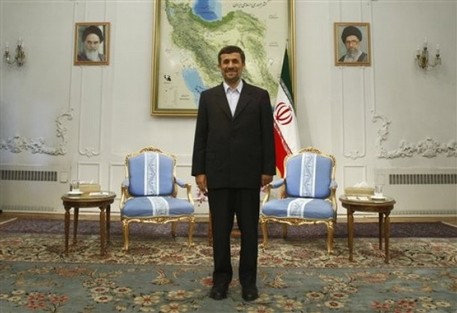
The trouble with this version of Cold War history is that it leaves out a rather important fact: the U.S. fought two massive wars - at a cost of over 100,000 lives - to sustain the "perception" that we were willing to stand up to Soviet Communism. Are the authors suggesting that the U.S. embark on similar endeavors to impress upon the Chinese leadership our seriousness?

They continue:

Absent an overwhelming superiority in naval strength to back up trade and other negotiated agreements, President Obama’s efforts to re-engage in Asia will be worthless. China respects power and will adjust its foreign policy to the realization that the interests of America and its allies are both immutable and capable of being defended. That is the true path to an enduring peace.

I think it's correct for the U.S. to sustain a good deal of military power in Asia, of which the Navy plays a huge role. But this kind of advice really, really falls apart without a clear definition as to the American interests that are supposed to be "immutable." It's particularly important to spell out which of our allies' interests we are expected to treat as immutable and worthy of dying for.

(AP Photo)

American Leadership

David Schorr thinks that, contrary to my assertion, American leadership really does stand between a civilized world order and Hobbesian chaos:

Check my logic here:

1. The biggest items on the agenda -- disequilibrium in the global economy, climate change, and nuclear proliferation -- are on a negative trend line, stemming directly for a shortfall in international cooperation.

2. These items are high on the agenda because the stakes are high and the consequences dire.

3. Diplomatic and political impetus from the United States is a critical factor in spurring a more serious collective international response. We don't have all the answers, but we're taking the questions seriously; if America pulls back, things will continue along their downward slide.

Chaos? Economic imbalances will eventually go completely out of balance. Ten nuclear-armed nations becomes 12, 15, 20... Violent political predators from Sudan to Zimbabwe go unchecked. Oh, and remind me what happens when the global average temperature reaches four plus degrees over pre-industrial levels? I don't think chaos overstates the case.

The real point is that the United States cannot by itself ward off this Hobbesian future. This is an appeal to other governments to join Washington as global leaders who step up to their responsibilities to deal with these challenges.


Jacksonians & Afghanistan

Michael Gerson sees "Jacksonian" Republicans making trouble for President Obama's foreign policy:

Even without a developed tea party foreign policy, the center of gravity on Capitol Hill is likely to shift in a Jacksonian direction. Historian Walter Russell Mead describes this potent, populist foreign policy tradition as "an instinct rather than an ideology." Today's Jacksonians believe in a strong military, assertively employed to defend American interests. They are skeptical of international law and international institutions, which are viewed as threats to American sovereignty and freedom of action. Jacksonians are generally dismissive of idealistic global objectives, such as a world free from nuclear weapons. Instead, they are heavily armed realists, convinced that America operates in an irredeemably hostile world. In particular, according to Mead, Jacksonians believe in wars that end with the unconditional surrender of an enemy, instead of "multilateral, limited warfare or peacekeeping operations."

But then he writes:

But the largest test case will be Afghanistan. Here Obama faces a rare challenge. His base of support for the Afghan War lies mainly in the opposing party, making Republican attitudes toward the war decisive. As Obama's July 2011 deadline for beginning the withdrawal of American troops approaches, any hint of civilian-military divisions on strategy could dramatically erode Republican support. Jacksonians like to win wars. But if Obama appears reluctant, they could easily turn against a war the president does not seem determined to win.

This doesn't make sense. In the prior graf, Gerson insists Jacksonians don't like "multilateral, limited warfare or peacekeeping operations." That's precisely what we're doing in Afghanistan. If anything, a spike in Jacksonian sentiment would lead to an eros