Main

January 24, 2012

New Foreign Policy Blogs

We're firm believers that you can never have too much foreign policy and national security commentary, so it's nice to see some new blogs pop up that are worth your time. First, there's Renewing America, a new blog from the Council on Foreign Relations on the U.S. in the global economy. Then there's Democracy Lab, from Foreign Policy, which is focused on tracking democratic transitions across the world. Last, but certainly not least, is Democracy, Development and the Rule of Law, a new blog by renowned scholar Francis Fukuyama hosted on the American Interest's website. Check them out and if there are blogs we should be reading, let us know in comments.

January 3, 2012

A Tale of Two Internets

In Belarus, it is now illegal to visit any "foreign" website, while in Malaysia, it is now mandatory for an eatery in Kuala Lumpur to offer Wi-Fi access.

December 28, 2011

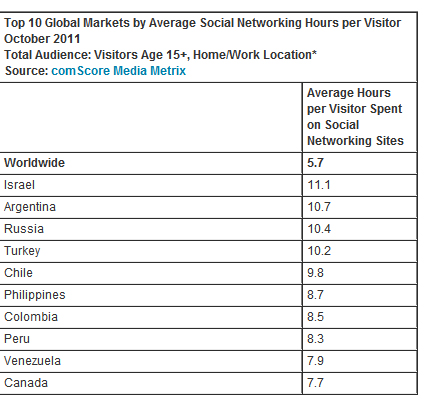
Social Networking: A Global Addiction

comscorechart.jpg


A new study from ComScore breaks down hours spent on social networking. As you can see, the U.S. is far from a global leader here. (And that's probably not a bad thing...)

December 15, 2011

The Word in 2011 (According to Google)

I could do without the music, but the video's pretty good.

December 13, 2011

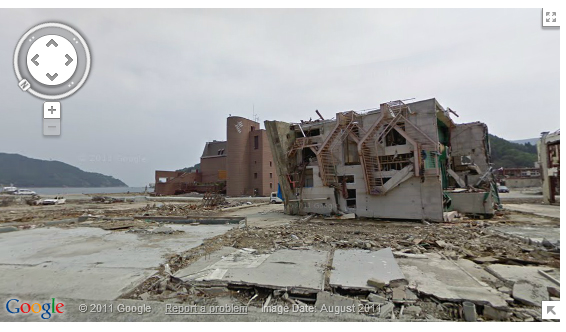
A Street View of Japan Tsunami Damage

japandestruction.jpg

Via Google:

Back in July, we announced our initiative to digitally archive the areas of Northeastern Japan affected by the March 11 earthquake and tsunami. Today, we’re making good on that promise—after driving more than 44,000 kilometers through the affected regions, 360-degree panoramic imagery of those areas is now available through the Street View feature in Google Maps. The images can also be viewed via a special website called “Build the Memory,” where you can easily compare before and after shots of the towns changed by these events.

A virtual tour via Street View profoundly illustrates how much these natural disasters have transformed these communities. If you start inland and venture out toward the coast, you’ll see the idyllic countryside change dramatically, becoming cluttered with mountains of rubble and debris as you get closer to the ocean. In the cities, buildings that once stood proud are now empty spaces.

You can start this grim tour here.

November 8, 2011

YouTube - a Global Hub

Via Daily Dot:

YouTube, the six-year-old video-sharing site based in California, has an undeniably large International footprint. But just how much traffic visiting the site comes from outside the United States?

“70 percent of [all] traffic comes from outside the U.S.,” a YouTube spokesman told the Daily Dot via e-mail.

And 60 percent of users access the site in a language other than English, a YouTube spokesperson told Gigaom last week.

September 8, 2011

More from RealClear

We interrupt our global affairs blogging for a bit of home news. There are a few new members in the RealClear family as of this week: RealClearTechnology, RealClearBooks and RealClearHistory.

Please give them a look!

July 11, 2011

Arabic - The Language of Facebook?

A new study looks at the use of Facebook in the Middle East:

Since it was launched in 2009, use of the Arabic Facebook interface has skyrocketed to reach some 10 million users today. At the moment, they represent about a third of all Facebook users in the Arab world, but it’s expected that within a year Arabic will overtake English to become the most popular Facebook language in the region.

Spot On Public Relations, a Middle Eastern publicity agency specializing in on-line social media, found that two times as many people log on to Facebook in the Middle East and North Africa than purchase a daily newspaper.

“What’s fascinating for us is not Facebook’s overall growth in the Middle East but its growth in Arabic,” Alexander McNabb, director of Spot On PR told The Media Line.

According to their study, Arabic Facebook has grown about 175% a year, double the overall rate of the mushrooming use of Facebook worldwide. In some countries, like Algeria, it grew a whopping 423% annually.

“Until recently, many marketers pretty much took for granted that the region’s Facebook users were English-speaking Arabs or expatriates, using Facebook in English and representing a fairly elite group of on-line consumers. It has become apparent that this is now far from being true,” the study found. “We can expect Arabic to become the most popular Facebook langue in the region within a year.”

The Arabic platform’s 10 million users make up about 35% of the region’s Facebook subscribers, up from 24% in May 2010.

“The new phenomenon we are seeing is the growth in Arabic language usage, which in some parts of the region is truly phenomenal,” McNabb said.

According to their figures, 56% of Facebook users in Egypt (3.8 million) opt for the Arabic language version. In the Gulf Cooperation Council (GCC) countries, 41% use Arabic and in Saudi Arabia it’s 61%. By contrast, Morocco has 17% recorded Arabic users and at the bottom of the list is the United Arab Emirates, with its big expatriate population, with just 10%.

July 8, 2011

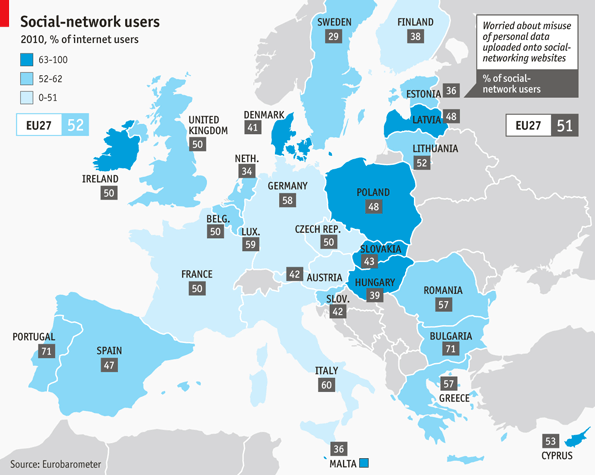
Social Networking in Europe

20110709_WOC928_1.gif

The Economist measures social networking activity in Europe.

March 28, 2011

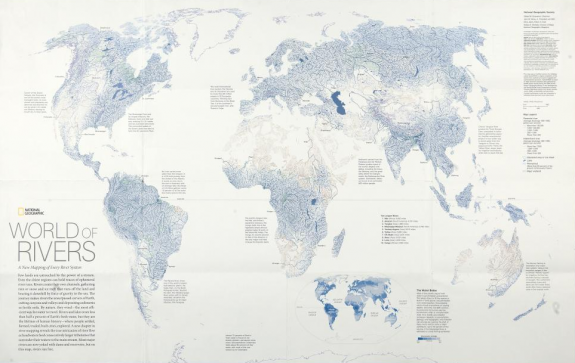
Map of the Year: World of Rivers

World-of-Rivers-from-NG-575x363.png

Via Flowing Data, the above map from National Geographic of every river system in the world won the annual Malofiej award for top graphics in journalism. Click the photo for a larger view. Pretty neat.

February 8, 2011

Tracking Global Obesity

I thought the word from Conventional Wisdom HQ was that a food-crisis was in the making. But according to the chart above from the Economist, we're also enjoying a bull market in obesity. There's some good news in that, as it means prosperity, like waistlines, is expanding.

January 17, 2011

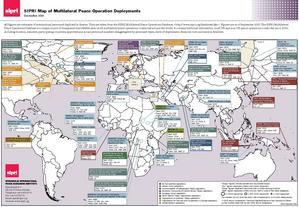
The World of Peacekeepers

peacekeepers.jpg

The Stockholm International Peace Research Institute recently published a map showing the global deployment of multilateral peace-keeping operations. You can download a larger image here.

January 14, 2011

The U.S. as the World

Here's a fun interactive map from the Economist that recasts U.S. states as other countries by dint of their GDP or population size.


December 16, 2010

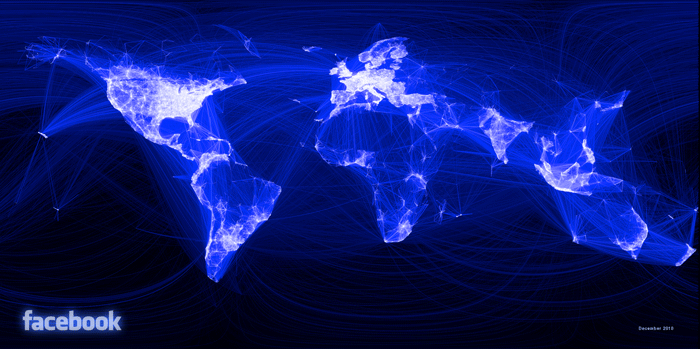
The World of Facebook Connections

the%20world%20of%20facebook.gif

This map, created by Facebook, shows the connections people have made around the world. It is useful for charting who is connected and, just as important, who isn't (at least via Facebook, there is still a world outside of Facebook, or so I've been told).

A recent Pew survey looked at the world's appetite for social networking:

Among the 22 publics surveyed, Americans most often say they use websites like Facebook and MySpace: 46% use such sites, 36% use the internet, but do not access these sites, and 18% say they never go online.

The survey finds three countries close behind the United States in social network usage: in Poland (43%), Britain (43%) and South Korea (40%), at least four-in-ten adults say they use such sites. And at least a third engage in social networking in France (36%), Spain (34%), Russia (33%) and Brazil (33%).1

Germans and the Japanese stand out among highly connected publics for their comparatively low levels of participation in social networking. While 31% of Germans use these types of sites, 49% go online at least occasionally but choose not to use them. In Japan, 24% are engaged in social networking, while 44% have internet access but are not engaged.

[Hat tip: William Easterly]

December 10, 2010

Google Zeitgeist

Google has released an overview of "how the world searched" the Internet in 2010. They have a very neat interactive tool here that lets you monitor global search volumes by major world events, like the Haitian earthquake or World Cup. Check it out.

October 8, 2010

A Multimedia Look at Pakistan's Crisis

The Council on Foreign Relations has put together a nice multimedia presentation Pakistan. Click the image for the full show:

Crisis Guide: Pakistan

May 30, 2010

Odds and Ends

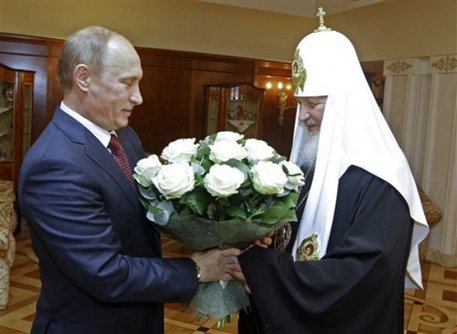
rsz_putinflowers.jpg

In an effort to resolve my anemic presence on this blog as of late, I decided a daily - or quasi-daily - tab dump or roundup might be a good idea. Get excited!

- If you haven't seen it yet, be sure to check out FP's gallery of Afghan retro photos. (This one is my personal favorite.)

- Sharmeen Obaid-Chinoy discusses how the Taliban converts children into suicide bombers.

- CSM looks at the role Venezuelan President Hugo Chavez will play in today's Colombian presidential poll.

- Georgians head to the polls today in local elections that may serve as a referendum on President Mikheil Saakashvili.

- Washington Post, in case you missed it, released this handy PDF last week summarizing key provisions in the proposed sanctions resolution against Iran.

- They apparently like their coffee in the Nordic countries.

- Did you read Greg's review of Ian Bremmer's latest book? Please do!

- In keeping with the holiday weekend, which continent do you think is the most Pro-American (aside, you know, from North America)?

For our American readers who are either stateside or abroad, we wish you a happy and safe Memorial Day weekend. Have fun, eat a lot of BBQ and give a couple bucks to the USO or the Wounded Warrior Project, if you can.

Now get off the internet and go get some sun!

(AP Photo)

May 21, 2010

(Not So) Deep Thought

As the anniversary of Iran's June 12 unrest rapidly approaches, I had a (not so) deep thought about this year's headlines as compared to last.

The top foreign policy story of 2009, I'd assume rather indisputably, was Iran. But barring some sort of cataclysmic event (knock on virtual-wood), the world news story of 2010 will likely be Greece and the greater Euro debt crisis.

So I ask: Which do you believe to be the more significant of the two? I think one's answer may reveal a lot about how they consider and approach foreign policy. (and yes, my answer is the Eurozone crisis.)

Please add your thoughts in the comments section and call me Neville Chamberlain.

May 13, 2010

The Global Rich List

London-based firm Poke has created a site that ranks income status around the world, using World Bank data and a global population estimate of six billion people. You can see how you rank among the world's earners here.

November 25, 2009

Curtain Call for "Abu Muquwama"

I have long felt that it is vanity for blogs and newspapers to treat news about the relay of news in the same way it does actual news. That said, there is something to be learned by watching the occasional trends in reporting. In a move that is getting a great deal of discussion in the military blogging community, Andrew Exum, aka Abu Muquwama, announced on Monday that he intends to discontinue regular blogging.

Abu Muquwama is a rarity in the military community, in that he is a self-proclaimed center-left figure who the military establishment takes seriously; he understands the tactical and operational levels of war; he is comfortable with the use of force. In my mind, he reflected the Truman branch of liberalism. While Abu Muquwama will continue on as an active blog, Andrew Exum will post less frequently, and the blog will serve primarily as an outlet for Londonstani, a correspondent in the Af/Pak region.

This reminds me of the transition that CNN experienced after the first Gulf War. While CNN had been around for years, it was only in the First Gulf War that it really came into its own. The hourly riveting and relatively sterile images made for extremely high ratings and propelled people like Wolf Blitzer into the national spotlight. However, after the war, a 24 hour news cycle was difficult to maintain, and CNN suffered. (Faced with a similar dilemma after the invasion of Iraq, the news channels increased their commentary to fill the gap.)

Similarly, Andrew Exum, like many bloggers, had plenty of fodder with two wars ongoing, and lots of news flowing out of both Afghanistan and Iraq. Quick evaluations based on experience could influence the course of debate, and that is exactly the role Abu Muquwama and others played. Now, a lot less information is reported in the news. Iraq has fallen off the radar almost completely, and most of the news about Afghanistan seems to be about the Obama administration's grappling with the war's complexities instead of actual events inside the country. As such, there is much less to comment or report on, unless you are on the ground like Londonstani, or Michael Yon. Unfortunately, the decline in readily available information means that the Western public is forming opinions on even less information than before, and in my opinion, that bodes ill for informed decision making on the part of democratic states.

November 23, 2009

The Decline of Maritime Empires

This is a neat video showing the decline of four maritime empires over time:

Visualizing empires decline from Pedro M Cruz on Vimeo.

If you liked that, you'll probably enjoy this one as well.

[Hat tip: Jesse Walker]

September 28, 2009

Congrats to GlobalPost

Exciting news for our friends at GlobalPost:

CBS News plans to announce Monday that it has formed a partnership with GlobalPost, a foreign news Web site, that will provide CBS with reporting from its approximately 70 affiliated correspondents in 50 countries.

As many print and broadcast news outlets are struggling to find ways to cover foreign news, the alliance may suggest a blueprint.

[...]

“Having a broadcast network partner was a high priority for us, and to be associated with CBS News is a great validation of what we are trying to build,” Mr. Balboni said in a phone call. “We hope to become an important source of international news for Americans, and this partnership is a big step in that direction.”

In the early going, at least, GlobalPost reporters will provide information, not work on the air, with CBS using its reporters and anchors to flesh out coverage for broadcast.

CBS News suggested that the alliance with GlobalPost, in which the network will pay a monthly undisclosed fee to the site, represents an expansion of the news divisions’ efforts to cover the rest of the world.

Congratulations to GlobalPost. They do a lot of great work, and being essentially a loose network of freelancers, this deal should enable them to keep producing great content -- and more of it.

For a taste of the quality work they do, please check out this piece by Nadja Drost on the Latin American arms buildup, and also be sure to hit up the GlobalPost website.

(h/t Joel)