


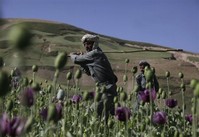
As the United States retools its counternarcotics strategy in Afghanistan, officials are looking to Colombia for lessons.
The two nations share many burdens: Colombia is the largest supplier of cocaine in the world, Afghanistan of opium. Both have impoverished rural communities easily enticed into trafficking webs. Both are vulnerable to the sway and command of insurgent groups that finance their fight with proceeds from the drug trade.
The parallels have led to calls for exporting elements of the nearly decade-old "Plan Colombia," the US-funded antinarcotics effort, to Afghanistan. Critics are wary. But it seems that, at least at the outset, the US is learning as much from its mistakes as from its successes in South America.
For example, instead of pouring money into crop eradication as it did in Colombia, the new US strategy in Afghanistan will phase out eradication, and place a new emphasis on the interdiction of opium shipments and encouraging farmers to adopt alternate crops.
The number of Drug Enforcement Agency officials in Afghanistan will increase more than sixfold by next year, to as many as 81 agents. The DEA and US military will target (to be killed or captured) the top 50 drug traffickers with ties to the Taliban.
"Even with all the mistakes in Colombia, there is also learning taking place … on how to do rural development in the context of an illicit economy," says Vanda Felbab-Brown, a fellow at the Brookings Institution in Washington and author of the book "Shooting Up: Counterinsurgency and the War on Drugs." "Depending on which pieces of Plan Colombia you pick, they might very well be applicable."
After nearly 10 years and $6 billion in US aid, Plan Colombia's focus on massive forced eradication of coca crops has only recently made a dent in the South American country's cocaine production. Colombia's efforts at offering alternative livelihoods to coca farmers suffered multiple failures over the years: With promised government subsidies never materializing and no markets for their alternative crops, many farmers went back to coca.
Read Full Article »