


President Obama has ordered sufficient reinforcements to Afghanistan to execute a war strategy that can succeed. We applaud this decision. And we urge everyone to rally round the effort to defeat our enemies and accomplish objectives vital to America's national security.
Obama's decision, and the speech in which it was announced, were not flawless. The president should have met his commander's full request for forces. He should not have announced a deadline for the start of the withdrawal of U.S. forces. He should have committed to a specific and significant increase in the size of the Afghan National Security Forces. He should also have explained more clearly the relationship between defeating the Taliban and defeating al Qaeda, the significance of such a victory, and the reasons his Afghan strategy can succeed. The secretaries of defense and state, as well as the chairman of the Joint Chiefs of Staff, made those arguments far more compellingly in subsequent congressional testimony than the president did at West Point.
We shouldn't miss the forest for the trees, however. When all the rhetorical and other problems are stripped away, the fact remains that Obama has, in his first year in office, committed to doubling our forces in Afghanistan and embraced our mission there. Indeed, the plan the president announced on Tuesday features a commendably rapid deployment of reinforcements to the theater, with most of the surge forces arriving over the course of this winter, allowing them to be in position before the enemy's traditional fighting season begins.
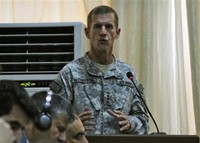
The bottom line: Our very capable field commander, General Stanley McChrystal, will have 100,000 American troops by the middle of next year to take the fight to the enemy and regain the initiative in the war. General McChrystal has expressed confidence in his ability to execute his strategy with these resources. He and his superior in the chain of command, General David Petraeus, have earned the right to the nation's confidence in their judgment.
It's also important to note that General McChrystal and his forces have not stood still for the last four months, as the president pondered his options. They have moved rapidly to set the conditions to take advantage of the surge of forces, accomplishing a number of important tasks that will make the job of taking the fight to the enemy in 2010 much easier.
Problems of command-and-control in particular have bedeviled our efforts in Afghanistan, especially in the south where the fight is the most important right now. British forces have been focused on Helmand and Canadian on Kandahar--such that the regions were often called "Helmandshire" and "Canadahar"--but there was no unified approach even within Regional Command South (commanded until recently by a Dutch general without a full staff working for him), let alone between the south and the U.S.-controlled Regional Command East. There was also no operational command in Afghanistan equivalent to the Multinational Corps-Iraq structure. The effort to train Afghan security forces was run from a headquarters that was not part of the same command structure as the U.S. and allied troops on the ground fighting.
Search Subscribe Subscribers Only FAQ Advertise Store Newsletter Contact About Us Site Map Privacy Policy
Read Full Article »