


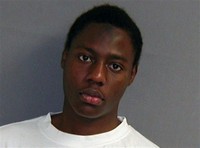
Umar Abdulmutallab, who tried to blow up a plane as it landed in Detroit on Christmas Day, was a student at University College London (UCL) and president of its Muslim society. Many have already used this to accuse British universities of failing to do enough to stamp out extremism, and suggest that, left unchecked, Muslim student societies will incubate further threats.If Abdulmutallab studied at UCL, the theory goes, he must have been radicalised there, so we have to change how we think about free and open debates on campuses: particularly when they involve Muslim student organisations.
Strong words. Let's see how they stand up to scrutiny. According to the most recent polls, British Muslims are the most patriotic Muslim community in Europe – and more so than the average non-Muslim Briton. Muslim British students are no less patriotic than the wider Muslim population; if anything, as a younger generation, their patriotism is more entrenched. And their activities certainly show that.
As deputy convener of the Home Office task force on tackling radicalisation and extremism in the aftermath of the 7/7 London bombings in 2005, I know that first hand. The Federation of Student Islamic Societies (Fosis), the national representative organisation of Muslim students, was a part of that task force, and has consistently worked closely with the British government and universities around the country. Despite growing controversy around the whole strategy, as many fear it casts the entire Muslim community as possible terrorists, Fosis has remained involved in backing and actively supporting counter-extremist activities all over the country.
document.write('');
So what happened to Omar Abdulmuttalab? The fact is, we do not know. We do know that universities are politically active places; university, for many, is the first time they become politically aware. Some become committed supporters of animal rights, for example; or involve themselves in community issues (black politics, Jewish politics); or political problems, such as Tibet. This is normal, and unsurprising. Many members of the ruling Labour party in the UK were themselves “radicals” at university. In that regard, it is hardly surprising that Muslim students also become politically more aware; there are many political conflicts in the Muslim world.
It could be that in the process of becoming politically aware, Abdulmuttalab became a target for extremists who exploited that political awareness for their own ends. But that's just conjecture – there is no evidence. What we do know is that his role at UCL was very public. As president of a Muslim student society, his opinions and stances would have been in the public domain. Student society presidents are forced to be transparent; it's not a role that one can attain, or maintain, by being secretive.
An investigation is being launched into his time at UCL – an investigation that both the university administration and Fosis have called for. That they have both done so, entirely voluntarily, is testimony that the university, as well as the Muslim student establishments, take this case seriously. But the investigation is likely to tell us a lot we already know; that far from being suspected of being an extremist, Omar
Comment
US drone attacks killed 700 civilians, officials say
Read the newspaper as it was printed
Send us your stories and pictures
document.write(''); One deluded man does not make an extremists’ hotbed
H A Hellyer
Last Updated: January 03. 2010 6:38PM UAE / January 3. 2010 2:38PM GMT
Umar Abdulmutallab, who tried to blow up a plane as it landed in Detroit on Christmas Day, was a student at University College London (UCL) and president of its Muslim society. Many have already used this to accuse British universities of failing to do enough to stamp out extremism, and suggest that, left unchecked, Muslim student societies will incubate further threats.If Abdulmutallab studied at UCL, the theory goes, he must have been radicalised there, so we have to change how we think about free and open debates on campuses: particularly when they involve Muslim student organisations.
Strong words. Let's see how they stand up to scrutiny. According to the most recent polls, British Muslims are the most patriotic Muslim community in Europe – and more so than the average non-Muslim Briton. Muslim British students are no less patriotic than the wider Muslim population; if anything, as a younger generation, their patriotism is more entrenched. And their activities certainly show that.
As deputy convener of the Home Office task force on tackling radicalisation and extremism in the aftermath of the 7/7 London bombings in 2005, I know that first hand. The Federation of Student Islamic Societies (Fosis), the national representative organisation of Muslim students, was a part of that task force, and has consistently worked closely with the British government and universities around the country. Despite growing controversy around the whole strategy, as many fear it casts the entire Muslim community as possible terrorists, Fosis has remained involved in backing and actively supporting counter-extremist activities all over the country.
document.write('');
So what happened to Omar Abdulmuttalab? The fact is, we do not know. We do know that universities are politically active places; university, for many, is the first time they become politically aware. Some become committed supporters of animal rights, for example; or involve themselves in community issues (black politics, Jewish politics); or political problems, such as Tibet. This is normal, and unsurprising. Many members of the ruling Labour party in the UK were themselves “radicals” at university. In that regard, it is hardly surprising that Muslim students also become politically more aware; there are many political conflicts in the Muslim world.
It could be that in the process of becoming politically aware, Abdulmuttalab became a target for extremists who exploited that political awareness for their own ends. But that's just conjecture – there is no evidence. What we do know is that his role at UCL was very public. As president of a Muslim student society, his opinions and stances would have been in the public domain. Student society presidents are forced to be transparent; it's not a role that one can attain, or maintain, by being secretive.
An investigation is being launched into his time at UCL – an investigation that both the university administration and Fosis have called for. That they have both done so, entirely voluntarily, is testimony that the university, as well as the Muslim student establishments, take this case seriously. But the investigation is likely to tell us a lot we already know; that far from being suspected of being an extremist, Omar Abdulmuttalab was lauded by students and staff alike for being “very polite and a condemner of terrorism”.
What we do not know is what happened after his graduation. He went travelling and essentially dropped off the radar, only to reappear last week. It was during this time, not at UCL, that his father suspected something was wrong, and reported it to the authorities in Nigeria. That's where we need to focus our attention, and stop wasting our time on a university experience until there is evidence to show otherwise. Instead of succumbing to more base instincts, which would put Britain's principles of freedom of expression in jeopardy, we need to be more focused and not jump to baseless conclusions.
In any case, universities are generally not held accountable for the actions of their graduates; not with IRA sympathisers (or members) who graduated from British universities, nor with extremists from any background (the British National Party chairman is a Cambridge graduate). Nor are they security establishments. The job of universities, as the president of University College London recently pointed out, is to “encourage the vigorous debate, disputation and criticism that is central to the very concept of a university”. That sort of spirit is also fundamental to a free society – the type of society that al Qa'eda seeks to destroy, and that some in the West would like to curb, at least for Muslims.
Already, the UK government's counter-terrorism strategy is under review because of the way it stigmatises Muslims – and for sound strategic security reasons. A couple of years ago the joint general secretary of the Universities and Colleges Union, Paul Mackney, cautioned against an anti-Muslim McCarthyism in which freedom of speech and expression were being narrowed; will we let this terrible event be used as an excuse to narrow it further?
As students go back to university after the holidays, do we want to encourage an atmosphere where irresponsible conclusions might endanger the safety of Muslim students, when there is no evidence that anything actually happened at UCL in the first place?At the very least, we should have a pause, before we give al Qa'eda cause to chuckle in their caves, with the phrase on their lips: “Wow: we've got the West so scared, they're dismantling their freedoms for us.” The only losers in such a scenario will be us. Abdulmuttallab will stand trial – British universities and Muslim students in general should not be in the dock with him.
Dr H A Hellyer is the author of Muslims of Europe: the 'Other' Europeans, published by Edinburgh University Press
Send to friend Print var addthis_pub="noahkhan"; var addthis_brand = "The National"; var addthis_logo = "http://www.thenational.ae/images/the_national_logo.gif"; var addthis_logo_color = "3261A5"; Bookmark & Share function storeCaret(textEl) { if (textEl.createTextRange) textEl.caretPos = document.selection.createRange().duplicate(); } if ((document.all) && (navigator.userAgent.indexOf('Opera')== -1)) { IE = true; } else { IE = false; } function doSubmitMessage(aFormId,aUrl){ aForumForm = aFormId; aCreateUrl = aUrl+"&omniture=0"; aForumMessageUrl = ''; aAjaxDiv = document.getElementById("cpost"); processForum(aAjaxDiv); }
Have your say
Please log in to post a comment try { if (document.getElementById("_userEmail").innerHTML = '') { document.newmessageform.Body.disabled=true; document.newmessageform.post.disabled = true; } } catch(e) { document.newmessageform.Body.disabled = true; document.newmessageform.post.disabled = true; } See also Fuel prices will not ease Bahrain's traffic The Yemen dilemma: what would Mr Bush have done? A failing state that poses a threat to us all Other Opinion stories Flash should play to its strengths How many more 'Palestines' to go? The boy I shared my dream with � a suicide bomber? Democracy is the only path to Afghan peace The height of hope and resilience One deluded man does not make an extremists' hotbed document.write(''); Top stories Capital reconsiders hotel rate caps Burj Dubai: the view from the top of the world Lawyer says boy's killer is not sane Internet users face slowdown US warned against strike in Yemen Eduardo delivers hammer blow Your View What impact have the parking meters in Abu Dhabi had on you?Have you been unfairly charged in a restaurant?Have doctors in the UAE given you unnecessary drugs?Would you recycle your rubbish if you had recycling bins?What course of action do you think should be taken against noisy neighbours? Most popular stories Most read Most e-mailed Burj Dubai: the view from the top of the world An owner is eager to claim 'top of the world' apartment Internet users face slowdown See the Burj for less than Dh100 Burj already in the black Lawyer says boy's killer is not sane Sentence reduced for men who killed Pakistani driver Women tell court of prostitution ring US drone attacks killed 700 civilians, officials say A study of habits Notes from a small island Debt-ridden developers face prison or flight The making of the modern state Abu Dhabi signs nuclear power deal with South Korean group Diners told to report illegal restaurant service charges First foreign owners take possession of Abu Dhabi homes A 70 per cent pay rise that's a 100 per cent bad idea Medical practices 'put lives at risk' Restaurants defy ban on service charges Interactive: Burj Dubai - The only way is up var countries=new ddtabcontent("countrytabs") countries.setpersist(true) countries.setselectedClassTarget("link") //"link" or "linkparent" countries.init() Products & Services Your View e-polls e-Paper RSS Feeds Home UAE World Business Sport var countries=new ddtabcontent("countrytabs") countries.setpersist(true) countries.setselectedClassTarget("link") //"link" or "linkparent" countries.init() Products & Services Your View e-polls e-Paper RSS Feeds Home UAE World Business Sport About us Contact us Terms & Conditions FAQ Site map
© Copyright of Abu Dhabi Media Company PJSC.
var gaJsHost = (("https:" == document.location.protocol) ? "https://ssl." : "http://www."); document.write(unescape("%3Cscript src='" + gaJsHost + "google-analytics.com/ga.js' type='text/javascript'%3E%3C/script%3E")); var pageTracker = _gat._getTracker("UA-4452332-2"); pageTracker._initData(); pageTracker._trackPageview(); //-1?'https:':'http:') +unescape('//me.effectivemeasure.net/em.js%22%3E%3C/script%3E')); //]]> var pvar = { cid: "mena-admedia", content: "0", sample_size: 10, server: "secure-uk" }; var feat = { surveys_enabled: 1 }; var trac = nol_t(pvar, feat); var _rsND = trac.getSchemeHost(); var _rsCI = "mena-admedia"; trac.record().post().do_sample(); var doLoad = true; if (doLoad) { updatePollMini(); } s.Account="saxotechthenational" s.cookieDomainPeriods="2" s.pageName="Opinion,One deluded man does not make an extremists hotbed:20100104:701039970" s.server="S260608AT1VW921" s.channel="Opinion" /* Traffic Variables */ s.prop1="Story" /* E-commerce Variables */ s.events="event3" s.products="Poll;Will you be making use of the Etisalat remittances services?/Will you be making use of the Etisalat remittances services?" /* Hierarchy Variables */ s.hier1="Opinion,One deluded man does not make an extremists hotbed:20100104:701039970" /************* DO NOT ALTER ANYTHING BELOW THIS LINE ! **************/ var s_code=s.t(); if(s_code)document.write(s_code)
Read Full Article »