


If we're lucky this time around, we'll avoid the who-lost-Egypt debate. Mubarak's decision to step down has pre-empted a catastrophic crisis for Egypt and for American interests. We may not be adept at manipulating Middle Eastern politics; but we're sure experts at beating ourselves up.
Commentators and analysts have argued forcefully that Barack Obama's administration failed to anticipate the current crisis, blew an opportunity by failing to push President Hosni Mubarak to make significant reforms during the early days of the upheaval, and risks being on the wrong side of history by not being assertive in trying to force Mubarak's removal. But the administration was smart to keep its distance from this crisis.
If the last eight years in Afghanistan, Iraq, and Iran -- and the previous 800 years in the Middle East -- demonstrate anything, it is that great powers cannot micromanage the affairs of small tribes. And when they try, they almost always fare badly. COMMENTS (0) SHARE: Twitter Reddit Buzz More...
There is much to quibble with in the administration's approach -- too many daily political weather reports about the current situation in Cairo, not enough initial coordination about what the administration should say, and too many presidential statements.
But on balance, the administration has played a bad hand pretty well. The cards the president were dealt were largely beyond his control. Hammering him now completely ignores the reality that U.S. policy made its bed in Egypt decades ago, and now the administration -- forced to sleep in it as it confronts the current crisis -- has few good options.
For decades, the United States cut a devil's bargain with a number of Middle Eastern authoritarian regimes. And let's be clear here, Hosni Mubarak isn't Saddam Hussein: He's not a sociopath or a mass murderer. Indeed, until last month, I guarantee you, any number of U.S. officials, including the president and the secretary of state, chummed it up with him in Washington and Cairo.
The bargain the United States cut was quite simple: In exchange for helping it carry out what it believed to be sound American policies on peace and war, it gave Mubarak, the monarchs of Jordan, the Saudis, and even Saddam Hussein (for a brief period during the 1980s) a pass on domestic governance.123NEXT Save big when you subscribe to FP.
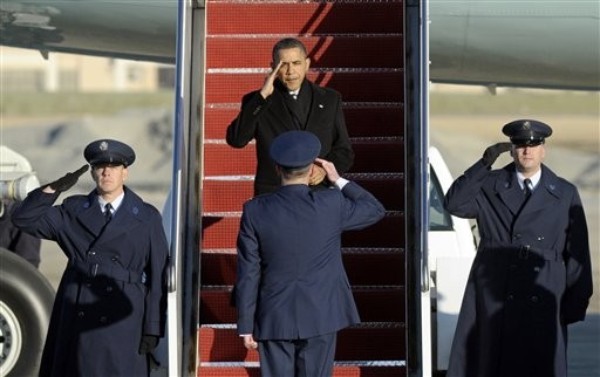
TIM SLOAN/AFP/Getty Images
Aaron David Miller is a public policy scholar at the Woodrow Wilson International Center for Scholars and former advisor to Republican and Democratic secretaries of state. His forthcoming book is Can America Have Another Great President?.
Don't Blame Obama for Losing Egypt. It Wasn't His to Win.
#I Love Twitter, Doesn't Mean I Trust It
The Muslim Brotherhood Isn't As Scary As You Think
10 Reasons Why Americans Really Should Care About Egypt
HIDE COMMENTS LOGIN OR REGISTER REPORT ABUSE
MOSTREAD
MOSTCOMMENTED
MOSTREAD
MOSTCOMMENTED
MOSTREAD
MOSTCOMMENTED
MOSTREAD
MOSTCOMMENTED
PASSPORT
Where does Mubarak go now?
BY JOSHUA E. KEATING
DAVID ROTHKOPF
Is Obama slipping on Egypt?
DISPATCH
Mubarak's speech ensures that the revolution will go on
BY BLAKE HOUNSHELL
BEST DEFENSE
The best novel so far about the war in Iraq
Read Full Article »