


There is a field of academic theory called realism, more popular in America than here in Europe, which holds that states are, for practical purposes, like billiard balls: Given certain power realities, geographical positions and other material criteria, all states will behave identically under similar circumstances without regard to domestic political culture, distinct histories or the idiosyncrasies of leaders. As academic realists see it, neither emotion nor happenstance has anything to do with the choices leaders make.
I have never known a statesman, let alone a neuroscientist, who takes the strong expression of this theory seriously. When professional diplomats consider their subject matter, they invariably combine objective knowledge with what, for lack of a better term, is a feel for the situation that they have acquired from experience. A unique psychological interplay defines any given diplomatic engagement. It matters, for example, if a state’s leadership thinks that the national honor of the nation has been recently violated and requires redress; the emotional substrata of a revisionist—or revanchist, to use the classical French term of art—state is a reality ignored at one’s peril.
For example, no one who deals today with the Russian leadership and its coterie of diplomats thinks that the country’s traumatic recent history makes no difference to how it acts. At the end of the Cold War, Russia lost not only its artificial 20th century name but also many territories it had controlled since the time of Catherine the Great. Russia plunged from superpower to the uncertain status of a country with a dysfunctional economy, a murky multiethnic and ideological identity, and lots of nuclear weapons for which no practical purpose could be identified. Many claimed that Russians did not lose the Cold War, but rather that they had liberated their country from communism. This is not, however, what the situation actually felt like, either for those within the country or for those outside it. Dealing with Russia became in short order for Europeans and Americans alike bound up with Russia’s wounded pride. Diplomats sensed that their Russian counterparts were particularly sensitive to slights of respect, and that a certain deference was necessary to do business with them. There was a price to be paid for not at least pretending to take the Russians seriously; the U.S. government, in fact, has paid that price several times in recent years.
Russia’s collective state of mind over the past two decades is singular, but hardy unique. The post-World War I transformation of the Ottoman Empire into the Republic of Turkey and the Hapsburg Empire into Austria are other examples of vast and long-standing imperial domains being suddenly shorn away, leaving a rump remainder of uncertain status and self-understanding. At that time Russia was also convulsed by revolution, civil war and the loss of territory. In such circumstances context is critical, and it is never the same from case to case. Nevertheless, one cannot help but wonder if there are not some similarities amid the contextual differences, with lessons to learn from them. The thought often crossed my mind when I served as the Austrian Ambassador to Russia from 1999 to 2003, and it has returned to visit now and again ever since. What follows is a belated attempt to interrogate the post-Hapsburg and post-Soviet cases together, to see what insights the comparison may yield.
The differences between the Habsburg and Soviet episodes of imperial collapse and national political reconsolidation are of course many and obvious. Not least among them is the fact that they are separated in time by 71 rather eventful years, during which norms, technology and more besides changed significantly. But other differences may be more germane; of these, five stand out.
First, although both empires lost considerable territory, post-Hapsburg Austria ended up a small, landlocked country while the post-Soviet Russian Federation has remained the largest country in the world and a purveyor of enormous natural resource wealth.
Second, Austria was rendered militarily insignificant after World War I, while Russia is still a nuclear power with a large army. Russia’s size and military prowess justify to most observers its retention of a permanent seat on the UN Security Council and its continued status as a major player in global affairs. The Austrian Republic neither had nor could dream of seeking such a post-imperial status.
Third, Soviet totalitarianism can in no way be compared to Habsburg political culture. Despite its dark sides and weaknesses, Habsburg Vienna was not Communist Moscow. The Habsburg dynasty aspired to the creation of no “new” man, nor did it ever perfect the methodologies of domestic terror to regiment its population. As a consequence, its passing gave rise in time to nostalgia amid the non-German speaking populations of its lost provinces; that has not been the case among non-Russians in former Soviet territories.
Fourth, the collapse of the Habsburg Empire sent sparks of leftist revolution through much of central Europe, followed in most places by a sharp right-wing reaction. The collapse of the Soviet Union led to far less ideological extremism and consequent political polarization in either eastern Europe or in the former territories of the Soviet Union. In contrast to the short-lived Bela Kun communist government in Budapest, for example, in the post-Soviet space old communist parties were often able to quickly recast themselves as socialist or even social democratic ones. In many cases autocratic leaders of former Soviet republics remained autocratic leaders of newly independent states. Whereas political energies exploded in and around Vienna in 1918–19, they imploded into a muffled heap in and around Moscow after December 1991.
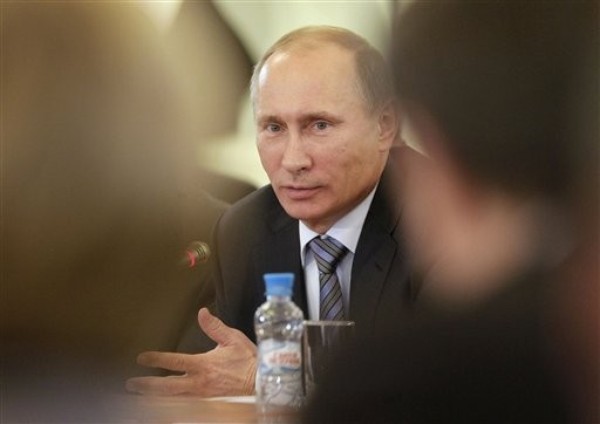
Fifth, while post-World War I Austria never seriously entertained revisionist aspirations to regain part or all of its lost empire, post-Soviet Russia may well do so. Certainly, since the summer 2008 Russia-Georgia War, it is no longer possible to take for granted Russia’s acceptance of the post-Cold War territorial status quo. Vladimir Putin declared the collapse of the Soviet Union “the biggest geopolitical catastrophe of the 20th century”, implying that if it were possible to reverse that catastrophe he would do so. No Austrian leader has ever made a similar remark about the dissolution of the Habsburg monarchy.
Notwithstanding these important differences, five similarities are worth exploring. At the low points in the Austrian and Russian experiences, both post-imperial national leaderships faced the shock of lost empire; the issue of legal/political continuity; an ideological watershed; a search for a post-imperial political identity; and tension between the sirens of multi-ethnicity and a more parochial nationalism. More broadly, both collapses bore implications for the wider balance of world power, generating issues not only for the former imperial metropoles but for the rest of the world as well. Let us look at these similarities in turn.
The shock of lost empire: The Austro-Hungarian Empire disintegrated almost literally overnight. The Treaty of Saint-Germain, of September 10, 1919, drew the borders of the newly established Republic of Austria in a way that justified French Prime Minister Clémenceau’s description: “Le reste c’est l’Autriche.” Compared with the territory of the former Dual Monarchy, only a small fraction of the lands previously under Habsburg rule remained within the borders of Austria. Some non-German-speaking Habsburg territories were added to the newly recreated Poland and the newly created Kingdom of the Serbs, Croats and Slovenes (subsequently Yugoslavia). Austria also lost sizable areas with a predominantly German-speaking population: South Tyrol and the Carinthian Canal Valley were assigned to Italy; the southern part of Styria went to the new Kingdom of the Southern Slavs; a large strip of German-speaking territories in the northern part of the country was given to the new state of Czechoslovakia, and independent Hungary came into existence as well. With all these territorial excisions, Austria lost its predominant role in Mitteleuropa. “The world of yesterday”, as the famous Austrian writer Stefan Zweig put it in the title of his last book, “abruptly disappeared, bringing to a close the illusory stability of the Habsburg monarchy.”
In Vienna, Emperor Charles had to abdicate as the monarchy gave way to a hastily constructed first Austrian Republic. The abdication constituted the concentrated symbolic shock of abrupt change: A 261,000 square-mile European state stretching from Lake Constance in the west to the confines of the Russian Empire in the east was reduced to a territory of hardly more than 52,000 square miles; a multiethnic population of more than fifty million was reduced to about seven million German speakers. Vienna, the former capital of a great European power and one of the largest European cities at the time, suddenly became the confused hydrocephalus of a small country.
The disappearance of Austria-Hungary disrupted the close cultural ties and ethno-political balances that had bound together the various parts of the Habsburg commonwealth, but the harsh realities of 1918–19 were so severe that few had the luxury of dwelling on Austria’s prewar role in European political culture. Indeed, the dislocations caused by four years of war and the sudden economic fragmentation of the realm had made basic living conditions in the first Austrian Republic precarious. The shock of lost empire and even the threat of civil war paled next to the pressing concerns of daily survival in a country facing a serious hunger crisis. Complete exhaustion after the military defeat of World War I and the prevailing catastrophic living conditions generated a climate of political apathy and general depression. Thus, despite the political chaos that followed the collapse of the monarchy, the population remained remarkably calm, politically sleep-walking from one elusive meal to the next. Not knowing how to think about politics in a sudden void of familiarity, people simply stopped thinking about it altogether.
Things were so bad that much of the new political leadership and large segments of the population doubted that Austria could survive as an independent state. Most took the view that Austria should unify with Germany, an objective that was, however, explicitly ruled out by the Allies in the Treaty of Saint-Germain. Hellmut Andics expertly captured the general mood when he called his popular 1962 book on the history of Austria in the interwar period Der Staat, der keiner wollte (“The State Nobody Wanted”).
There is little to be gained from recapitulating the situation in Moscow and the rest of the former Soviet Union after December 1991. It is recent enough to be familiar to many of us. But it is worth reminding ourselves that there was fear of a hunger crisis in the winter immediately following the collapse. It is worth noting, too, that just as the threat of political violence in Vienna receded in the face of exhaustion, apathy and worry about more basic concerns such as personal security from crime and finding dinner also meant that there was little political violence in Moscow or in any of the soon-to-be-former Soviet space. Even though the situation seemed to approach civil war when, in August 1991, Communist hardliners attempted to stage a coup d‘état, nothing of the sort happened. Certainly Boris Yeltsin’s resolute action played a role, but it may have been more important that so few people could summon any energy for a new armed politics. Not even in the Baltic States, where Russia unsuccessfully tried to use military force to prevent secession, did many people get killed. The lesson seems to be that the sudden loss of empire has a way of taking the wind out of politics in general.
Legal/political continuity: The victorious Allied Powers considered the First Republic of Austria to be the legal successor to the Habsburg Monarchy. They thereby proceeded from the assumption that Austria had the same legal identity as the former Austro-Hungarian Empire and therefore bore responsibility for the war. In the negotiations for the Treaty of Saint-Germain, the government in Vienna was simply too weak to challenge the legal fiction of continuity imposed by the Paris Peace Conference. However, Austrian leaders soon took a diametrically opposite position, claiming that the new Republic of Austria was legally distinct from the former Monarchy. This led to extended arguments over a series of financial and diplomatic issues.
In addition to disagreement about the issue of continuity, the Allies and Austria were divided over the fundamental question of Austrian independence. As noted, under the shock of defeat and disintegration an overwhelming majority of Austrians, together with the country’s most influential politicians, favored Austria’s accession to Germany. But, as also noted, the Allies forbade that option. The name Austrians originally chose for the new state was Deutschösterreich (“German Austria”). The Allies insisted on the deletion of the qualifier “Deutsch.” None of this was fair or legally proper, but it was what it was.
The issue of state succession also became an issue when the Soviet Union disappeared from the political landscape: To what extent was the Russian Federation entitled under international law to assume the rights and obligations of the former Soviet Union? This question clearly bore on Moscow’s relationship with the newly independent states that emerged on the territory of the former Soviet Union and with the rest of the world. The matter turned out not to be particularly contentious because of a pre-eminent parallel concern among the interested parties. Western capitals wanted Russia to assume full responsibility for the nuclear weapons it had inherited from the Soviets, including insofar as possible those deployed in Ukraine, Kazakhstan and elsewhere outside the Russian Federation’s territory; Russia wanted control of Soviet nukes to save as much of its superpower status as possible and so was eager to take responsibility for Soviet nukes. The new Russian leadership clearly had no interest in an independent Ukrainian state having a nuclear weapons arsenal.
The official Russian position was based on the claim that the Russian Federation was legally identical with the former Soviet Union and that, therefore, Russia simply continued the legal destiny of the Soviet Union as a subject of international law. Once accepted, this thesis had the remarkable consequence that the Russian Federation was not considered a new state and did not need to apply for international recognition. In the United Nations, for example, Russia took over the permanent seat in the Security Council previously held by the Soviet Union without any objection being raised by the other permanent members of that body.
This, of course, marks a difference from the extended legal quarrels about the status of Austria as a successor of the Austro-Hungarian Monarchy in 1918, but it is not clear even today that there should have been a difference. I was directly involved in the discussions on Russian state succession. Shortly after the dissolution of the Soviet Union, the Austrian Foreign Ministry challenged the Russian Federation’s official position that it was a legal continuation of the Soviet Union. Austria argued that, on the contrary, the Russian Federation had to be considered a new subject of international law. Austria called into question the validity of the international treaties concluded by the former Soviet Union, including, of course, the Austrian State Treaty of 1955 that ensured de facto Austrian neutrality.
Austria’s stand on the Russian state succession turned out to be a lonely one. As the legal adviser to the Austrian Foreign Ministry at that time, I faced an uphill battle trying to explain the Austrian view to my Russian Foreign Ministry counterpart. The atmosphere turned rather tense as he offered a lengthy lecture of Russian history beginning with the first written documents of the Nestor chronicle, dating back to the 13th century. Russia, he explained, has always been and always would be Russia whether it was called the Soviet Union or the Russian Federation or Brigadoon, for that matter.
The Austrian-Russian legal dispute could be swept under the carpet only when Austria joined the European Union in 1995. As a member country, Austria was bound to accept the official position of the European Union, which had recognized the legal opinion of Russia on this matter. On the other hand, since EU accession negated de facto Austria’s neutral status, the one legal hand washed the other, so to speak.
Ideological watersheds: In the course of its disintegration, many people held the Habsburg dynasty responsible for the war and the catastrophe of defeat. In Budapest, as already noted, the turmoil brought forth a Communist Party regime. In Vienna, Communist Party activists tried to follow the Hungarian example but failed. The majority of the Viennese working class did not support a Communist takeover, but what it did support took some time to work out.
In the first general elections held after the war in February 1919, the Socialist Party emerged as the dominant force in a coalition government with the Christian Social Party. The new political leaders did not agree on much regarding Austria’s political direction, but they did agree to officially end the rights and privileges of the former reigning dynasty and to summarily abolish all privileges and titles of the old Austrian aristocracy. Emperor Charles and his family were driven into exile, all property belonging to the crown was confiscated, and the Habsburgs’ return to Austria was prohibited by law. The old monarchical order thus quickly gave way to the egalitarian concepts of a democratic Republic, at least on the surface.
Obviously, the transition from a centuries-old dynastic regime to a democratic system was anything but frictionless. Once the shock of collapse had worn off and food reappeared on shelves, the political climate of postwar Vienna heated up. In most respects it remained extremely warm until the Anschluss put an end to Austrian independence in 1938. Few advocated the restoration of the monarchy. (Even so, Charles tried and failed to gain control of the crown of Hungary.) But political life in the first Austrian Republic remained unsteady, as its democracy tried to function amidst acute tension between the extreme Left and the extreme Right, with almost no practiced democrats on hand to broken compromise.
Something not so different happened in Russia. The dissolution of the Soviet Empire was accompanied by the evaporation of communist ideology as the theoretical infrastructure of the Soviet dictatorship. The complete collapse of Soviet communism as a political regime was compounded by the total failure of communist ideology. The fact that, in the course of the failed putsch in Moscow in August 1991, the Communist Party was totally discredited to the point of being dissolved speaks volumes about the drama of a system that had held a monopoly on power for two generations. As the rights and privileges of the Habsburg aristocracy were abolished, so were those of the Soviet nomenclatura—again, at least on the surface.
Russian politics formally embraced democracy, but as was the case in post-Habsburg Austria, there were few genuine democrats available to operate it. There were, however, lots of people with vested interests in the old social and economic order who were not about to abandon their leverage. Just as the political creeds that attracted the most support left little room for the genuine principles of democratic politics to thrive in interwar Austria, so too did the Yeltsin period see the development of neither real mass-based political parties nor the rule of law. The state remained the locus of wealth and power, and political organization flowed downward in the form of patronage. In the Putin era, the hold of the state over society and the economy tightened, giving rise to a managed or imitation Russian democracy, at best.1
To a considerable extent, too, post-Habsburg and post-Soviet politics adopted the political-ideological form (but not necessarily the content) of the victors of the wars that had brought them down. After World War I, all the great autocratic empires were gone, and so those picking up the pieces in Vienna, Berlin, Istanbul and Moscow pledged themselves to egalitarianism, which seemed to be the rhythm to which modern politics moved in London, Paris and Washington. After December 1991, the Washington Consensus dominated thinking about political economy far and wide, even to some extent, in Beijing and Hanoi. But reflected and reflexive orthodoxies of this sort do not easily take root and thrive. A society cannot simply pick up a political economy like one buys a suit off the rack. As was the case in Austria from 1919 to 1938, what has characterized Russia since 1992 is an ideological miasma. Beneath the façade of democracy is a lowest-common-denominator politics of self-interest and short-term maneuver. The existence of democracy as a formal structure actually helps political actors avoid naming the neo-feudal system in which they are really engaged, and it also serves to fool inexpert and hopeful onlookers, at least for a time.
Post-imperial identity: There is, of course, a connection between ideology and identity. If one knows the higher purposes of politics, the source of its ideological aspirations helps to identify the constituencies for whose benefit those purposes are sought. If the former is wanting, the latter can become problematic.
So it was for post-Habsburg Austrians. One could fill entire libraries with the literature on the problematique of Austrian identity. During the monarchy all the various nationalities, the Catholic Church, the army, the public bureaucracy and the aristocracy professed allegiance to “God, Emperor and Fatherland.” Emperor Franz Josef’s reign as head of state from 1848 to 1916 ran so long that some of his subjects reportedly didn’t know who was older, the Emperor or God. The subjects of the Empire had good reasons to believe that they belonged to a great European power whose achievements in science, education, public administration and many other areas compared well with that of the most advanced countries of the civilized world. The Emperor’s authoritarianism wore lightly; citizens enjoyed a considerable degree of personal freedom. Cultural life thrived and fin de siècle Vienna developed as a major center of the arts and sciences. This Central European civilization provided people with a sense of identity characterized by common features and a certain way of life. Its politics remained for the most part politely behind the curtains.
Read Full Article »