


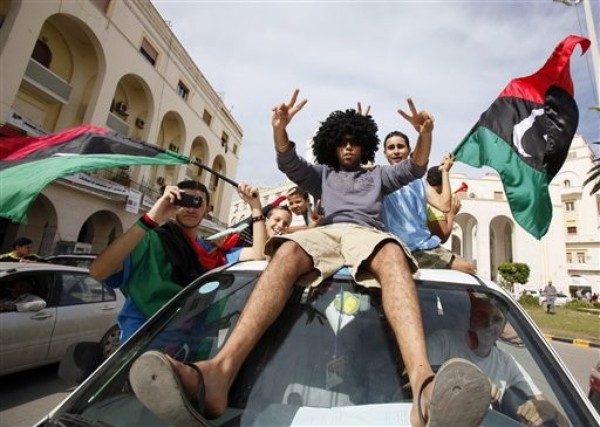
The death of former Libyan ruler Muammar el-Qaddafi allows the Obama administration to claim credit for ending a war it never wanted to fight. The White House wavered for weeks before it reluctantly joined the NATO campaign. It deployed far fewer aides to Libya than its allies, pledged much less money, and was the last major allied power to recognize the interim government. But the White House has a simple reason for celebrating—and slightly exaggerating—its role in ousting Qaddafi: American power is on the wane throughout the Middle East, and Libya is a rare success story.
From Iraq to Israel, Egypt to Bahrain, Washington finds itself relegated to the sidelines rather than directing the action. During the George W. Bush administration, Washington—using carrots and sticks—persuaded a number of governments to do its bidding: Saudi Arabia made peace overtures to Israel; Palestine held elections; monarchies like Jordan and Morocco pursued halting democratic reforms; Iraq cracked down on Shia militias and enfranchised its disenchanted Sunni minority; and Israel pulled out of the Gaza Strip and offered a peace deal to the Palestinians. The Bush White House suffered many stumbles—none bigger than the invasion of Iraq—but regional governments at least took Washington’s wishes seriously.
Read Full Article »