


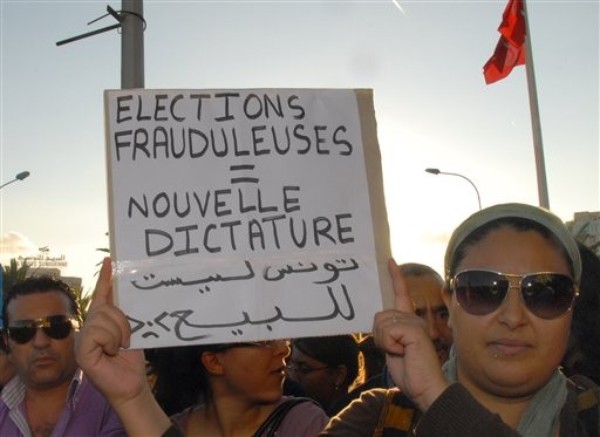
Nine months after the first revolution of the Arab Spring, Tunisia has given birth to the first freely elected political body of its history, following 23 years of dictatorial rule by ousted president Zine El Abidine Ben Ali. In previous years, Tunisians already knew the results of their elections before the polls even opened, but this year held surprises for both voters and observers alike. An extremely high turnout (around 70 percent of eligible voters by some estimates) proved that citizens have reconciled their distaste for national politics with their desire for representative government and have not been dissuaded by claims that the revolution has failed.
Preliminary election results have been disappointing for secular parties, however. Islamists are clearly the dominant power, with the political party Al Nahda (also rendered as Ennahda, meaning "The Awakening") claiming that it has won more than 40 percent of the Constituent Assembly’s 217 available seats (more than 50 percent of the total vote by some estimates).
This electoral defeat for the secularists does not mean that those parties, or observers in the West, should, in despair, quit reform efforts or politics altogether.
Read Full Article »