


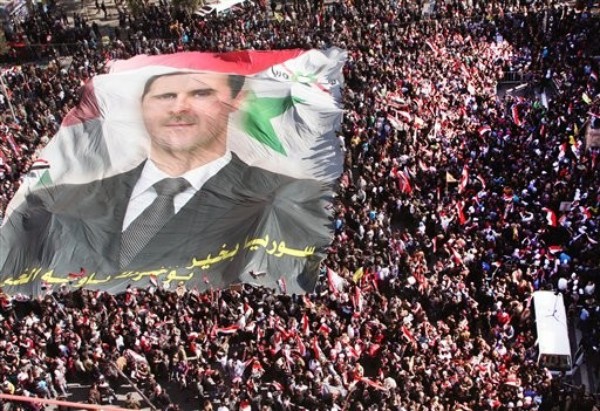
Bashar al-Assad is finished. The Arab League has condemned him, as have former allies Qatar and Turkey. One time Saudi intelligence chief Turki al-Faisal says Assad’s exit is inevitable. Perhaps most significantly, King Abdullah II of Jordan felt sufficiently confident of Assad’s fall to call for the president of Syria, the Hashemite Kingdom’s historical nemesis, to step down.
In the past, a more vigorous Syrian regime would have lashed out against its critics and rivals by unleashing its terrorist assets. But to date, Hezbollah has kept its head down, balancing its support of Damascus with the recognition that the regional Sunni majority has come to detest a regime that has so far slaughtered upward of 3,500 people, most of them Sunni. Hamas is doing its best to distance itself from Assad and is looking to relocate—maybe to Qatar, or even to Islamist-friendly Tunisia. It’s true that Assad hasn’t played all his cards yet: He’s still threatening to destabilize Turkey, but attacks on embassies in Damascus—including those of France, Turkey, Qatar, Saudi Arabia, UAE, Morocco, and others—rather than terrorist operations abroad suggest the regime is hemmed in.
Read Full Article »