


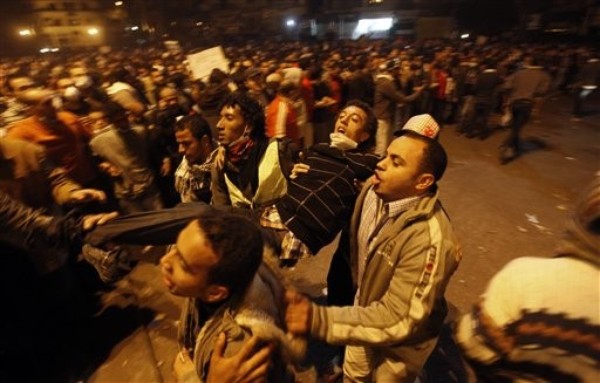
The Egyptian uprising that began on January 25 has been rightly celebrated as a momentous event. Eighteen continuous days of mass protests forced the end of Hosni Mubarak’s three decades of strongman rule.
A revolution is inherently romantic, so it’s no surprise that Egypt’s has inspired exceptional narratives. Journalists saw something fundamentally novel in the eighteen days and the subsequent small-scale protests—“a new culture of street demonstrations,” said USA Today. The uprising became the defining event of Egyptian politics, a turning point separating before and after. Before, a brutal dictatorship maintained fear and silence. After, liberated citizens poured into the streets to exercise their freedom.
Read Full Article »