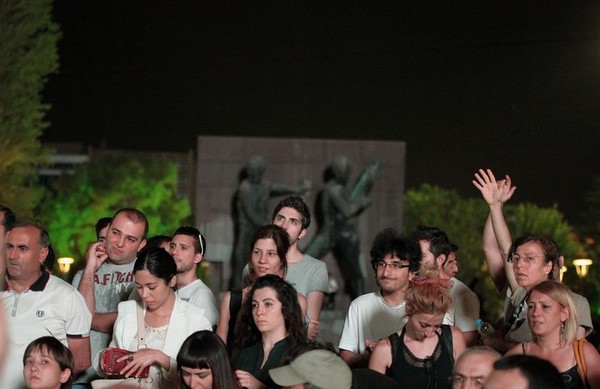
The fascinating, simultaneous demonstrations and challenges to democratically elected regimes in Egypt, Turkey and Brazil this month suggest that we need to look for an explanation for all this in something structural in newly democratized societies, rather than in cultural explanations. The silliest common cultural line of analysis asks about the compatibility between “Islam and democracy,” without our ever hearing an analogous discussion of, say, “Judaism and democracy” or “Christianity and democracy.”The mass demonstrations in these three countries are particularly intriguing because their leaderships are democratically elected, and therefore unquestionably legitimate. Also, all three countries were passing through moments of great hope and achievement; these included significant mass economic improvements in people’s well-being in Brazil and Turkey, and a democratic transition in Egypt that created a new global icon of the popular will for mass dignity and civil rights: Tahrir Square. Politically mummified Egypt set a new benchmark against which other political agitation around the world would be measured, whether in Madison, Wisconsin, in 2011 or in Turkey this month where analysts debated whether the Turkish people were about to create a new Tahrir Square.



When Democracy Doesn't Work
Read Full Article »
Comment
