


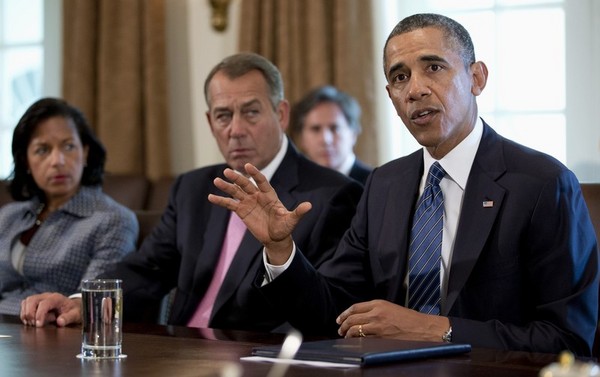
A week has proven to be a long time in international politics. On Aug. 26, arriving in Europe, NATO military strikes on Syria seemed both inevitable and imminent to punish it for alleged chemical weapons use on Aug. 21. On Thursday, the British Parliament rejected, by a 285-272 vote, the government motion that would have paved the way for British participation. Prime Minister David Cameron said he would respect the vote. By Friday, the United States was looking decidedly lonely and exposed in its hard-line stance that military attacks were still necessary and could be launched without U.N. sanction.
Read Full Article »
