


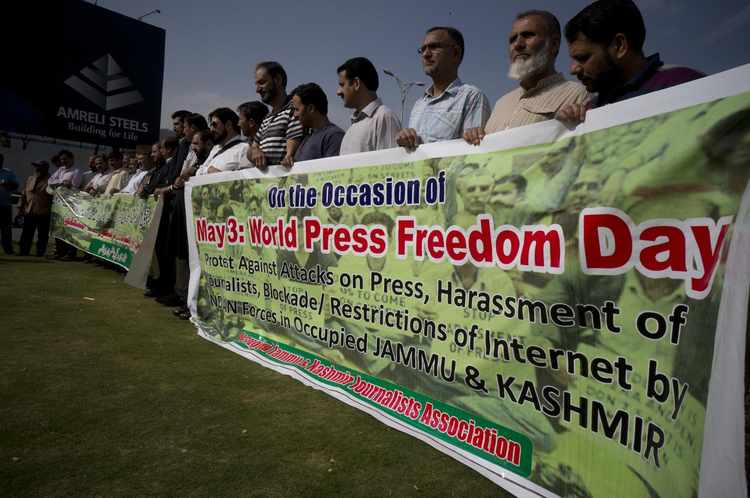
In Pakistan, journalists' woes have been one constant. Whether under civilian or military rule, the multidimensional challenges faced by journalists have remained the same. Kamran Khan, the well-known Pakistani anchor on Dunya TV, in a recent program equated journalists' current predicament to the conditions under former dictator General Zia-ul-Haq's (1977-88) rule. Adding support to his argument, Islamabad, the capital city, has reportedly been dubbed the “most dangerous place to practice journalism in Pakistan.”
Indeed, journalists are living in a constant nightmare in the capital following cases of abductions and beatings; on some occasions reporters have been targeted just because of their journalistic work. As a result, there are also reports of journalists fleeing Islamabad. A case in point is that of outspoken journalist Taha Siddiqui, who is currently living in exile in France.
Democracy was restored in Pakistan in 2008. In 2018, for only the second time in Pakistan's history, the country will mark a peaceful transfer of power between civilian governments. Yet despite these developments, mainstream political parties have not paid any serious attention to the press. Even pro-democracy political parties have failed to provide succor for a free and vibrant press. Instead, these parties have only further bullied the press and media organizations upon coming.
Read Full Article »