


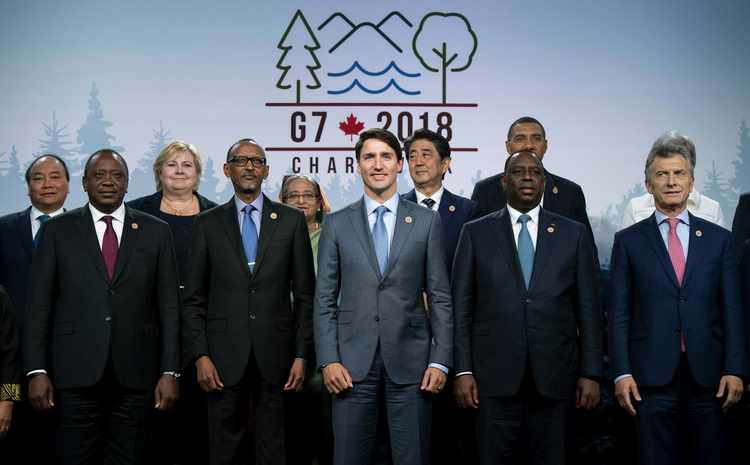
Never before has a U.S. president worked so hard to isolate his country from its friends. The G-7 summit of advanced economies that starts today in Quebec sees Canada, France, Germany, Italy, Japan and the U.K. united in opposition to Donald Trump's protectionist trade policy. The problem goes deeper than a first round of tariffs and counter-tariffs, because Trump's trade policy is not an oversight: Taken at his word, the president is opposed to multilateralism in principle.
He's wrong, of course. The cooperative global order shaped by previous U.S. presidents has served American interests far better than Trumpian unilateralism ever could or will. Needless trade friction will distract the summit's attention from cooperation on North Korea, Russia, China, migration, stresses in emerging markets, and more.
Future presidents, one hopes, will understand this. Right now, the question is how to cope with a president who just doesn't get it.
The G-6 needs to judge its response cautiously. Too public a dressing down of the president would probably backfire — not just because Trump is unlikely to respond well, but more especially because it wouldn't cause his supporters to think again about backing his policy.
