


The headquarters of the World Trade Organisation (WTO), on the banks of Lake Geneva, once belonged to the League of Nations. That ill-fated body was crippled by American isolationism. The building's occupant today is also at the mercy of decisions taken in Washington.
President Donald Trump has circumvented the WTO to impose tariffs on steel and aluminium imports, including those from America's allies. Complaining of unfair treatment, the administration is blocking nominations to seats on the WTO's appellate body, which could leave it unable to hear cases after 2019. Most ominously, America is embroiled in a trade war with China. Both sides have imposed tariffs on goods worth tens of billions of dollars and are threatening worse.
The WTO was supposed to contain trade disputes and prevent retaliatory pile-ups. Today it appears to be a horrified bystander as the system it oversees crumbles. Free-traders are right to be deeply worried, but not yet right to despair. For the outlines of a plan to save the system are discernible.
It's the end of the WTO as we know it
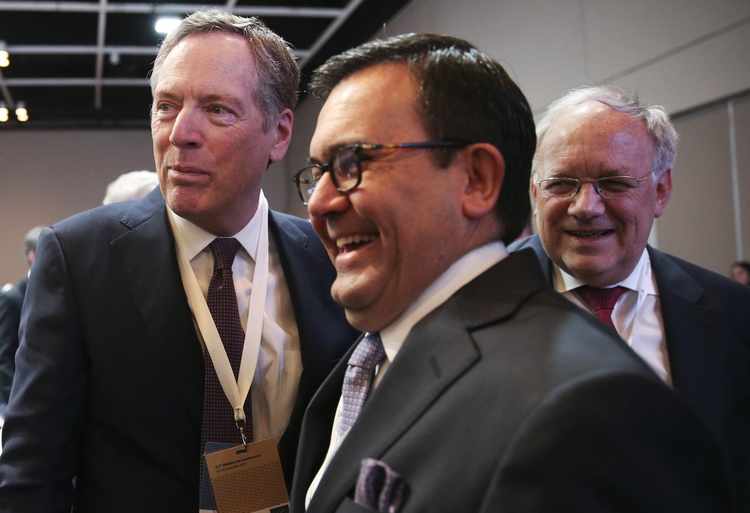
That might seem fanciful, given Mr Trump's belligerence, but for two things. The first is that the president is not the only person forging American trade policy. The European Union and Japan have been talking to Robert Lighthizer, his low-profile chief trade negotiator, about WTO reform. Mr Trump's tirades make headlines, but Mr Lighthizer wants to remake the WTO, not abandon it entirely. He could use the president's threats as leverage to make deals. Think of it as a good cop/bad cop routine, albeit one in which the bad cop has only a faint grasp that he has been allotted the role.
The second thing to understand is that the focus of much of America's ire, China, arouses deep suspicion elsewhere, too (see Briefing). Since joining the WTO in 2001, China has not turned towards markets, as the West expected. Instead, it has distorted trade on a scale that is far bigger than the dumping and other causes of disputes between market economies that the WTO was designed to handle.
The EU and Japan share America's desire to constrain Chinese mercantilism. China's state-owned firms and its vast and opaque subsidies have distorted markets and caused gluts in supply for commodities such as steel. Foreign firms operating in China struggle against heavy-handed regulation, and are required to hand over their intellectual property as a condition of market access.
But holding China to account is hard with the existing rule book. The reforms being talked about by the EU, Japan and America could plug many of the gaps. They would set out how to judge the scale of government distortions to the market, make it easier to gather information on wrongdoing and set the boundaries for proportionate retaliation. They would also define what exactly counts as an arm of the government, and broaden the scope of banned subsidies. And they would lower the burden of proof for complainants, which, given the opacity of the Chinese system, is too high.
Read Full Article »