


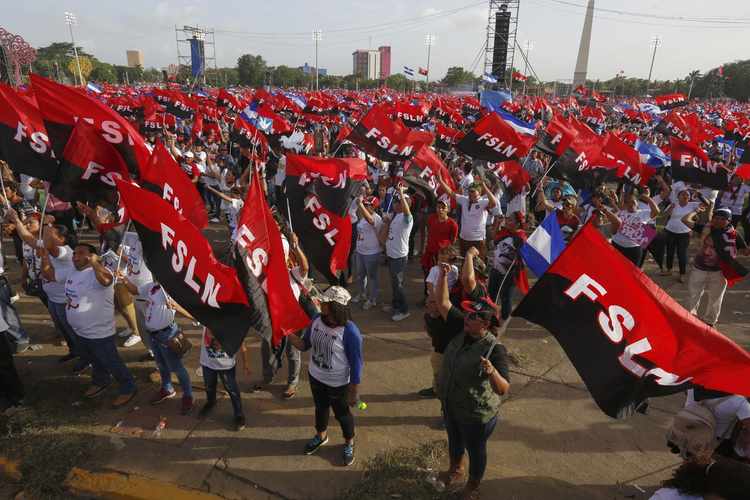
Daniel Ortega, the president of Nicaragua, was once lauded for ending over four decades of rule by the dictatorial Somoza family. Back in 1979 he was instrumental in the takeover of the country by the leftist Sandinista National Liberation Front, then spent a decade fighting against counter-revolutionary forces funded by the Americans. The Sandinistas made public education free, improved access to health care and nationalised land formerly owned by the Somozas. Now, however, hundreds of thousands have taken to the streets protesting against Mr Ortega, his wife and his succession plans. More than 300 people have been killed since protests began in mid-April (38 of them on July 8th), and thousands more have been wounded. What went wrong?
The Sandinistas' economic policies proved ruinous for the country and they were voted out of office in 1990 (making sure to pilfer national assets for themselves as they stepped down). During the late 1990s, the party entered a power-sharing agreement with the then president, placated the Catholic church with the promise to outlaw abortion, and cosied up to business elites. Mr Ortega was re-elected as president in 2006, and has consolidated power ever since. He stuffed courts with loyalists, took control of all branches of government and most media channels, disbanded the opposition and abolished constitutional term limits. Moreover, he made his wife, Rosario Murillo, his vice-president, and put his children and confidantes in charge of a network of businesses. Nicaraguans acquiesced: the economy was growing at over 4% a year (the fastest rate in Central America), the country was a safe part of an otherwise volatile region, and Mr Ortega continued to support social programmes thanks to generous aid from Venezuela.
Read Full Article »