


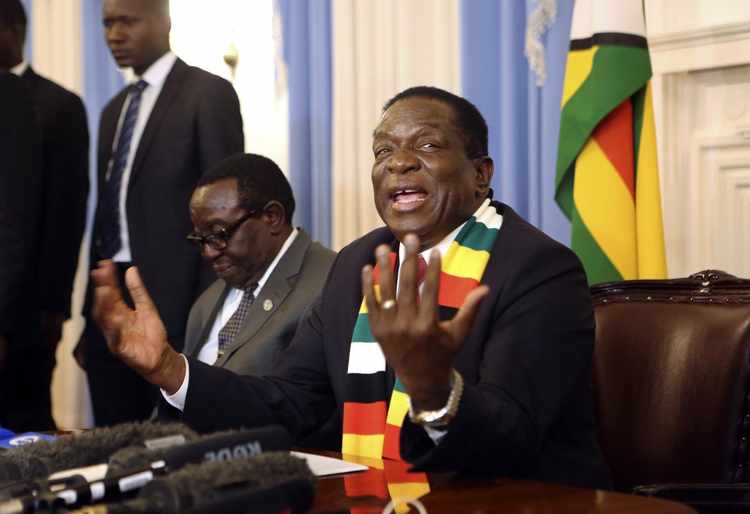
Last week's national elections in Zimbabwe were a critical test of whether President Emmerson Mnangagwa was really prepared to lead the revival of a country brought to ruin by his autocratic predecessor, Robert Mugabe. So far, the aftermath of the elections that gave Mr. Mnangagwa and the governing ZANU-PF party at least five more years in power has given little reason for celebration.
International observers charged that the playing field was not even, with coverage on state media, misuse of state resources and intimidation working in the government's favor. Even before the results were in, Mr. Mnangagwa's 40-year-old opponent, Nelson Chamisa, claimed fraud and pledged to challenge the results.
Still, huge numbers of voters turned out on July 30, and a host of observers spread across the country reported that the voting was a marked improvement on the systematic rigging and violence that characterized elections under Mr. Mugabe. But a delay in announcing the results of the presidential race sent suspicious opposition members into the streets, where soldiers opened fire and killed at least six. And when the electoral commission announced four days after the voting that Mr. Mnangagwa had secured 50.8 percent of the vote — just over the threshold for an outright victory — tensions rose even further, with numerous reports of beatings and harassment of opposition members.
Read Full Article »