


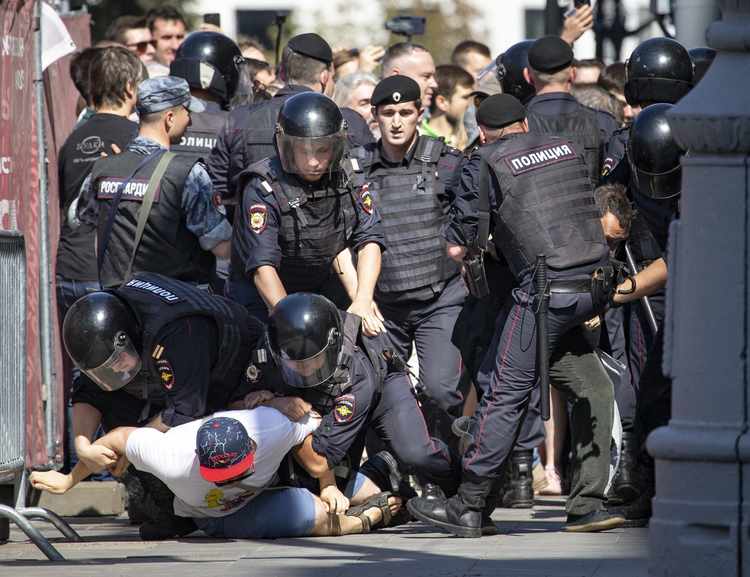
The violent suppression of recent protests in Russia could presage intensified repression of opposition activists. The ‘non-systemic' extra-parliamentary opposition has grown more organised and sophisticated and the Russian people more willing to demonstrate. Yet it would be unwise to overstate the opposition's ability to mobilise mass protests or to understate the regime's ability to respond to threats strategically.
In July and August 2019, a series of protests took place in Moscow in response to the Russian authorities' refusal in mid-July to register independent opposition candidates for the elections to the Moscow City Council. Law enforcement dispersed the unsanctioned but predominantly peaceful demonstrations with an unusually high level of violence and an unprecedented number of arrests. As with the Bolotnaya Square protests in May 2012, the violent suppression of these protests could presage a new phase of repression of the opposition. This could include an attempt to dismantle the campaign infrastructure of Aleksei Navalny, the most prominent opposition leader, who has attempted to build a national political network. Russia has an official ‘systemic' parliamentary opposition that is, to a great extent, sanctioned and tame. The authorities' focus has been on the so-called ‘non-systemic', extra-parliamentary opposition, which has become more organised and sophisticated since the last major wave of political protests in 2011–12 and which will continue to seek political representation in Moscow.
Yet while the disturbances and opinion polls signal the Russian people's increased willingness to protest, the opposition's capacity to mobilise mass street demonstrations remains limited overall. The approval ratings of President Vladimir Putin have declined markedly over the past year but remain high compared to those of Western leaders. It is unclear whether trust in the president and his government will continue to trend downwards, or if Putin's ratings have entered a lower but more sustainable equilibrium.
Read Full Article »