




Earlier this month, Secretary of Defense Pete Hegseth put words to a shift already underway. In an era of renewed great power competition, the United States can no longer afford to treat Latin America as a geopolitical periphery. “To put America first, we will put the Americas first,” he said in Panama at the 2025 Central American Security Conference. That message wasn’t just rhetorical—it was strategic.
China—along with other adversaries defined in the National Defense Strategy-- has made deep inroads into Latin America. Infrastructure, energy grids, ports, and even military facilities are falling under its influence. This isn’t hypothetical; it’s happening now and the response must be structural, credible, and sustained.
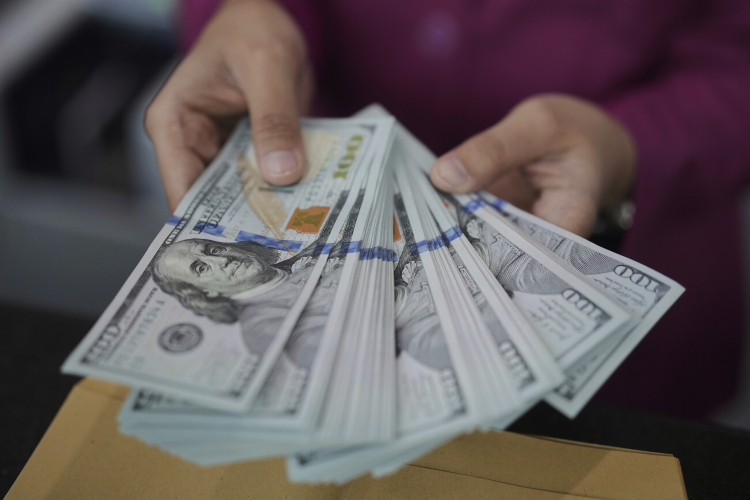
As I recently argued in 'The Hill,' the door has reopened to a reimagined Monroe Doctrine—not a 19th-century doctrine of dominance, but a 21st-century architecture of partnership. That architecture must rest on hard power, but also on stable institutions and economic alignment. This is where the question of currency enters the picture, and why dollarization deserves more serious attention than it’s been given in decades.
We are in a period of systemic realignment. BRICS is no longer just a loose club of developing economies, but rather a project with a purpose: to erode the global reach of the dollar and displace the liberal economic framework that underpins the American-led global order. This isn’t just about payments, but rather redefining global polarity and shifting power towards actors known to have little regard for human or market rights. In this context, Latin America moves from being the forgotten “backyard” to a contested theater where our civilizational partners are stuck behind enemy lines.
But this challenge brings clear opportunities for the region. COVID exposed just how brittle our supply chains really are, and the gathering prospect of major power conflict has only sharpened that lesson. Nearshoring is no longer a matter of convenience or efficiency, but rather a strategic inevitability—and Latin America must be prepared for that coming shift.
The Western Hemisphere is the natural industrial rear of the United States, but proximity alone is not enough. Without monetary and institutional stability, it becomes a point of vulnerability rather than strength. If Latin America is to become a serious partner in the next phase of the global economic order, it must be integrated into the system that continues to anchor global trust. That system is still built on the dollar.
As it celebrates 25 years of dollarization this year, Ecuador’s story is the sharpest proof of concept. By the late 1990s, Ecuador had descended into one of the worst financial crises in its history. GDP contracted by 7.3 percent, monthly inflation approached 100 percent and the sucre collapsed from 4,493 to over 25,000 per dollar. Capital fled, trust disappeared, and the state froze deposits in a last-ditch effort to halt the bleeding. But then came dollarization.
Announced in January 2000, the move was swift and deeply controversial. President Jamil Mahuad was ousted within two weeks, but the policy held. By September, the sucre was gone—and with it, inflation fell from 96 percent in 2000 to 22 percent the following year, and into the single digits by 2003. Interest rates stabilized and confidence returned. Ecuadorians experienced the kind of economic stability that would have allowed my parents and me to remain in my hometown, Guayaquil, instead of moving to the United States over 30 years ago.
Outside Ecuador, few were more influential in advising and defending the policy than Steve Hanke, the Johns Hopkins economist who had boots on the ground to make the project a reality.
In a recent interview on Ecuador’s dollarization 25 years later, he explained: “Dollarization’s strength is that it provides monetary and economic stability. And while stability might not be everything, everything is nothing without stability.”
But dollarization also acted as an important constraint on populist excess. When Rafael Correa assumed office in 2007, many assumed he would reverse the policy, but he didn’t—or perhaps couldn’t.
Ecuadorian economist Pablo Lucio Paredes—now director of the Institute of Economics at the University San Francisco de Quito—was one of the key architects of dollarization inside the country when the policy was finally adopted. He recalls how the discipline imposed by the system mimics the logic of sound money.
“When funds began to run low, there was a need to rely on the central bank, and in fact the government did so by expanding the balance sheet,” Paredes recently told me. “But dollarization served as a very significant brake. Had there been a national currency, there would have been massive money creation with the consequences we already know (and which would have been worse, given the country’s recent experience in 1998–1999 that led to dollarization).”
In a word, dollarization didn’t just limit monetary tools—it eliminated the political convenience of printing money, forcing discipline where none could be trusted to exist.
And that discipline is precisely what nearshoring demands. Global capital doesn’t only chase cost, but rather credibility. As supply chains continue to shift from Asia to the Americas, the region's future depends on reliable frameworks.
Although critics call it a loss of monetary sovereignty, Paredes notes, “Ecuador would have gone the way of Argentina—or perhaps even Venezuela—if not for the dollar.” Dollarization doesn’t remove sovereignty—it removes the ability to destroy it from within.
Those consequences are painfully visible in Venezuela. Once one of the region’s wealthiest nations, it now stands as the hemisphere’s most devastating economic collapse. Between 2016 and 2019, inflation surged to a staggering 9,585 percent. Over 8 million Venezuelans have fled the country, the largest refugee crisis in Latin American history.
China can offer liquidity. It can offer infrastructure. What it cannot offer is constraint—and without constraint, there is no credibility. That’s the difference between coercion and order, between short-term leverage and long-term partnership. In a world where institutions are fraying and alignment is no longer guaranteed, one man’s fiat—when backed by rules, trust, and discipline—can still be another man’s gold.
Johannes Schmidt works in public relations in the defense acquisitions community and is a foreign language expert with the National Language Service Corps.
