




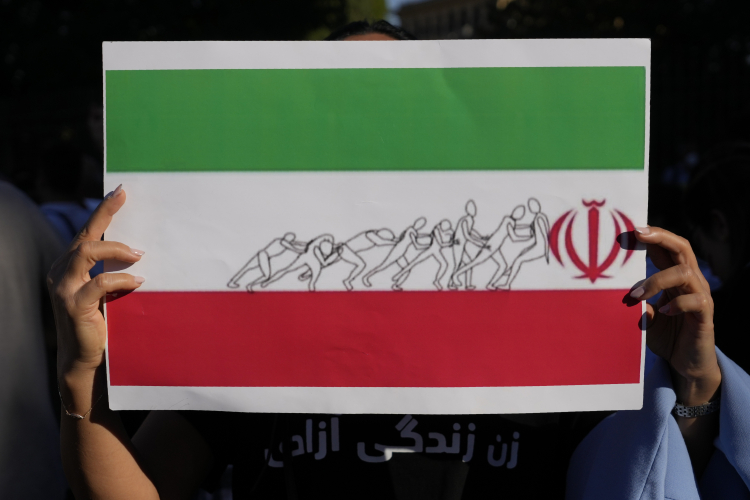
For 46 years, the Islamic Republic of Iran has cast a long and menacing shadow across the globe. Its unchecked terrorism, relentless human rights abuses, and brutal repression have haunted the conscience of the international community. As a Western statesman and thinker, I watched with alarm as the United Nations General Assembly opened in New York, where President Masoud Pezeshkian’s delegation dared to speak on the world stage — even as his regime executes dissenters at a staggering rate.
Yet amid this darkness, a powerful light emerges. Thousands of Iranian expatriates rallied in New York on Tuesday, September 23, demanding justice, accountability, and regime change. Their voices represent the unbroken spirit of a nation that refuses to surrender to tyranny. I urge all freedom-loving people to stand with them, support their cause, and help turn this UNGA into a turning point for liberty.
Since the 1979 revolution, Iran has earned the grim distinction of being the world’s leading state sponsor of terrorism. It also holds the highest per capita execution rate globally. The regime’s disdain for human life is evident in its brutal crackdowns — arbitrary arrests, torture, and executions under vague charges like “enmity against God.” The 1988 massacre, in which an estimated 30,000 political prisoners, mostly supporters of the People’s Mojahedin Organization of Iran (PMOI/MEK), were executed under a fatwa by Ayatollah Khomeini, remains one of the darkest chapters in modern history. Yet, the PMOI has not only survived — it has grown, leading a dynamic and expanding resistance movement.
Earlier this month, I addressed a massive rally in Brussels on September 6, where tens of thousands gathered to voice support for Maryam Rajavi’s Ten-Point Plan — a democratic blueprint for a secular republic that guarantees gender equality, abolishes the death penalty, and upholds freedom of religion and expression. The Brussels rally also called for international accountability for regime leaders involved in crimes against humanity. Now, the momentum continues in New York, as thousands of Iranians from across the United States converged to protest Pezeshkian’s presence at the UN this week.
Demonstrators called on the UN to hold the regime accountable for its escalating repression, particularly the surge in executions since the 2022 uprising. That uprising, sparked by the death of Mahsa Amini, a young Kurdish woman killed by the morality police, ignited a nationwide movement demanding regime change. It followed earlier uprisings in 2018 and 2019, the latter resulting in 1,500 deaths at the hands of security forces. The 2022 protests, which lasted months, saw 750 killed, and led to intensified crackdowns and a horrifying rise in executions — 1,000 in 2024, with over 900 more already recorded this year, including two dissidents on the charge of membership in the MEK. Another 15 are on death row on the same charge.
Despite this brutality, the Iranian people remain defiant. The Resistance Units, affiliated with the MEK, who are active across the country, have played a vital role in organizing protests and challenging the regime’s grip.
Maryam Rajavi, NCRI (National Council of Resistance of Iran) President-elect, has long warned of the regime’s nuclear ambitions and its use of repression to maintain power. “The world knows that if it were not for 133 exposés by the Iranian Resistance over the past 34 years,” she said, “the theocratic dictatorship would by now have armed itself with an atomic bomb.” She has also called for strict UN oversight of regime funds, urging that Iran’s wealth be redirected to meet the urgent needs of its people — workers, teachers, nurses — rather than financing terror and oppression.
Western supporters, including former officials and lawmakers, addressed the rally, advocating for a firm policy toward Tehran. Their demands include full enforcement of snapback sanctions, designation of the IRGC as a terrorist organization, and formal recognition of the Iranian people’s right to resist tyranny. While some policymakers fear that endorsing regime change could lead to war or instability, the NCRI’s vision offers a peaceful, democratic alternative — one rooted in the strength of Iran’s own people.
The uprisings of recent years have shown that change is not only possible — it is inevitable. The Iranian people have demonstrated extraordinary courage, and their resistance continues to grow. The international community must now choose: will it stand with the oppressors, or with those who fight for freedom?
As the UNGA debates unfold, the rally’s message is clear: supporting Iran’s resistance is not just a moral imperative — it is a strategic necessity. Ending 46 years of tyranny will not only liberate Iran but also help curb the regime’s global threats, from nuclear proliferation to terrorism.
The Iranian people are unbroken. Their fight is our fight. Let us stand with them — in New York, in Brussels, and wherever freedom is under siege.
Mr. Kennedy (D-RI), represented Rhode Island’s 1st District in the United States House of Representatives from 1995 - 2011.
