




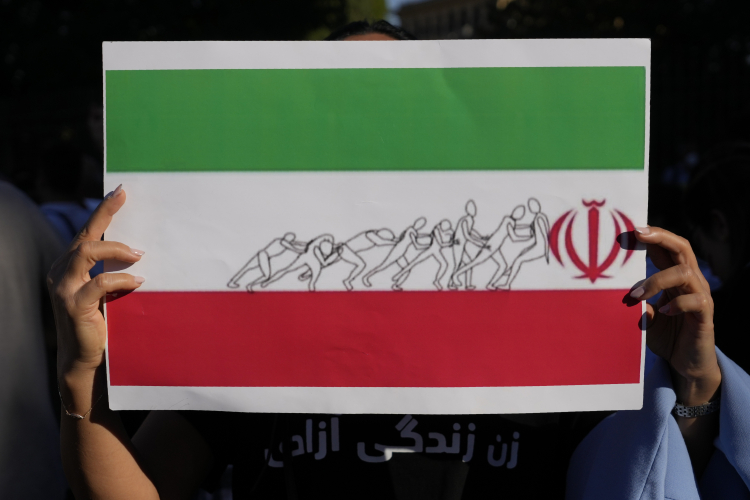
Eight days into nationwide demonstrations that began on December 28, 2025, Iranians have taken to the streets in a remarkably widespread upheaval. What started as protests against soaring inflation and the collapse of the rial has now spread to 78 cities and 222 locations across 26 of Iran’s 31 provinces, reflecting not only economic desperation but deeper political discontent.
What makes this wave of unrest notable is not merely its scale, but its persistence. Despite an escalating security response, demonstrations have continued across diverse regions, signaling a population increasingly unwilling to retreat in the face of intimidation.
While casualty figures vary by source, human rights organizations report mass arrests and at least 20 confirmed deaths as security forces have increasingly resorted to tear gas, pellet guns, and live fire to suppress dissent. In several cities, including Malekshahi and Tehran, security operations have been described by witnesses as indiscriminate and brutal, underscoring the regime’s readiness to deploy violence to retain control.
Many outside commentators have characterized the unrest as spontaneous, leaderless, and temporary. This interpretation misses the deeper dynamics at play. The events unfolding across Iran are not simply reactions to economic strain. They represent an evolving confrontation between a deeply unpopular political system and a population that no longer believes marginal reforms can address fundamental grievances.
University students have played a visible and courageous role, but they do not alone define this movement. Sustained pressure emerges when broader segments of society—including workers, merchants, neighborhood networks, and ordinary citizens—repeatedly choose to engage publicly despite the risks. Such persistence is not accidental. It reflects organization, coordination, and a growing willingness to challenge authority over time.
Labeling the current protests as “leaderless” reflects a misunderstanding of how resistance operates under authoritarian rule. In highly repressive environments, leadership does not announce itself publicly. Instead, resilience is built through decentralized coordination, local initiatives, and adaptability. Visibility is often a liability; continuity is the true measure of strength.
The central question now is whether resistance can regroup after arrests, reemerge after crackdowns, and spread across social sectors and regions. The evidence increasingly suggests that it can.
As in many moments of upheaval, various actors seek to frame or claim influence over the movement. Monarchist symbolism and claims of leadership by prominent figures outside the country have gained media attention, yet such assertions lack evidence of sustained, organized, in-country mobilization.
By contrast, the National Council of Resistance of Iran, established in 1981, has for decades reported and documented the activities of its Resistance Units operating inside Iran. These units have been involved in organizing protests, disseminating information, and challenging regime authority across multiple regions over time. Their defining feature is not spectacle, but persistence.
International comparisons are often drawn at moments like this. Recent geopolitical shifts elsewhere, including externally driven leadership changes in countries such as Venezuela, highlight the complexity of global political transformation. Yet Iran’s future cannot be outsourced. Durable change must be shaped by Iranians themselves. Foreign intervention, however well-intentioned, risks undermining the very agency that gives such movements legitimacy.
One notable feature of the current uprising is the information environment. Despite censorship, Iranians continue to rely on encrypted communication platforms, satellite media, and transnational networks. Narratives are rapidly tested against lived experience, making it increasingly difficult to impose simplistic or externally constructed interpretations on a diverse and informed society.
Iran has not yet reached a decisive political rupture. But it has reached a point of recognition. These protests are no longer solely about economic hardship. They are about who has the capacity to confront power over time, and on what terms.
Observers should stop asking whether crowds are large enough. The more important question is whether sustained, organized resistance can be recognized, consolidated, and maintained under pressure. History shows that political outcomes are not determined by moments of protest alone, but by the forces that endure long after the headlines fade.
Dr. Sofey Saidi is a scholar-practitioner in international relations, global governance, and conflict resolution. She earned her Ph.D. in International Relations from Geneva School of Diplomacy and International Relations, Switzerland.
This piece was updated on Janary 5, 2026 to include recent developments after publication.
