




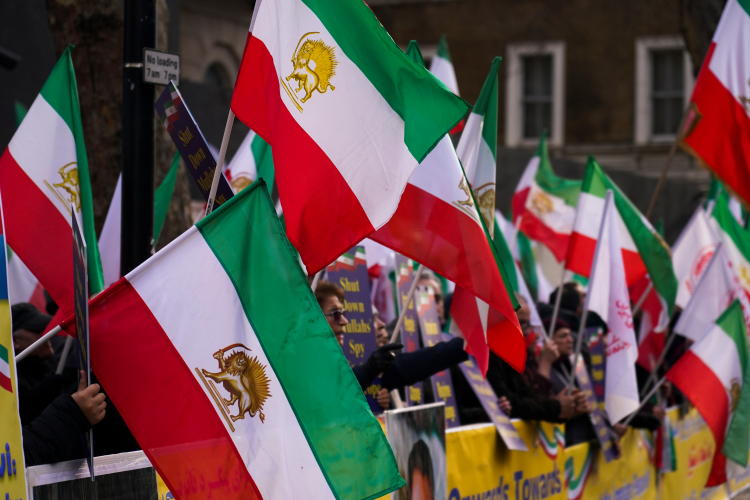
Analyses of dissent in Iran usually point to familiar causes: sanctions, inflation, unemployment, and elite factionalism. These factors undeniably shape daily life. But they do not fully explain the persistence, depth, and emotional intensity of opposition to the Islamic Republic — nor why resistance endures across generations and social classes despite repeated crackdowns.
To understand Iran’s mounting unrest, one must look beyond economics and politics to a deeper cultural, emotional, and civilizational divide between society and state.
At the heart of this divide lies a crisis of legitimacy that cannot be resolved through policy reform or material concessions. The Islamic Republic defines itself through an ideological mission rooted in a specific interpretation of political Islam and revolutionary identity. Many Iranians, by contrast, understand their identity in civilizational terms: as heirs to a long, pluralistic cultural tradition that predates and transcends any single ideology. The conflict is therefore not simply about governance. It is about meaning — about who has the authority to define Iran’s identity and future.
This tension is structural, not episodic, and explains why protests return even after severe repression.
One of the most underestimated aspects of Iranian opposition is cultural alienation. The regime’s regulation of personal life — dress codes, gender relations, music, art, celebrations, and everyday social behavior — has turned ordinary life into a site of political confrontation. For many Iranians, especially younger generations, opposition is not an abstract political position. It is a lived, daily experience expressed through subtle defiance and refusal to internalize the state’s moral order.
Religion, often assumed to be the regime’s strongest source of legitimacy, has become a ground of alienation. After more than four decades of state-enforced religiosity, large segments of Iranian society have moved not only toward a desire for secular democracy but also toward open disaffection with religion as it has been practiced within the political system. Independent surveys and social trends indicate that many Iranians today do not identify with Islam as enforced by the state, and some express deep resentment toward it — not because of theology but because of its association with coercion and compulsory conformity. The regime has achieved the opposite of what it intended, accelerating the distancing of society from its ideological foundations.
This cultural and emotional alienation was dramatically reinforced during the December 2025–January 2026 uprising. Nationwide protests that began in late December were met with a brutal crackdown, including widespread use of lethal force by security forces. Despite conflicting figures due to a near-total internet blackout imposed by the regime, independent reports and hospital data suggest tens of thousands of casualties, with some estimates indicating that the number of people killed may exceed 40,000, making it one of the deadliest suppression campaigns in the country’s modern history.
For many Iranians, the memory of this mass violence — carried out in the streets under an information blackout — has become a collective wound, a trauma that will shape societal consciousness for generations. There is a shared sense that those killings were not aberrations but expressions of the regime’s willingness to slaughter its own citizens to maintain power. Trauma on this scale cannot be erased from national memory; it reinforces an uncompromising rejection of the existing system.
The emotional dimension of dissent is further rooted in a cultural emphasis on dignity and honor. The routine use of humiliation — forced confessions, morality policing, arbitrary punishment, and public shaming — has created a deep moral injury. Protest, in this context, becomes a means of reclaiming dignity rather than merely demanding economic relief. Protest slogans, symbols, and cultural expressions consistently reflect this moral register.
Many Iranians look beyond the regime for symbols of national identity. Figures such as Prince Reza Pahlavi became as an emblem of Iranian history and cultural continuity. The Pahlavi Monarchy represents a national identity separate from ideological Islam and clerical rule.
As a result, many Iranians increasingly describe the state as alien — a force imposed upon society rather than one that expresses its will. This linguistic shift reflects the scale of estrangement: the regime is no longer seen as a legitimate representative of the nation.
From a foreign-policy perspective, these dynamics carry profound implications. Iranian unrest should not be misread as episodic protests triggered solely by economic pressure. Economic concessions, elite bargaining, or tactical repression may suppress unrest temporarily, but they do not address the underlying dissonance between state ideology and societal self-understanding.
The source of opposition in Iran is not transactional. It is identity-based.
The Islamic Republic therefore faces not only a governance challenge but a civilizational and psychological one. Its opposition is rooted in culture, dignity, belonging, historical continuity, and collective memory — domains far more resistant to control than institutions or markets.
This kind of deep cultural and emotional estrangement between society and state is rare even among authoritarian systems. It suggests that the struggle in Iran is not simply over policy or power. It is over the meaning of Iranian identity in the modern world.
For policymakers, the lesson is clear: the durability of Iranian opposition should not be underestimated, nor should it be mistaken for short-term unrest that can be managed with economic incentives or limited reforms. The divide between state and society has reached a level where many Iranians see fundamental change — regime change — as the only acceptable outcome.
Any serious assessment of Iran’s future must begin with this reality.
Dr. Fariba Parsa holds a Ph.D. in social science, specializing in Iranian politics with a focus on political Islam, democracy, and human rights. She is the author of Fighting for Change in Iran: The Women, Life, Freedom Philosophy against Political Islam. Dr. Parsa is also the founder and president of Women's E-Learning in Leadership (WELL), a nonprofit organization dedicated to empowering women in Iran and Afghanistan through online leadership education and training.
