




At the turn of the 21st century, the international system became increasingly interdependent and shaped by rapid technological globalization. The bipolar world order that depicted the Cold War era gave way to a multipolar configuration in which the United States and Russia retained their dominance and China emerged as a geopolitical superpower. In this complex environment, Western Europe has undergone a gradual decline in power and influence. Once the dominant hegemonic power in global affairs for centuries and later a critical partner in helping the United States enforce and promote its democratic political agenda, Western Europe now has a limited capacity to influence global outcomes collectively. Although it still retains considerable socio-political and economic influence, especially in multilateral organizations, its ability to act as an autonomous decision maker has eroded significantly.
Western Europe’s diminished global influence is its decline in high-growth sectors, such as technology and the automobile industry. While its leaders have often tried to compensate for its reduced economic growth, such as by upholding rules based on shared liberal norms and promoting multilateral diplomacy, their strategies have proven to be insufficient in a world where economic leverage, technological innovation, and industrial capacity are paramount for asserting global dominance. Therefore, strategies for strengthening Western European political influence must prioritize economic revitalization over reliance on moral authority and regulatory leadership.
Assessing Western Europe’s relative decline and ways to improve its global standing is vital for a few reasons. First, Western Europe is where the intellectual framework for modern-day international relations and the institutions that guide it were created. In this way, Western European political principles and practices are the structure that continues to shape global politics. Second, its current position as a world power has profound implications for the future of global governance, democratic political norms, and transatlantic relations. Third, Western European policymakers increasingly recognize that, without more strategic economic growth, the continent risks losing its influence and socio-political relevance. Finally, a nuanced understanding of Western Europe’s post-2000 evolution provides critical insight into how it could have a more active role in world politics.
Structural Sources of Western Europe’s Decline
Western Europe’s diminished political power can be explained by a combination of economic, geopolitical, and institutional factors. Among the most significant is the rapid rise of China as a superpower. By the 1960s, China had developed into a politically influential communist state that was a threat to the United States. As the United States prioritized competing with the Soviet Union for power and dealing with the threats it posed during the Cold War, it paid insufficient attention to China. As a result, it left growing Chinese political power unchecked as it began to westernize, modernize, and embark on an ambitious industrial expansion strategy in the 1970s. By the early twenty-first century, Beijing had successfully leveraged globalization to consolidate economic power, positioning itself as a critical actor in global supply chains and technological innovation. Today, China is a global leader in technology, defense, trade, and diplomacy that has replaced European leadership of certain industries. For example, Germany, which had been prominent in the car industry for many years, had been replaced by China due to its ability to make cars more technologically advanced.
Cultural and demographic challenges have also played a significant role. Scholars, have noted that relatively low birth rates, migration from non-European countries, an erosion of historical identity, and religious changes have contributed to Western Europe’s decline as a power. While these factors help explain its internal challenges, they cannot fully account for its political fragmentation.
At the same time, governance dynamics within the European Union have made it harder for Western Europe to effectively respond to these challenges. The EU enforces and promotes regulatory compliance, social protections, and climate objectives in a way that hinders long-term economic growth. Scholars and professionals have argued that it slows down rapid capital mobilization, industrial productivity, and technological innovation. Increased regulations, rising taxes, and fewer incentives for businesses to grow have discouraged large-scale investment in emerging industries. Some critics argue that the current social-market capitalistic model, while successful in fostering stability and social cohesion, has reduced incentives for business expansion and innovation.
The most consequential contributing factor of Western Europe’s decline lies in its waning technological and industrial competitiveness. In a world in which economic strength depends on the mastery of artificial intelligence, financial technology, and advanced manufacturing, Western Europe has not kept up with the pace of American and Chinese development. Despite maintaining GDP parity with the United States over the past decade, it has lagged in productivity, venture capital formation, and technological commercialization. Therefore, aggregate market share does not positively correlate to enhanced economic growth.
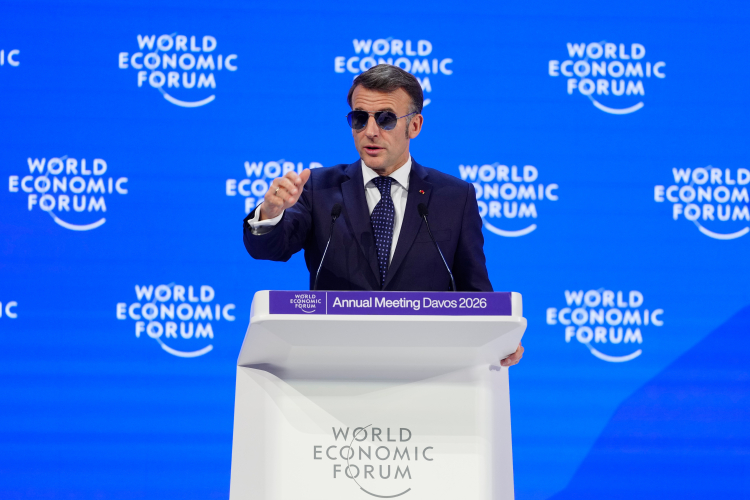
Western European leaders increasingly acknowledge this reality. For example, French President Emmanuel Macron has emphasized that Europe’s relative stagnation reflects a collective underinvestment in high-growth industries, including artificial intelligence, banking, and the automobile industry. Additionally, Mario Draghi of the European Commission has stated that Western Europe is struggling to help its researchers and entrepreneurs turn their ideas into products, services, and thriving businesses. Similarly, foreign affairs scholars note that China and the United States now dominate central technological ecosystems, granting them disproportionate influence over supply chains and global political outcomes. Without achieving comparable industrial capabilities, Western Europe will continue to struggle to achieve its geopolitical goals.
Technological production plays a critical role in influencing political power. Control over digital platforms, advanced manufacturing processes, and next-generation infrastructure not only generates economic growth but also establishes strategic dependencies. The dominance of American and Chinese firms in fields such as artificial intelligence, robotics, and biotechnology has enabled both nations to influence global outcomes. Western Europe’s relative absence from these sectors limits its capacity to exert comparable influence. Without investing in technological capital and infrastructure, it will be difficult for its leaders to have a more active role in world politics.
Strategic Pathways to Renewed European Influence
Politicians and other critical political stakeholders have come up with a wide range of strategies to boost Western Europe’s economic competitiveness. In his report for the European Commission, Mario Draghi stated that enhanced innovation, particularly in advanced technology, a combined decarbonization and economic competitiveness plan, heightened security, and decreasing dependencies on the U.S. and China are essential for making Western Europe competitive as a power. At a Leaders of European Growth and Competitiveness meeting, Western European leaders spoke of the importance of accelerating investment in clean energy infrastructure, leveraging financial markets, improving the use of strategic alliances, and enhancing technological innovation. Similarly, European business leaders, such as Anna Borg and Kat Borlongan, have advocated for environmental and market-creating approaches to enhancing Western European competitiveness. Borg emphasized the value of cross-value chain collaboration between Europe’s energy industry and other industries while Borlangan has promoted a market-making approach. At the 2026 World Economic Forum, ideas on how to go about doing this were discussed. For example, French President Emmanuel Macron highlighted the importance of Europe strengthening multilateral cooperation, more economic sovereignty, and a strategic economy. Macron also emphasized increasing investment in capital that can help Western Europe become a leader in industries of economic leverage and political influence, such as AI and banking.
Some scholars emphasize the importance of a change in governance strategy, beliefs, and habits. Advocates of this approach argue that Europe should position itself as a power that can reform an increasingly polarized international system while avoiding binary worldviews and applying a humbler foreign policy approach. Europe’s diplomatic engagement in supporting Ukraine, mediating regional conflicts, and advancing climate governance demonstrates the continued relevance of this strategy.
While all of these things are important, technological innovation and industrial growth should remain Europe’s top priority. Breakthroughs in fields such as artificial intelligence, robotics, and biotechnology and strategic entrepreneurship increasingly define economic leadership. Without an influential presence in these fields, Europe risks permanent subordination within global value chains. Consequently, policymakers should prioritize removing regulatory barriers to innovation on European companies and researchers, investing in the education of young people at the grade school and university levels, and capitalizing on opportunities in the technology industry.
Enhanced Western European technological innovation and industrial capacity are essential for ensuring that it becomes an influential power on the global stage. Without strategic investment in its students, workforce, industrial capital, and technology, Western Europe risks permanent subordination in an increasingly competitive multipolar order.
