




After the recent release of political prisoners in Venezuela, Donald Trump once again presents himself as a leader willing to confront authoritarian regimes in Latin America. His message is familiar: pressure works, dictators respond, and Washington can still shape outcomes beyond its borders. While the headlines celebrate Caracas, a harder question emerges in Brazil. When it comes to a country where political persecution comes from judges, not generals, Trump does not go far enough — and the cost of that retreat is measured not in speeches, but in lives.
I recently had the opportunity to interview Luísa Cunha, a young woman from a humble family in Brazil’s Northeast whose father, Cleriston Pereira da Cunha, was wrongfully arrested in January 2023 under the regime of Supreme Court Justice Alexandre de Moraes for participating in a supposed “coup d'état” that never actually took place. No weapons, no proof, and no evidence of any kind were ever found. He died in custody. “I used to wonder if [Moraes] could sleep at night. It took me time to understand that he doesn’t feel guilt, he feels pleasure,” Luísa told me. Cunha’s case is among more than one hundred thousand others who were arrested that January, marking the peak of a campaign of censorship and arbitrary arrests that has targeted everyone from ordinary citizens to former president Jair Bolsonaro. Today over one hundred people remain unjustly imprisoned.
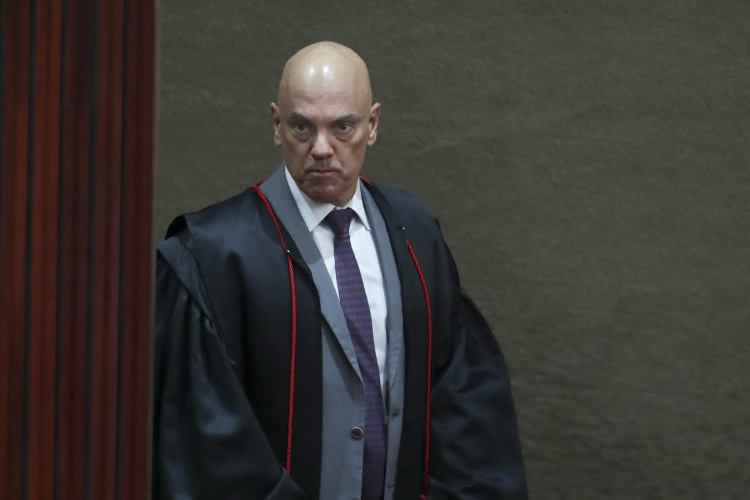
For a brief moment last year, it seemed that President Trump would take action against Moraes’ regime. In July 2025, Washington applied the Magnitsky Act directly against Alexandre de Moraes, cutting him off from the international financial system. The law was created after Sergei Magnitsky was killed in prison for exposing state corruption in Russia; today, it is the main tool used to punish human rights abusers. For Brazilians who watched their country move closer to authoritarian regimes, this felt like the only way to stop a judge who had become the lawmaker, the prosecutor, and the jury all at once.
Despite these sanctions, the situation in Brazil only worsened. Jair Bolsonaro, whom Donald Trump once called a key ally, is now behind bars. His imprisonment is a clear violation of legal standards. He was judged by a small group of Supreme Court judges who were all appointed by his political enemies. His lawyers have stated they were denied access to the evidence against him, making a fair trial impossible. Justice has been replaced by political revenge.
This persecution does not stop with high-profile figures. Beyond Luísa’s case, I interviewed exiles who fled the country to avoid arrest. I followed the case of a 62-year-old woman detained over January 8 who was beaten inside her cell. As Brazil became a landscape of violence against unarmed protesters, Donald Trump chose silence. He stepped back.
In December 2025, without explanation, the Magnitsky Act sanctions were revoked. As internal persecution in Brazil intensified, Trump’s tone softened. No change had been made to either Luisa’s situation or the state of hundreds of other political prisoners. What changed was the bargaining table.
Secret meetings followed with billionaires with dubious pasts, such as Joesley Batista, a central figure in some of the largest corruption scandals in Brazilian history. Soon after, Trump invited Brazil under Luiz Inácio Lula da Silva to join an American Peace Council. Lula is an ally of Tehran and of authoritarian regimes. The move signaled that Brazilian freedom had been used as a bargaining chip in backroom deals.
This betrayal is especially bitter when compared to the rest of the region. For Brazilians, Donald Trump’s recent actions against Nicolas Maduro in Venezuela sent a real message: Washington was finally ready to stand up to dictators. But this makes the current silence on Brazil even harder to explain. If Washington is willing to act so strongly in Caracas, why has it turned its back on Brasília? The death of Luísa’s father is a sad reminder of what happens when the fight for freedom is treated like a bargaining chip.
Outside Brazil, Trump continues to raise his tone, promising to end dictatorships in Cuba and Venezuela. But behind all this rhetoric, the real question remains: What was the price of his retreat in Brazil? Sanctions against someone officially labeled a human rights violator are not lifted by chance. If the punishment against Alexandre de Moraes became a bargaining chip, what guarantees that Trump will not do the same with Cuba or Venezuela as soon as a better deal appears? In the end, the hope that crossed the ocean died at the bargaining table.
With this record of retreats, Trump now turns his attention to Cuba, once again promising to stand against socialism. The rhetoric is familiar, and the villains are the same as ever. But the Brazilian example shows that Washington’s promises are volatile and last only until the next closed-door meeting. For families who, like Luísa Cunha’s, paid the highest price, the lesson is painful: In the game of geopolitics, the “fight for democracy” often ends where shadowy interests begin. Trump’s impact can be real, as we saw in Venezuela, but for those on the front lines, his word no longer seems enough.
Anne Dias is a Brazilian lawyer, political commentator, and Young Voices contributor.
