




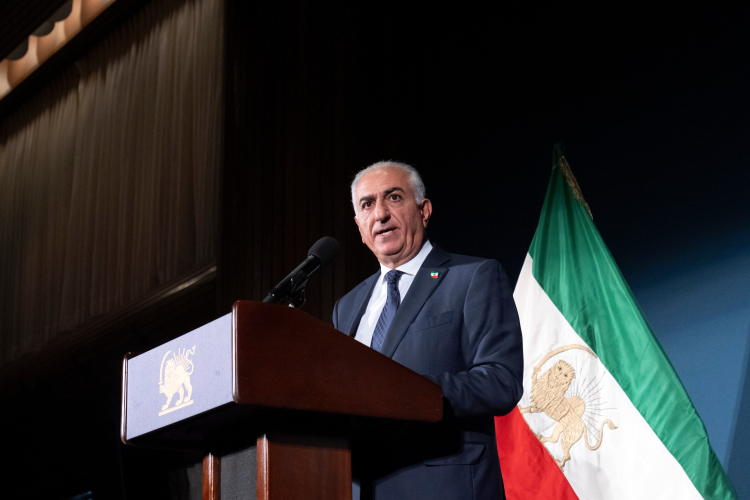
Understanding Iran today requires looking beyond political factions and economic crises to a deeper struggle over identity. The central tension shaping Iran’s present is not merely political; it is civilizational. It reflects a long-standing duality within Iranian society between an Islamic political identity and a far older Iranian civilizational identity rooted in history, culture, and collective memory.
A Civilization Older Than Ideology
Iran’s civilizational identity stretches back millennia, long before modern ideological frameworks emerged. The founding of the Persian Empire under Cyrus the Great in the 6th century BCE established principles of governance, tolerance, and cultural pluralism that remain embedded in Iranian historical consciousness.
Over centuries, Iranian identity was shaped through poetry, mythology, and epic literature — most notably the Shahnameh, which preserved pre-Islamic narratives of kingship and moral struggle. The legendary figure of Fereydoun, the just ruler who defeats the tyrant Zahhak, symbolizes the triumph of justice over tyranny — a narrative that continues to resonate in modern political imagination.
Dual Identities: Iranian and Islamic
Following the Arab conquest in the 7th century, Islam became a defining component of Iranian society. Yet Persian language, culture, and historical consciousness persisted. For centuries, Iranian identity evolved through the coexistence of two parallel traditions:
- an Islamic religious identity
- a civilizational Iranian identity rooted in history, language, and cultural memory
This duality endured through dynasties, empires, and modern state formation.
1979: Revolution and the Ascendancy of Political Islam
The 1979 revolution marked a turning point. Under Ruhollah Khomeini, the state was redefined through an ideological vision of political Islam. The revolution mobilized diverse forces — including Islamists, Marxists, secular nationalists, and anti-Western intellectuals — united by a shared opposition to monarchy and Western influence.
At the time, some European scholars described the revolutionary ethos as a “return to self,” a rejection of Western modernity and particularly of American influence — framed by revolutionary rhetoric as the “Great Satan”.
This ideological identity shaped governance, law, education, and public life for decades.
1925–1979: The Pahlavi Era and National Revival
To understand the current symbolic weight of Crown Prince Reza Pahlavi, one must consider the historical significance of the Pahlavi name itself.
The name Pahlavi derives from Pahlav, referring to the Parthians, an ancient Iranian people, and later to the Middle Persian language used during the Sassanian Empire. It represents a linguistic and civilizational bridge between ancient Persia and modern Iran.
When Reza Shah founded the Pahlavi state in 1925, the name was chosen deliberately to evoke:
- continuity with pre-Islamic Persian civilization
- national unity beyond tribal or sectarian divisions
- modernization rooted in historical sovereignty
His son, Mohammad Reza Pahlavi, continued a project of modernization and state centralization while promoting Iranian nationalism and cultural heritage.
Regardless of political evaluations of that era, the Pahlavi name became associated with state-building, national revival, and Iran’s historical continuity.
2026: Identity Reversal After Nearly Half a Century
After nearly five decades of rule by political Islam, three generations of Iranians have experienced ideological governance in their daily lives. Economic crises, social restrictions, and political repression have shaped public consciousness.
Today, a profound identity shift is visible. Large segments of society — especially younger generations — increasingly emphasize Iranian civilizational identity over ideological religious identity. Cultural symbols, historical references, and pre-Islamic heritage have reemerged in public discourse, social media, and protest movements.
This shift is not merely political; it is existential. It reflects a desire for continuity with Iran’s historical identity and a rejection of imposed ideological frameworks.
The Symbolic Role of Prince Reza Pahlavi
Within this identity transformation, Reza Pahlavi occupies a unique symbolic position.
He is viewed not only as:
- the son of Iran’s last monarch
- a political opposition figure
- a recognizable and charismatic public personality
but also as a symbol connected to Iran’s civilizational continuity.
For many supporters, his significance transcends monarchy. He represents:
- historical continuity with Iran’s pre-revolutionary statehood
- national unity beyond ideological divisions
- the revival of Iranian identity rooted in history rather than ideology
Supporters often emphasize that his appeal extends across political preferences — including republicans, secular activists, nationalists, and even religious citizens — because he symbolizes national identity rather than a specific governing model.
Reza Pahlavi himself has repeatedly stated that his struggle is not for personal power but for restoring sovereignty to the Iranian people and enabling them to determine their political future.
Identity, Memory, and Political Future
For centuries, Iran’s Islamic and Iranian identities coexisted. In 1979, the Islamic revolutionary identity became dominant. Today, the pendulum appears to be swinging back toward a civilizational self-understanding grounded in history, culture, and collective memory.
This identity shift helps explain why symbols rooted in Iran’s historical continuity have regained prominence in public discourse.
The debate unfolding inside Iran is therefore not solely about governance or policy. It is a struggle over belonging, historical continuity, and the meaning of being Iranian in the modern world.
Understanding this identity dimension is essential for understanding Iran’s political trajectory — and why questions of symbolism, history, and cultural memory have become central to the country’s future.
