




This is Part II of understanding the modern Middle East. Part I can be found here.
Hamas’s inhuman October 7, 2023 attacks on Israeli civilians led to an Israeli recalibration and response. For the first time in its history, Israel positioned itself as the champion of the region’s minorities and as the valued ally of the region’s nationalists. It didn’t take long for Druze, Kurds, and (more tentatively) Christians to rethink their own futures in light of the Israeli offer—or the Somalilanders to seize it with gusto. Meanwhile, the UAE and Bahrain—and further afield, Azerbaijan, Morrocco, Kazakhstan, and certain Sudanese factions—saw it as an opportunity to promote a deradicalized Sunni Islam, shorn of the need for empires and the bloodshed they always engender.
The new strategic reality that the October 7 attacks ushered into the region reverberated. Qatar, which had long ago recognized that a small, rich state cannot win a kinetic war against any of its neighbors, began to deploy its brilliant, innovative information-warfare doctrines and assets. Allied with the Muslim Brotherhood—the preeminent organization founded in direct response to the abolition of the Caliphate, with the sole objective of its restoration—and centered on Western universities, media, and Arab/Islamic institutions, Qatari-funded propagandists inverted the stories. A solid current of Western thought—cutting across multiple political parties, movements, and alliances—now sees the imperial drive as anti-imperialist and the various movements for minority self-determination as colonial.
Israel’s weakening of Hezbollah, and thus Iran’s power-projection capabilities, emboldened Turkey’s Erdogan to push forward with his self-proclaimed “Neo-Ottoman” project. Again working with the Muslim Brotherhood and its more violent offshoots, Turkish allies toppled Syria’s Assad, reclaiming that Sunni-majority country after five decades of minority Alawite rule. Since then, the new Syrian President Ahmed al-Sharaa—formerly known as the Islamist terror leader Abu Mohammad al-Jolani—has moved to consolidate power, often with brutal attacks against the country’s non-Sunni or non-Arab minorities.
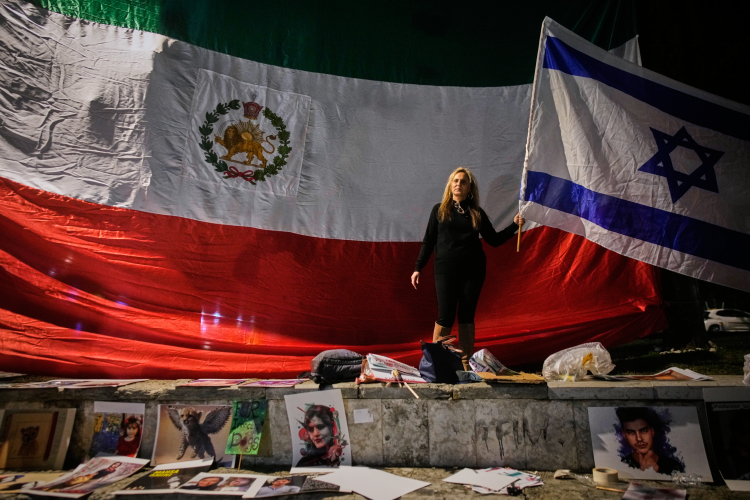
Finally, the Israeli/American multi-front weakening of Iran—and the possible imminent collapse of the Islamic Republic—removed the only movement seeking to restore imperial rule beneath a leadership other than the Sunnis. Its elimination as a power player has upended all prior calculations.
All of which brings us up to date with minimal reference to the significant American role in shaping these events. Though American boots on the ground have been minimized since the Obama Administration’s withdrawal from Iraq, American influence has remained enormous. Unfortunately, given both the partisan swings from Obama to Trump I to Biden to Trump II and the competing ideological camps within each of those administrations, both America’s actual positioning and the messages it broadcasts have been unclear.
Dominant forces within the Obama and Biden administrations, and minority voices during both of Trump’s, have favored imperial claims—whether emanating from Iran, Turkey, the Muslim Brotherhood, or other Arab sources—as the best way to preserve the status quo and the existing regional order. Majority voices during both of Trump’s terms, and a dwindling-but-still-present minority bloc inside and around the Obama and Biden Administrations, have favored preserving Israel, protecting minorities, weakening Iran, and elevating Arab states above imperial goals.
These internal American conflicts stem from both ideological and transactional sources. Large parts of the American left and small parts of the American right—for different reasons and following different paths—resonate to the imperial claims of justice and ability to secure order. Most of the American right and center-left view minority rights far more favorably and see the region’s minorities and nationalists as far more likely and reliable allies. Few Americans of any stripe, however, are yet comfortable championing the redrawing of national borders and the population movements necessary to make true minority protection and self-determination a reality.
The transactional calculus is even easier: The imperial players have much to offer in the short-term—cash, investment, tactical cooperation, and reduced terrorism are all excellent inducements for politicians seeking re-election as well as those looking for a post-politics sinecure. That a resurgent Islamic empire would certainly become a long-term threat to American security may raise the price they’re willing to accept, but that’s the nature of transactional politics.
The players within the region all hear the mixed signals. Long-term consequences could prove catastrophic. The best interests of the region’s people require a full and final dismemberment of the Ottoman Empire. A strong and integrated Israel is the only way to safeguard the futures of independent (or at the very least autonomous) Druze, Kurdish, Christian, Somalilander, and perhaps other ethnic homelands. A surge of national identity—following the models of the UAE, Azerbaijan, and Morrocco—are necessary to stabilize a post-imperial, deradicalized, Sunni world. The current threats to both regional flourishing and American interests are the remnants of Khomeinism, the Muslim Brotherhood, and its national champions in Qatar, Turkey, and (now) Syria.
By all indications, our lack of clarity is already working to the severe detriment of our long-term interests. Saudi Arabia, which had been veering towards deradicalization and national interests appears to have reconsidered. As the keeper of the Holy Cities and proud Sunni Arab leader, Mohammed bin Salman cannot let Erdogan’s Istanbul—the imperial capital and seat of the Caliphate for 450 years—reclaim its leadership role. If imperialism is allowed to persist, and with Shiite imperialism all but vanquished, the Saudi royals must seek leadership of the newly empowered imperial movement. Meanwhile, the Free Palestine movement surges, maintaining its toehold in Gaza, Judea, and Samaria, while poisoning Western institutions and countries.
The final year of the first Trump Administration and the first year of the second Trump administration, combined with Iranian miscalculation and Israeli prowess, have created an opening for a truly new, truly positive Middle East. Dominant parts of our current foreign policy team deserve tremendous credit for forging history’s most pro-American, pro-development, pro-human Middle East policy. Their work, however, is far from done. There are forces in our own country—and even within the Administration—seeking to snatch defeat from the jaws of victory.
For the sake of all decent people living in the Middle East—as well as long-term American interests—the Trump team must inject clarity. It must drop its insistence on preserving national boundaries, on keeping the Palestinian movement alive, and on opposing the consolidation of ethnic populations. Promote Zionism as the model that the region’s other minorities should follow. Free the brave Iranian people from radical, totalitarian Khomeinism. Champion independence for Druze and Kurds. Consolidate Christian populations to strengthen Lebanon. Integrate Sunni Arab refugees within the Sunni Arab world. For the first time in over a century, all such options are on the table—and all can be achieved without a sizable American footprint.
