




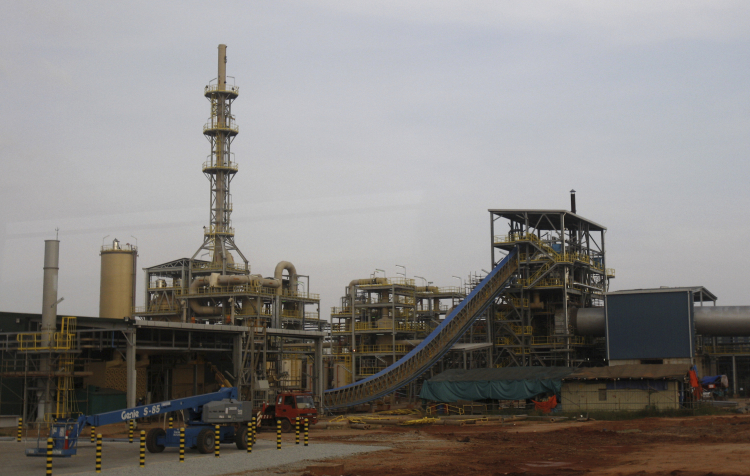
Western governments have correctly identified rare earth supply chains as strategically vulnerable. Yet their policy responses have disproportionately weighted toward finance, including sovereign funds, loan guarantees, and critical minerals grants. Instead, the real deficit plaguing the West lies in processing expertise, intellectual property depth and institutional capability in rare-earth separation and downstream refinement.
China’s dominance rests on decades of extraction optimization, state-supported accumulation of separation patents, embedded university–industry programs, pilot-plant refinements, and long-term retention of talent. Rare earth competition is therefore not merely a commodities race. Fundamentally, it is a contest of processing capability, which the West unfortunately ceded.
During World War II, control of strategic mineral supply chains shaped the outcome. Secure Allied access to cryolite from Greenland underpinned aluminum production at a decisive moment. Strategic materials have determined geopolitical leverage before. They will again.
If Western governments are serious about reducing dependency on China, policies must prioritize securing high-quality magnet feedstock such as deposits enriched in neodymium and praseodymium as well as dysprosium, terbium, gadolinium and yttrium.
These elements underpin the high-performance permanent magnets required for advanced defense systems, precision-guided munitions, robotics, and renewable energy generation.
Competing ton-for-ton with China is futile. But competing on magnet-grade oxides of neodymium, praseodymium, dysprosium and terbium makes sense.
Not all rare-earth mineral systems present equivalent technical risks. Carbonatite-hosted deposits including bastnäsite, synchysite and monazite-bearing systems have established processing precedents compatible with conventional flotation, magnetic separation and known hydrometallurgical flowsheets.
Where coarse-grained mineralogy and favorable liberation characteristics exist, development risk is materially lower than for complex or refractory feedstocks. In other words, reliance on China can be reduced more quickly by prioritizing mineral systems compatible with proven, scalable processing routes. China controls global separation capacity and thousands of patents covering rare-earth separation chemistry, impurity rejection and downstream oxide production. It also retains manpower along with know-how, all dedicated to rare-earth hydrometallurgy.
These specialists constitute a structural advantage. The West allowed much of their expertise to atrophy over four decades as processing capacity migrated offshore. Rebuilding Western capability requires government support for domestic rare-earth-related intellectual property generation. Ownership of process chemistry is as strategically significant as owning ore.
Second, the hydrometallurgical talent pipeline must be reconstituted. Rare-earth-focused academic chairs in chemical engineering and hydrometallurgy should be established.
Likewise, processing capability should be embedded in defense-aligned national laboratories. Structured apprenticeship pathways linked directly to pilot facilities should be developed.
Third, rare-earth pilot plants should be treated as national strategic infrastructure. Pilot facilities enable flowsheet refinement, impurity management and magnet-grade qualification before billions are deployed. Rapid pilot-plant validation and iterative optimization are essential to compress development timelines without compounding risk.
Fourth, downstream alignment must be secured. Separation, oxide refining and magnet-metal capability must be anchored in secure allied jurisdictions that are integrated into defense supply chains. Mining without domestic separation capacity does not reduce vulnerability. It simply moves leverage elsewhere. If Western governments are serious, rhetoric must translate into jurisdiction-specific action.
In the U.S., Defense Production Act Title III authorities should be aligned with process intellectual property acquisition and separation capability development. Defense Department laboratories should be integrated into materials qualification and process validation pipelines to ensure defense-grade oxide standards are met domestically or within allied networks.
Collaboration among Australia’s national science agency, the CSIRO, universities and industry should be expanded to bolster Australia’s position as a high-integrity upstream-to-midstream partner in allied supply chains.
In the European Union, the Critical Raw Materials Act should prioritize projects demonstrating processing clarity, magnet-grade output and proprietary separation capability. EU-supported rare-earth process research centers should be established to reduce reliance on external intellectual property.
There is understandable enthusiasm in Western capitals about breaking China’s grip on rare earths. But if the debate remains centered on who writes the check instead of who owns the flowsheet and the underlying process chemistry, another decade will be lost.
Global demand for magnet rare earths will continue to accelerate. Capital is being deployed at scale. Yet without coordinated action to rebuild processing expertise, intellectual property ownership and hydrometallurgical talent, capital stands to underperform.
Investment is necessary. But capability will determine whether the West meaningfully reduces dependence on China within the next decade. Without a radical shift in mindset, money alone will not close the gap.
Carl Popal is Executive Chairman of Eclipse Metals and a developer of critical minerals projects across allied jurisdictions.
