




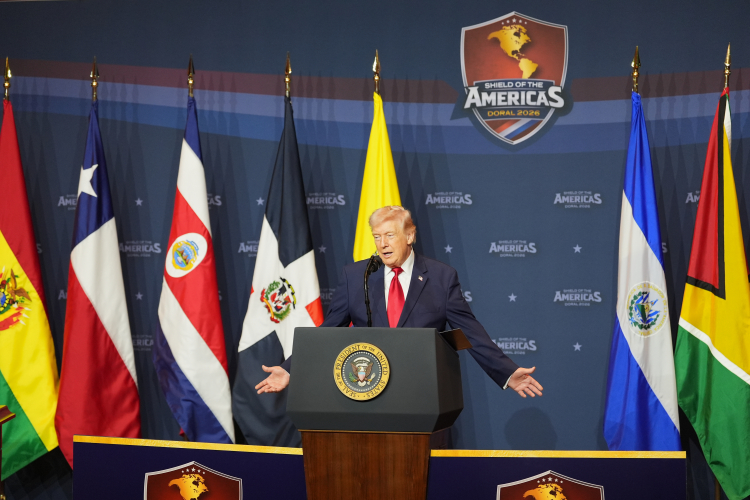
President Kast takes power in Chile. Rafael Lopez Aliaga leads the polling for the upcoming election in Peru. Recent wins pile up, including Costa Rica and Honduras. The political scene of Latin America moves markedly to the right, toward the United States — and away from meddling China.
For years, Latin America had tilted toward China’s orbit. Beijing focused on Latin America with a massive appetite for commodities, aggressive infrastructure financing, and consistent diplomatic outreach.
But that trend reverses now. Thankfully.
Across the region, a new generation of conservative leaders emerges. These populist right leaders are willing to continue trading with China, but only on terms that are transparent and fair. Additionally, they push back against Beijing’s political and strategic influence. A key driver of this shift flows from a renewed alignment with the United States.
Two figures illustrate this trend particularly well: Chile’s president-elect José Antonio Kast and Lima’s former mayor Rafael López Aliaga.
Both men rise from a wave of Latin American patriots who see global politics through the lenses of Western values, sovereignty, and strong pro-growth mindsets. Both Kast and Aliaga are also formed by a Catholic social tradition that rejects Marxist ideologies while affirming the God-given rights of free men and nations.
That worldview matters in a region that is targeted by the Chinese Communist Party, a regime that restricts religious freedom and exercises sweeping state control over the economy and society. The CCP seeks to export that treachery to the Americas.
But brave leaders like López Aliaga in Peru stand up against that Chinese encroachment. For years he has opposed China’s abuses. During the country’s 2021 presidential campaign, he rejected Chinese COVID-19 vaccines such as Sinopharm, arguing they were ineffective. He also called for greater global accountability regarding the origins of the pandemic, amplifying concerns raised by Western governments that China and the World Health Organization acted corruptly.
His concerns extend beyond public health. Aliaga pledged that if elected president he would expel foreign vessels illegally fishing in Peru’s waters, singling out large Chinese fleets that operate near South America’s coast and are widely accused of depleting marine resources. He has also raised alarms about alleged corruption involving Chinese firms competing for infrastructure contracts in Peru.
Chile’s new president, José Antonio Kast has recently taken similar steps. As he prepared to assume the presidency, Kast clashed with the outgoing administration over a controversial undersea telecommunications cable project linking Chile to Asia that involves China Mobile. President Kast now demands greater transparency regarding the project.
That dispute reflects a larger global contest over digital infrastructure. Submarine fiber-optic cables carry the vast majority of global internet traffic and have become a focal point of technological rivalry between China and the United States. Kast’s willingness to challenge a Chinese-backed project signals that Chile’s new leadership is prepared to treat strategic infrastructure as a national security issue.
Neither Kast nor López Aliaga advocates severing economic ties with China. China remains the largest trading partner for both Chile and Peru, purchasing massive quantities of copper, lithium, and other natural resources essential to the global economy.
But these realist leaders now advance what might be called a policy of pragmatic skepticism.
They recognize the economic benefits of trade with China, when it is conducted properly. Simultaneously, they will not allow Beijing’s influence to expand further, especially into sensitive sectors such as telecommunications networks, strategic minerals, ports, and infrastructure.
The deeper story here is not simply about China. It is about the reemergence of a broader pro-United States orientation in the key countries of Latin America.
From Argentina’s Tierra del Fuego all the way north to Central America and El Salvador, voters elevate leaders who emphasize cooperation with the United States and shared Western values.
In short, a pro-American tide is rising again in the Western Hemisphere—not because of pressure from abroad, but because voters across the region are choosing leaders who believe their future lies alongside the United States in building a hemisphere of prosperity and security. Big things ahead!
Steve Cortes is president of the League of American Workers and advisor to Catholic Vote. He directs political campaigns on media, polling, and Hispanic outreach, including Trump 2016/2020 and Vance 2022 US Senate. He is a former broadcaster for Fox News and CNN.
