




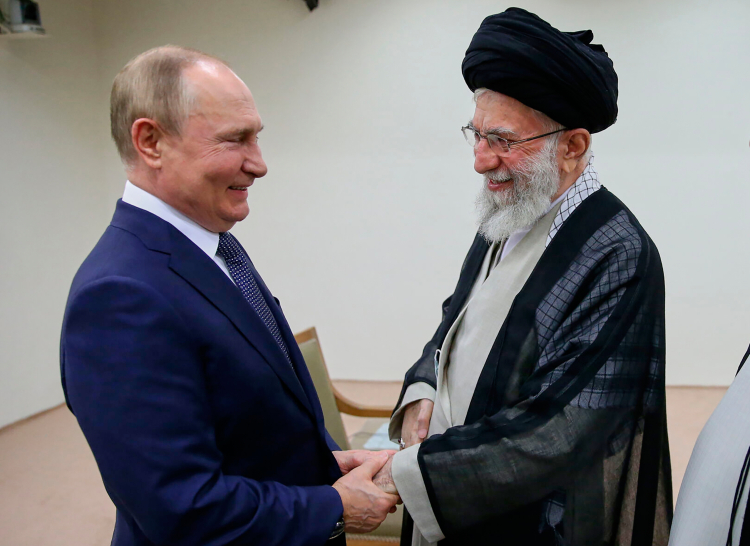
With Russia’s alliance with Iran being well-established, it was no surprise that Russian President Vladimir Putin put out a statement after the death of Iran’s Supreme Leader, Ali Khamenei, expressing his condolences; calling Khamenei an “outstanding statesman” and lauding him for his contribution to the “development of friendly ties between Russia and Iran,” in Putin’s own words. In addition to these kind words to the late Supreme Leader, the Washington Post reports that Russia is also providing Iran with intelligence revealing U.S. targets, including the locations of American warships and aircraft around the Middle East. That said, the Kremlin’s refusal to militarily assist Iran came as a shock to many, with Kremlin Spokesperson Dmitry Peskov stating that Russia’s 20 year strategic partnership with Iran does not include a mutual defense pact and that Iran has not approached Moscow for arms supplies in the current conflict. On a similar note, Putin has also made phone calls to the United Arab Emirates and Qatar expressing solidarity with them against Iranian attacks upon their territory, telling Qatar’s Amir Sheikh, Tamim bin Hamad Al-Thani, that “Russia is ready to provide any kind of support that helps overcome the fallout of these assaults and strengthen Qatar's security and stability,” according to the Qatar News Agency.
Russia’s current response to the conflict appears to be very mixed, but in the eyes of the Kremlin, this mixed response reflects Russia’s interest in striking a balance of power in the region between retaining Iran as a strategic regional ally and attempting to court the Gulf States, notably Qatar and the UAE, into engaging in greater economic and strategic cooperation with Moscow. Russia has seen some success in working toward this end, with the UAE officially joining BRICS in January of 2024 and the Qatar Investment Authority, Qatar’s sovereign wealth fund, owning approximately 19% of Russia’s oil giant Rosneft according to CNBC. Russia’s deepening ties with the Gulf States also reflect the Kremlin’s interest in weakening The U.S.’ economic and strategic relations with the Gulf, as the Arab states in the Gulf are all close U.S. allies. To that end, the Russian Foreign Ministry has been attempting to tarnish U.S. credibility with the Gulf by accusing the U.S. and Israel of dragging the Gulf Arab countries into the conflict with Iran, stating that "They deliberately provoked Iran into retaliatory strikes against targets in some Arab countries, which led to human and material losses, which the Russian side deeply regrets," as reported by Reuters.
With the supplying of intelligence to Iran regarding the locations of U.S. warships and other U.S. Military assets in the Middle East and Russia’s simultaneous display of solidarity with Qatar and the UAE in the wake of Iranian strikes upon their territory, it can be speculated that Russia wants Iran’s military response to remained focused against the U.S. as opposed to the Gulf States, and that it is within Russia’s interests to damage U.S. power and credibility in the region without damaging the Kremlin’s ever-increasing ties to the Arab states in the Gulf. Despite being U.S. strategic allies, some Gulf States such as the UAE and Saudi Arabia view it as essential for their national interests to reduce their dependency on the dollar, which some in the Gulf feel can be achieved through joining BRICS and strengthening their relations with Russia. Throughout the Gulf over the past decade, there have been drives towards economic diversification and de-dollarization, as the Gulf seeks to protect the wealth it has generated, and it is the view of some officials in Gulf States that a decrease in reliance upon the U.S. dollar will enhance their financial resilience and make cross-border trade easier in an ever-changing global economy.
Cody Persaud is Assistant Dean of Undergraduate Studies at St. John's University.
