




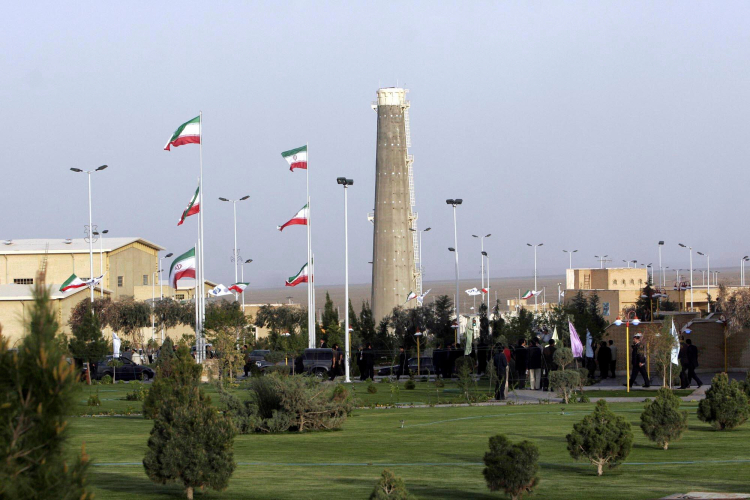
The recent US-Israeli attacks against Iran have proven something to the world: Either you get the bomb, or you bow before someone who has the bomb. That wouldn’t be so grim if the stakes weren’t so high. But the issue with nuclear bombs is it only takes one to go off before apocalyptic concerns rear their head. To small and great powers alike, the current war in Iran proves the only guarantee of deterring a nuclear-armed adversary in this era is if you actually have a nuclear weapon of your own.
Oceans of ink have been spilled over who should or should not get a nuclear weapon, but given the recent events, several countries are doing more than just talking about becoming nuclear powers. Poland, Finland, Japan, South Korea, and Saudi Arabia are a few of the countries which reportedly are eyeing getting their own nuclear deterrent. Undoubtedly others are secretly scrambling to see if they can acquire nuclear capabilities themselves.
Despite these countries being part of many international treaties and alliances, they are rationally realizing if they want some semblance of independence, they need a means to assert themselves. They’re watching what is happening in Iran and see that the cost for not having nuclear weapons just went up. Even if a country isn’t a state-sponsor of terror and may have great respectability on the world stage, who says all those friendships will last? Wise leaders understand that international relationships can flip on a dime, and if a major deterrent like an alliance isn’t guaranteed to protect you, why wouldn’t you want the most dreaded weapon on the planet as an alternative?
The reason why no one is talking about invading North Korea is mainly because they have nuclear weapons—the prospect of Chinese involvement a la the Korean War helps bolster North Korea’s defenses too. Pyongyang’s behavior may cause headaches but none of their actions are bad enough to justify the risk of nuclear fallout from any kind of altercation.
If there is any international order, it should discourage more nuclear actors from coming into play. The amount of nuclear weapons one country has is one question, but multiplying the number of countries which possess nuclear weapon capabilities makes international relations far more high-stakes than it already is.
Those who argue that certain states would suspend their rationality and use nuclear weapons on a whim, risking the complete destruction of their own country in the form of retaliatory strikes, have very little evidence for their position. This is not to say we should turn a blind eye as countries make steps to acquiring nuclear weapons. Rather, the issue is that states are indeed rational actors. What the United States and Israel have just taught the world is that either you have the ultimate deterrent or you don’t—there is no maybe-we-will-maybe-we-won’t middle ground that serves as a deterrent.
If one of the hopes of the war was to reduce the risk of proliferation, that clearly backfired. One could argue it's acceptable for our allies to acquire nuclear weapons since that creates less dependence on the United States, allowing Washington to finally pursue burden shifting in earnest. While it’s true that we should be less engaged with the European theater and hand it off to our allies, we should also consider that no alliance is permanent. Ukraine stands as another clear demonstration of how big a mistake it is to give up your nuclear weapons if you happen to acquire them. Only a few decades after giving up their nuclear stockpile to Russia, they found themselves being invaded by Russia. What country wants to be in that situation?
It’s unrealistic to think Washington will remain the dominant power forevermore. In the coming years, more countries — both inside and outside of the Western sphere of influence — will likely pursue a nuclear weapons program. Policy experts and lawmakers need to start envisioning a world in which more medium-sized or even small powers have nuclear weapon capabilities. We should preemptively be forming relationships expecting that future. Perhaps America can prevent Iran from getting a nuclear weapon, but can the US stop every country that will ever want a weapon? What length is America willing to go to ensure no country can ever again join the nuclear club?
The lesson for those thinking about how nuclear warfare has changed in the last decade is clear. Every country, to a greater or lesser degree, has an incentive to acquire a nuclear weapon and keep it. Until they get one, make a strong alliance with a friendly nuclear power who won’t make it their job to hinder you. If that’s the global order we didn’t want, too bad — because it’s the one we’re breathing life into right now.
Alex Madajian is a Contributing Fellow at Defense Priorities.
