




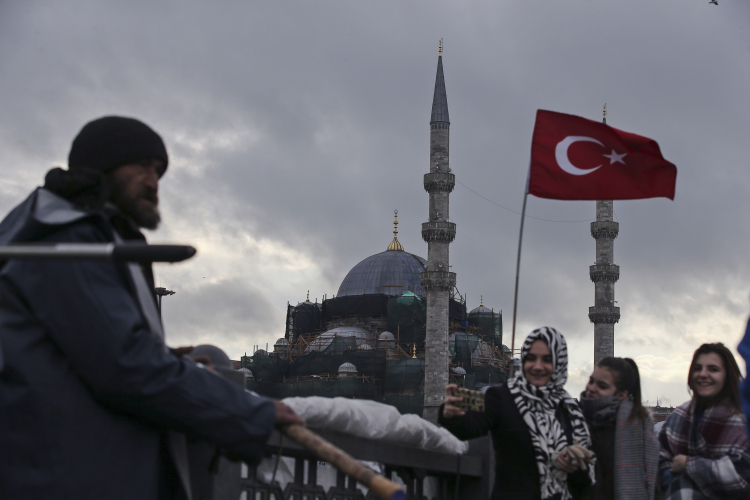
In spite of all the Middle East’s recent volatility, one thing remains clear: Turkey continues to try positioning itself as the region’s indispensable hinge – a state too useful for Washington, Tehran, or Riyadh to ignore. In a world defined by shifting alliances, collapsing regimes, and non-state actors, Ankara is carving out a role nestled in the art of adaptability.
Turkey’s road back from its post-Arab Spring overreach has been born out of necessity, above all else. Its wager on Sunni Islamist movements - most notably the Muslim Brotherhood, which has since been proscribed as a terrorist organisation by Saudi Arabia, the UAE, and Egypt - in the wake of the Arab Spring constituted a broader effort to shape the new regional order. Erdoğan's bet on leaders such as President Morsi in Egypt attempted to put a legitimate face on a broader Islamist movement. But when those movements ultimately fell, Turkey was left marginalised by its Arab neighbours, and divorced from regional diplomatic frameworks. It's attempt to proliferate the spread of political Islam - at precisely the time its Arab neighbours were attempting to move in the opposite direction.
Since 2021, Ankara has undertaken a transformative course of pragmatic reorientation. Turkey has reset diplomatic ties with Gulf neighbours and reopened dialogue with Israel. Crucially, the strategy attempts to place Turkey back inside the political architecture of the region.
It is a strategy seen most acutely in Syria. After the regime’s fall, Erdoğan quickly backed the new government, and maintained its military presence – thought to exceed 20,000 – to bring security to the northern regions. Whether it be its embassy reopening in 2024, or its welcoming of a Syrian delegation to Ankara, Turkey’s approach clearly represents a concerted effort to shoehorn itself within Syria’s political reconstruction. If successful, they will likely enjoy a front seat in helping design the country’s future.
This narrative extends far beyond Damascus, however; Turkey is extending its reach throughout Iraq, as well. Its engagement is built upon three central pillars: counter-PKK operations, economic integration and strategic connectivity. The Development Road Project – a multi-billion-dollar linkage between the Gulf and Europe, through Turkey, has become a flagship of this strategy. The country’s oil-for-water deal in 2025 reinforces this institutionalised independence, creating a reliance on Turkish investment and cementing Turkey inside Baghdad’s long-term outlook.
Across Iraq and Syria, the sentiment is clear: the Middle East is far from the ideological contest of years past. A more transactional regional order is emerging, and it is increasingly one defined by pragmatic partnerships, where influence is gained through who can deliver the best options on the ground. And that shift favours actors like Turkey, whose influence stems not from ideology, but from the capabilities to enact policy across multiple theatres.
It is a strategy particularly relevant in the wake of the Iran conflict, where Ankara has defined its role as a diplomatic conduit between the two warring powers. Turkey’s interest in the conflict ending is clear - refugees will doubtless land at Turkey’s door - but the country’s motivations stretch further than simple crisis management.
Across all of these domains, one clear pattern emerges. Where it formally anchors itself in NATO, it is increasingly renewing its ties with non-Western actors; where it is re-establishing ties with Gulf nations, it maintains open channels with Damascus and Tehran. The very same opportunistic statecraft that saw an overreach after the Arab Spring now fuels a more calculated approach. And if the maps of the Middle East are indeed being slowly altered, the lesson remains the same: the real test is whether Turkey can establish a seat within the Middle East’s political order. For Erdoğan, this requires a continued recognition that influence is now defined not by who instigates crises, but rather who manages them.
Oliver Dawson is a finalist at Durham University, reading Politics & International Relations. He is also a Policy Fellow at the Pinsker Centre, a UK-based foreign policy think tank, and a former Treasurer of the Durham Union Society.
