




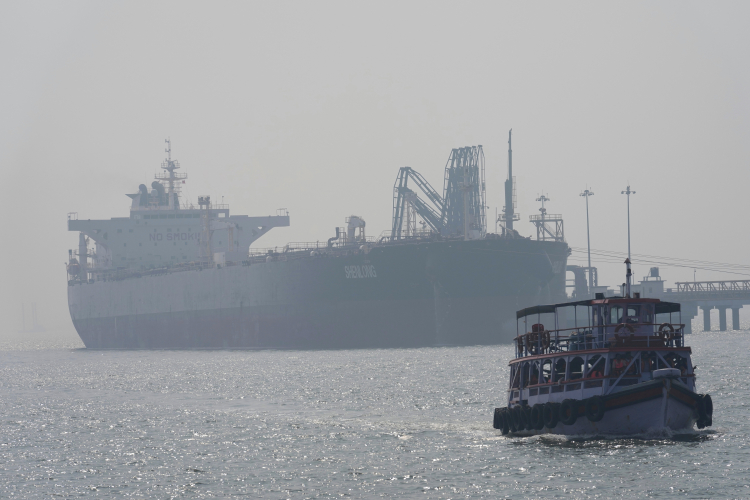
In June of 2023, the state-owned China National Petroleum Corporation (CNPC) signed a 27-year gas deal with Qatar, in which Qatar will supply China with four million metric tons of Liquefied Natural Gas (LNG) per year. Regarding this, Saad al-Kaabi, Qatar’s Energy Minister and CEO of QatarEnergy, stated that “Today we are signing two agreements that will further enhance our strong relations with one of the most important gas markets in the world and key market for Qatari energy products.” Following this trend of increasing energy reliance upon the Gulf States, just last year, in April of 2025, China signed two similar LNG agreements with the UAE. One of which, signed by another state-owned company by the name of China National Offshore Oil Corporation (CNOOC), is a five-year deal which includes the sale of 500,000 metric tons of LNG from the UAE annually, and the other deal, signed by a private Chinese firm named ENN Natural Gas, is a 15-year deal agreeing upon the sale of one million metric tons of LNG by the UAE to ENN Natural Gas annually. This increasing reliance upon Qatar and the UAE to meet China’s energy needs stems mostly from China’s geopolitical rivalry with the U.S. and the resulting need on the part of Beijing to decouple its energy security from the U.S. As a result of U.S. tariffs upon China, Beijing has halted LNG imports from the U.S. indefinitely as of March of 2025, which according to Reuters, China had imported 4.3 million tons of just the year prior in 2024.
With Iran’s recent closure of the Strait of Hormuz, however, China’s reliance upon the Gulf States for energy is beginning to falter. Despite China’s close alliance with Iran, the Iranian regime has declared that no ships are to pass through the Strait of Hormuz, which, to the dismay of Beijing, also includes Chinese-affiliated vessels. According to CSIS, while China has received assurances from Iran in previous conflicts that its vessels would be safe from attack by Iran’s proxies, which was the case with regard to the Houthis back in 2024, no such assurances have been given to Beijing in this current conflict. This has led to China urging all parties involved in the current conflict to keep the Strait of Hormuz open so as not to disrupt international trade, which is also a major disruption to China’s energy sector, considering that 40% of China’s oil imports and 30% of China’s LNG imports pass through the strait.
While China’s energy security is closely tied to the Gulf States, the same can be said for much of the rest of Asia, including Taiwan, who receives 33% of its LNG from Qatar. With many Asian countries scrambling for energy alternatives in the wake of the Strait of Hormuz’s closure, China has taken advantage of the situation to extend yet another offer of reunification to Taiwan, but this time using the promise of energy security to spearhead their offer. According to an article by Gulf Business, China has also publicly addressed these energy concerns in relation to the reunification offer. The article reports that, “Chen Binhua, a spokesperson for China’s Taiwan Affairs Office, told reporters in Beijing that ‘peaceful reunification’ would bring better protection of Taiwan’s energy and resource security with a ‘strong motherland’ as its backing.” Taiwan, however, has stated that they have already established alternative sources of energy for as long as the conflict lasts, including sourcing LNG from the U.S. Additionally, President Trump, taking note of the hard hit absorbed by Beijing after the closure of the strait by Iran, has requested Chinese assistance in reopening the strait; a request which has since been dismissed by the Chinese. All in all, it can be concluded that China’s reliance upon the Gulf for its energy security has been deeply hindered by the closure of the Strait of Hormuz by Iran, and that while China has rejected U.S. offers of cooperation on reopening the strait, it is possible that China may be more open to such cooperation as this energy crisis continues.
Cody Persaud is Assistant Dean of Undergraduate Studies at St. John's University.
