




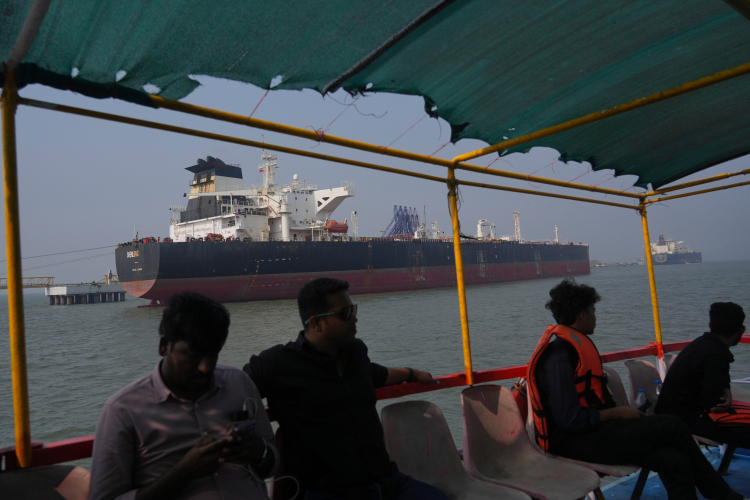
In his recent speech, President Trump suggested that he may end military action against Iran without the United States securing the opening of the Hormuz straits through direct military action. These straits, through which passed much oil designated for European and Asian countries, do not directly impact the United States, which has enormous oil reserves that are not sent through Hormuz. Other countries are more directly impacted by Iran’s illegal actions.
The United States is, however, indirectly impacted by the closure because of the increase in the price of oil which, at least until now, has been globally determined. But why is that so? Oil is a commodity like many others, and nations sell many commodities, with private companies or individual governments setting different prices, depending on many factors. That’s called competition and the open marketplace. But under current practices, oil prices are not subject to the usual competitive marketplace but rather to a price based on a single global market determination.
There may be good reasons for such global price fixing, but they are not inherent in the nature of the product itself or in the nature of world markets in general. Most informed people with whom I have discussed this issue have no idea why the pricing of oil is not subject to the usual competition involving most other commodities. Even local gas stations compete with other over the retail price of a fill up, so why should the wholesale price of oil fixed by global conglomerates? An understandable explanation — more than just “that’s the way it’s always been” — is required.
So President Trump’s next challenge is to figure out a way of delinking the price of American oil from the fixed global price, if that can be feasibly done. American companies would then be free to charge lower prices to friendly buyers, including American gas stations. This delinking would fit into Trump’s general belief in competition through open markets rather than fixed prices. It might require legislative or administrative action limiting the power of private American oil companies to profit unfairly, but there is precedent for that in the anti-trust laws, and especially in response to military and or enemy misuse of the global price fixing power to achieve improper military of diplomatic advantages.
Under the current global price fixing regime, American companies are getting windfalls by charging excessive prices that reflect higher costs by other oil companies that ship their oil through the Straits, but not by American companies that don’t. The American gas consumers are the victims of this unfairness, and the law should be capable of remediating this situation.
Israel has suggested yet another alternative: to reroute oil currently shipped through Hormuz in overland pipelines in nations that would not misuse their geographical power over international waterways as part of a military strategy. This would obviously take time and regional cooperation. Delinking the price of American produced oil from the price of oil produced by foreign countries could probably be done more quickly.
I’m not an economist, so I may be unaware of considerations that may make such delinking unworkable, but American consumers of artificially high-priced gas are entitled to a commonsense explanation we can understand. It’s not enough to say “that’s just the way it is, and has always been.”
Both of these ideas are better than the current alternative and warrant serious consideration. Neither would be easy to implement and maybe they aren’t feasible. But on their face, both provide better options than the military ones currently under consideration, or simply abandoning the straits and allowing the status quo to continue.
In his recent speech, president Trump suggested that the countries whose oil shipments are being blocked from going through the Straits of Hormuz should be the ones who take military action to remedy what is essentially their problem. That seems right. But in the meantime, Iran is succeeding in turning American voters against our just military actions by causing pain at the pumps. If we can take economic and geopolitical actions that reduce the price of gas to American consumers, we should consider doing so. So let’s put on our thinking caps and try to figure out ways of discouraging Iran from illegally using military threats to raise the price of gas to American consumers.
Alan Dershowitz is professor emeritus at Harvard Law School. His latest book is “Could President Trump Constitutionally Serve a Third Term?”
