




Amidst confrontations over islands in the South China Sea, the Philippines signed a defense agreement with France. This comes on the heels of China's militarization of islands in the Philippines' Exclusive Economic Zone (EEZ). This is the latest in China’s global campaign to dominate the seas. The US should partner with nations threatened by China to counter Beijing’s maritime power in East Asia and beyond.
EEZs are internationally recognized as the ocean territory of a country extending 200 nautical miles from the shores of that country. Yet for decades, China has been building military installations on islands in the EEZs of countries in the South China Sea. This would be bad enough on its own without the aggravating circumstance that many of these islands are man-made, built and expanded through land reclamation. Thousands of acres of land have been reclaimed in the middle of the ocean, large enough for airfields.
Land reclamation is a process where new land is created in the middle of the ocean, often by moving sand and other fillers. Countries around the world have done it to create more living space in coastal areas. Dubai has famously used land reclamation for some of its iconic hotels and housing projects. What is new is the way China is using it to intimidate its neighbors.
Understandably, the countries whose territory is being violated are not happy about this. The Philippines’ feud with China over these islands goes back more than a decade. When an international court ruled that China’s land reclamation projects were a violation of international law. China ignored the ruling, and the military buildup continues, thus forcing the Philippines to take matters into its own hands, resulting in confrontations between Filipino and Chinese naval vessels.
It isn’t just Filipinos struggling with this problem; long-time China ally Vietnam is also on the receiving end of China’s maritime bullying. China’s man-made islands are being built in Vietnam’s EEZ as well, leading to Vietnam lodging a rare formal complaint against the Chinese. Although the Chinese brushed off the complaint, the Vietnamese are legitimately miffed about the violation of their sovereignty.
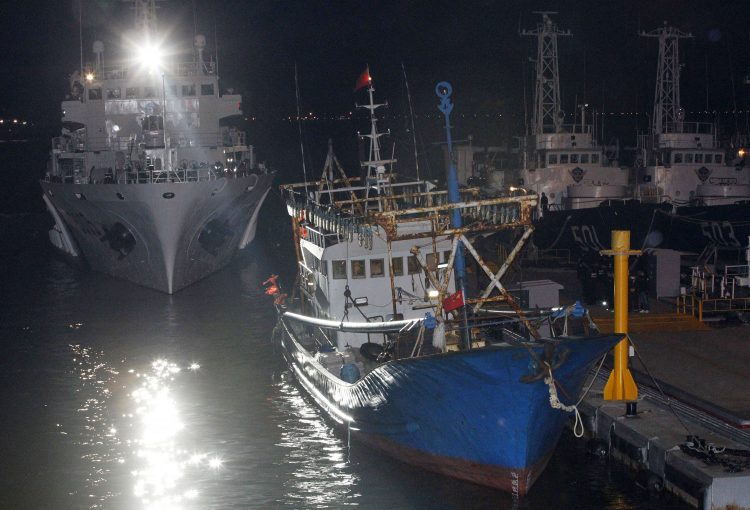
China’s maritime trouble-making isn’t limited to the South China Sea. Vast Chinese fishing fleets are illegally entering the EEZ of numerous countries and overfishing their waters. More than 90 countries have been the victim of unauthorized Chinese fishing, including Ecuador, South Korea, Argentina, Japan, and South Africa. The way countries ensure fishing remains viable long-term is by limiting how much fish local fishermen can catch, ensuring fish can be caught in the future. However, the sustainability of fishing in many of these places is questionable when unaccountable Chinese fishing fleets are flouting local rules.
What can be done to counter China’s belligerence? Like any bully, China thrives by picking on smaller targets too weak on their own to resist. This is an area where the United States can provide leadership. By forming a naval coalition with these smaller countries, the United States can protect these countries while also hemming in China’s expansionism. Not only that, such a coalition would protect global trade and protect the global fishing markets.
This is an area where Japan can be called upon to take on a greater leadership role. While the US is important here, global concerns prevent it from dedicating the entire US Navy to this project. A reinvigorated Japan could play a leading role in a coalition that defends against Chinese aggression.
Japan is already showing willingness to take on that role. Prime Minister Sanae Takaichi has repeatedly affirmed her goal of increased defense spending and supports amending the constitution to allow for proactive military deployments. To exemplify this willingness, Japan is sending 1,000 soldiers to the Philippines for drills. Japan has the will; they just need US support.
China is using its size and power to violate the sovereignty of nations not only in East Asia but around the world. This isn’t just a problem for these countries; it is also a problem for the United States. If China is allowed to militarize man-made islands in the South China Sea, it will have a stranglehold on global trade. If the US and its allies mobilize countries victimized by China, it can end China’s belligerence and secure global trade. President Trump should work to bring this coalition into being.
