




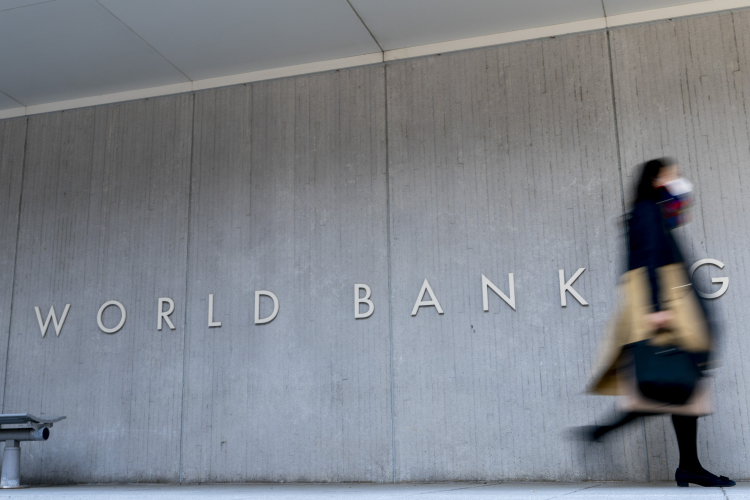
The 2026 spring meetings of the World Bank and the International Monetary Fund (IMF) take place from April 13-19 in Washington. High on the agenda will be a discussion of how to reduce debt, which has risen to unsustainable levels in many low-income countries. Advocates are again calling for forgiveness to “fix” unsustainable debt burdens. Some, including the United Nations, go further seeking to use the situation to expand international governance.
The United States should, instead, follow the advice of Secretary Scott Bessent and use its influence to press international financial institutions to “get back to basics” by refocusing them on transparency, macroeconomic and financial stability and promoting sound policy reforms needed for a “future that no longer relies on donor assistance.”
This is not to dismiss debt concerns in many developing countries. According to the Debt Sustainability Analysis of the World Bank Group and the IMF, sixty-nine low-income countries are at some risk of debt distress (i.e., when a country is unable to fulfill its financial obligations). Over half are considered at high risk of debt distress or are currently “in distress.”
But this is not a new concern. For decades, debt relief efforts have been proposed and adopted to address unsustainable debt in developing countries, including the Heavily Indebted Poor Countries (HIPC) Initiative and related efforts that were supposed to “deal decisively with the debt problems of the low-income countries” and end the need for future debt relief.
Yet nearly all the countries benefiting from these initiatives are currently at some degree of risk for debt distress. Since the HIPC initiative was launched in 1996, more than half of the countries benefiting from program remain at “high risk” for debt distress or are in debt distress.
In short, after repeated debt relief initiatives, unsustainable debt rebounded as a concern.
This was predicted by former World Bank economist William Easterly, who argued that debt relief simply opened space for governments to assume new debts and created an expectation, built on past debt forgiveness, that future unsustainable debt would also be forgiven.
In essence, past debt relief merely created the capacity for developing countries to accumulate unsustainable debt from other sources. Over the past two decades, beneficiaries of debt relief have done exactly that, borrowing from China and private sector creditors and now once again find themselves with unsustainable debt burdens. According to the World Bank, China’s share of low-income country debt rose from 18 percent in 2010 to 49 percent in 2021.
Past relief initiatives led by the Paris Club group of 22 major bilateral donors and international financial institutions like the IMF and World Bank forgave or restructured debt and committed to provide future assistance at highly concessional rates or through grants. This was supposed to prevent the recurrence of unsustainable debt.
But China and private creditors do not abide by prior arrangements. Aid to countries in debt distress is subsidizing repayment of Chinese debt, which refuses to forgive or restructure debt as the Paris Club countries have. Data show that China is now receiving more in debt repayments than it is providing in new lending. Meanwhile, low-income government borrowing from the World Bank and IMF increased. In essence, for the past few years, developing countries have been borrowing from international financial institutions to repay debt to China.
New rounds of debt relief will again be temporary unless bilateral creditors outside the Paris Club, particularly China, are pressured to adopt Paris Club practices on debt forgiveness, restructuring, transparency, and future lending. The U.S. should use its voice, vote, and influence to ensure that the IMF and World Bank make future assistance, particularly debt relief, contingent on recipients not borrowing from China or other bilateral creditors unless they are consistent with Paris Club practices.
Likewise, debt relief should not be used to bail out private creditors. Access to financial markets needs to be grounded in risk, not presumption of a bailout. Higher interest charged by private creditors incorporates that risk. In cases of unsustainable debt, private markets have options to restructure, including default and purchase of debt in secondary markets. Aiding low-income countries should not create incentives for private creditors to protract negotiations.
Neither should the U.S. support UN proposals to restructure the governing bodies of the IMF and World Bank or expand global governance in the form of a “global debt authority” to oversee debt restructurings or a new authority to regulate commodity trading to address “profiteering” by corporations, particularly involving food, during times of crisis.
Restructuring of IMF and World Bank governance is a long-sought goal of developing countries aimed at increasing their authority over the terms and access to multilateral credit. If accompanied by a decrease in U.S. votes in the IMF and World Bank, it would disempower the U.S. and its ability to veto major important decisions that require a super majority of 85 percent of votes. Meanwhile, international regulation of commodity prices is less likely to lead to stability than to politicization, price distortion, and volatility as the relationship between supply and demand relationship is distorted.
Neither are in the interest of the U.S.; moreover, it is inconsistent with U.S. efforts to narrow the remit of international organizations and refocus them on core purposes.
As Bessent noted, the U.S. instead should pull back from “expansive policy agendas” and refocus on measures to bolster international financial institutions, markets, and development: debt transparency, advice and analysis, enforcing graduation of wealthier countries from development assistance eligibility, focusing limited resources on lower income countries, and holding countries accountable for policy commitments.
Brett D. Schaefer is a senior fellow at the American Enterprise Institute (AEI), where he focuses on multilateral treaties, peacekeeping, and the United Nations and international organizations.
